GRP Potable
Water Tank
Hygienic Modular Water Storage for Clean Water Systems and Long-Term Reliability
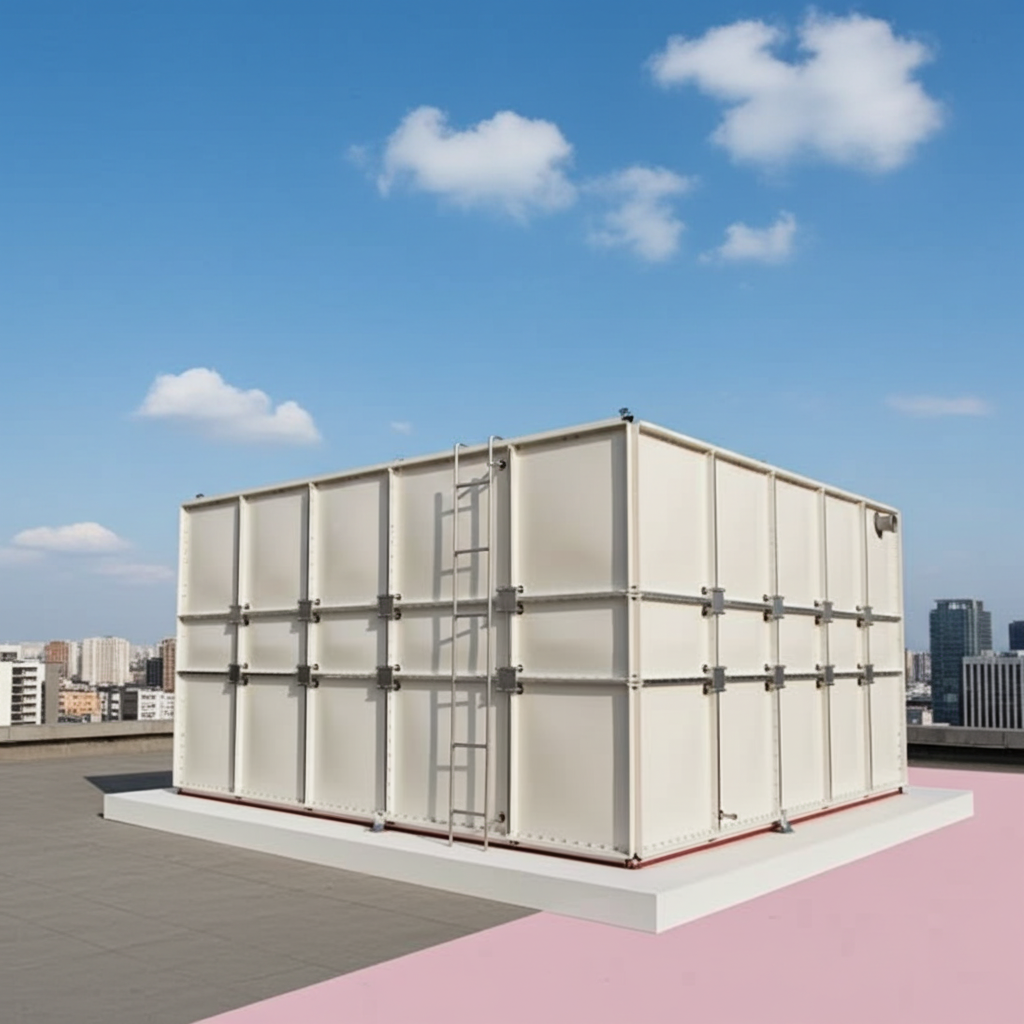
ZENTVO GRP Potable Water Tanks are hygienic modular water storage systems designed for drinking water and clean water applications in residential, commercial, municipal, and public facility projects. Backed by ZENTVO’s engineering-driven workflow — from project review and drawings to quality control, logistics, and installation guidance.
Water Safe
Resistant
Design
Assembly
What Is a GRP Potable
Water Tank?
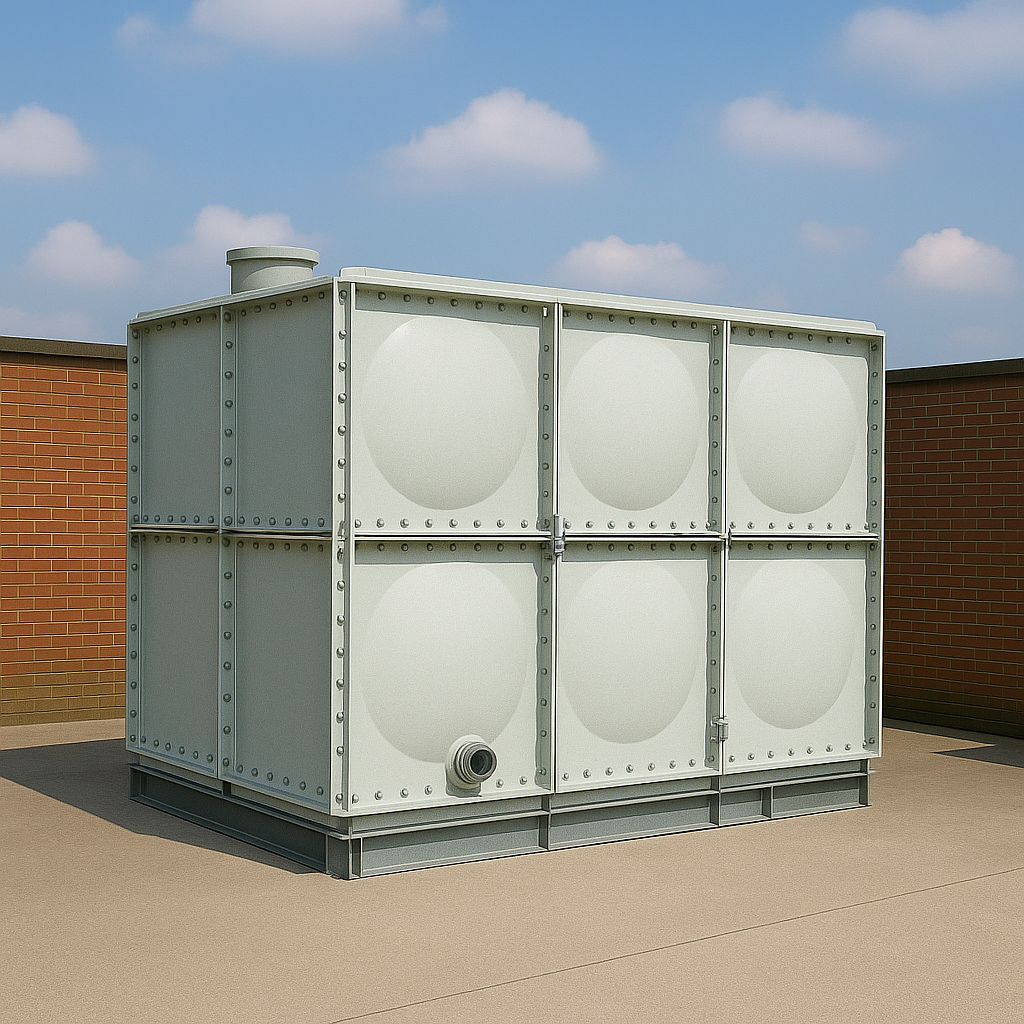
A GRP Potable Water Tank is a sectional modular water tank designed to store water intended for human consumption under hygienic storage conditions. GRP sectional tanks are a popular option because they are modular, durable, and suitable for varied sizes and structures.
Sectional GRP tanks are modular systems made from metre-by-metre panels that can be customized for restricted-access or project-specific layouts — delivering flexibility without compromising hygiene requirements.
For ZENTVO, this product is a project-ready potable water storage system: hygienic storage intent, modular sizing, drawing confirmation, potable-water documentation support, quality-controlled production, export-ready delivery, and installation guidance.
Potable Water Storage for Every Project Sector
ZENTVO GRP Potable Water Tanks are commonly used in residential, commercial, and public facilities — wherever clean water must be stored hygienically.
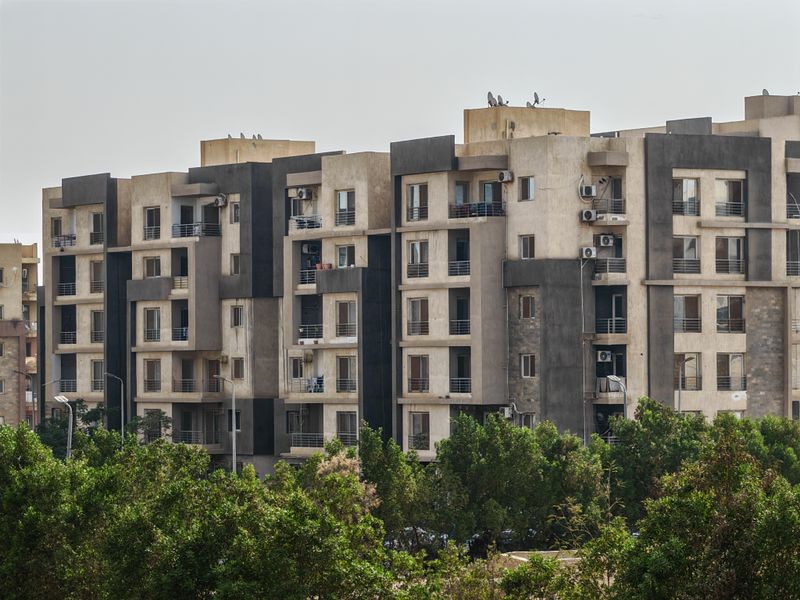
Residential & Building Water Supply
Suitable for apartment buildings, residential compounds, and building service systems that require hygienic potable water reserve or backup storage.

Commercial & Public Facilities
Applicable to hotels, schools, hospitals, office facilities, and other public buildings where clean water storage, inspection access, and long-term reliability are important.
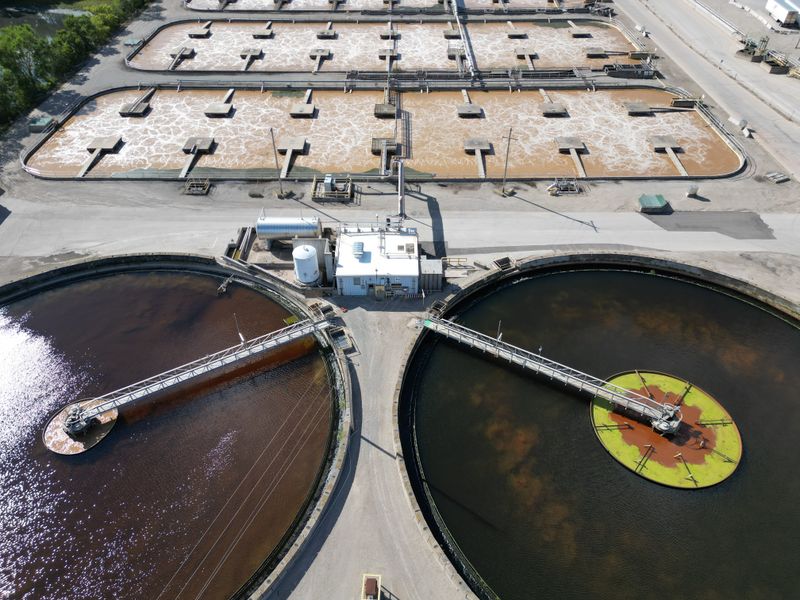
Municipal & Utility Projects
Potable water reservoirs, service water storage, and project-specific public water supply systems can benefit from modular GRP construction. GRP potable-water storage has been used successfully in municipal-scale custom tank applications.
ZENTVO GRP Potable Water Tank
Sectional, modular water storage assembled from hygienic GRP panels — engineered for safe drinking‑water supply, contamination prevention, and long‑term reliability across residential, commercial, and municipal projects.
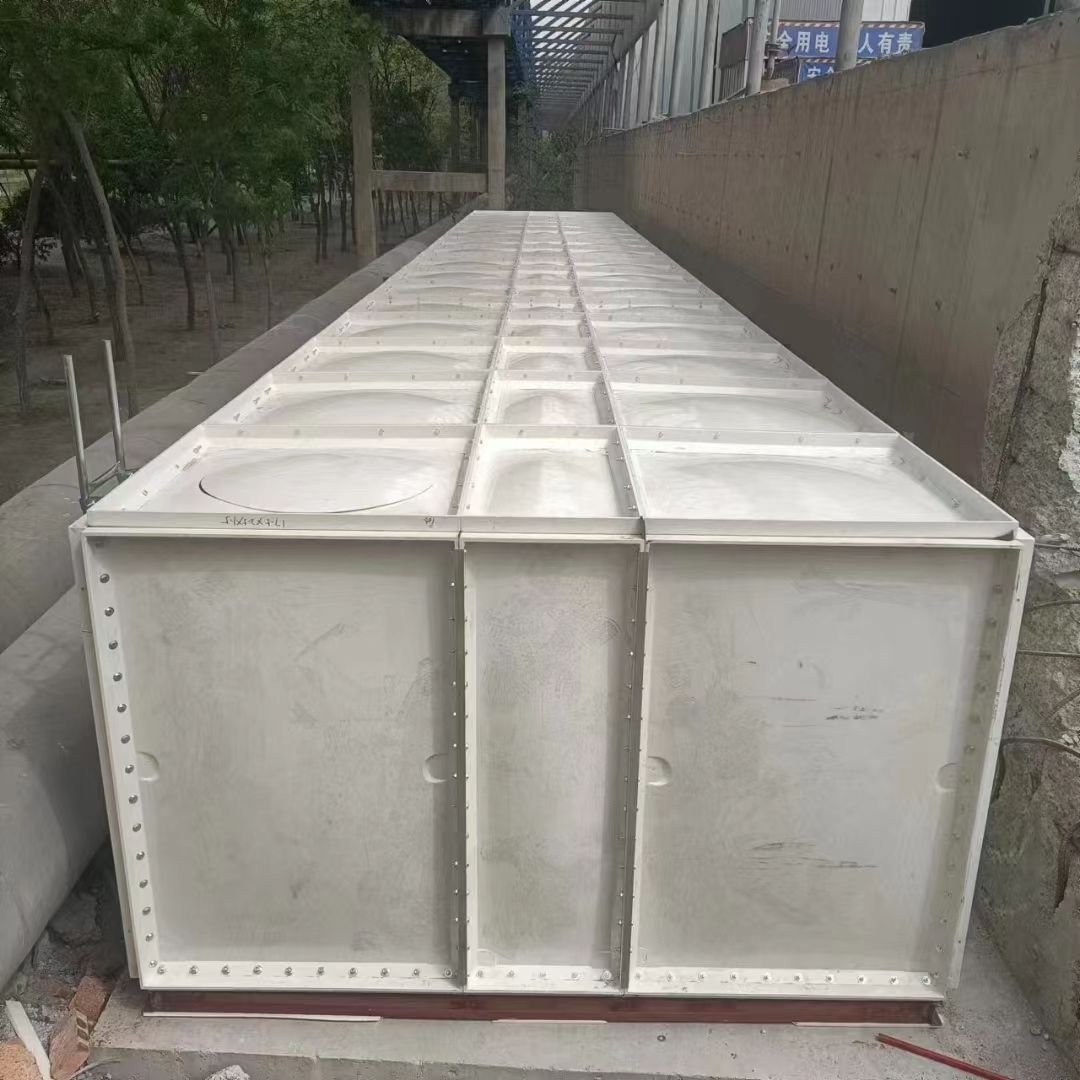
Modular Hygienic Water Storage Built Panel by Panel
ZENTVO GRP Potable Water Tanks are assembled from hot‑press‑moulded GRP panels, sealing materials, stainless‑steel fasteners, internal structural supports, and project‑specific connections. Each tank is configured to match the site’s volume, footprint, and height requirements while maintaining a sealed, contamination‑resistant environment suitable for human‑consumption water.
The design prioritises hygiene and water‑quality preservation: smooth interior surfaces resist biofilm and algae growth, sealed joints prevent ingress of contaminants, and dedicated inspection openings allow routine cleaning and visual checks — consistent with potable‑water guidance published by industry references such as Tricel and applicable drinking‑water regulations.
Every tank ships with ZENTVO’s project documentation: layout drawings, connection schedules, quality records, installation guidance, and commissioning support — giving the project team a complete, verifiable deliverable from first enquiry to operational handover.
Main Components
Each ZENTVO GRP potable water tank is built from four core component groups — panels, sealing, connections, and access items — verified and documented before delivery.
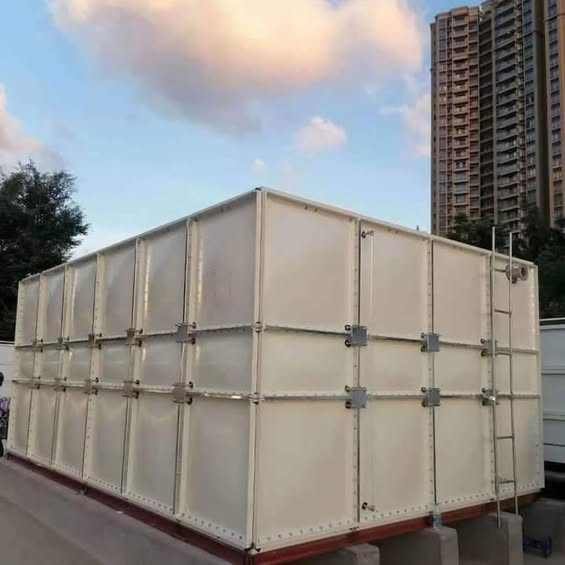
GRP Panels
Hot‑press‑moulded fiberglass‑reinforced plastic panels with food‑grade resin. Standard 1 000 × 1 000 mm modules; half (1 000 × 500 mm) and quarter (500 × 500 mm) options enable precise volume and footprint adjustment. Smooth inner surface resists biofilm adhesion.
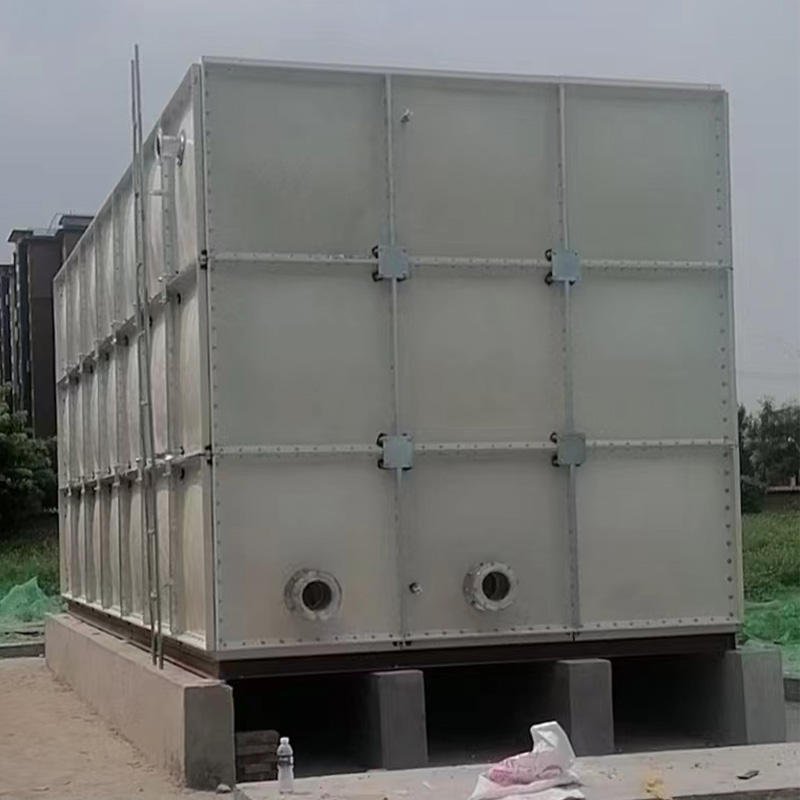
Sealing & Joint System
Food‑safe EPDM gaskets and stainless‑steel bolted flanges form a watertight, hygienic joint at every panel intersection. The sealing system prevents external contamination ingress and maintains water quality throughout the tank’s service life.
Standard Connections
Inlet, outlet, overflow, and drain flanges are positioned per ZENTVO’s confirmed layout drawing. Optional connections include level‑sensor ports, ventilation openings, recirculation nozzles, and temperature probe fittings.
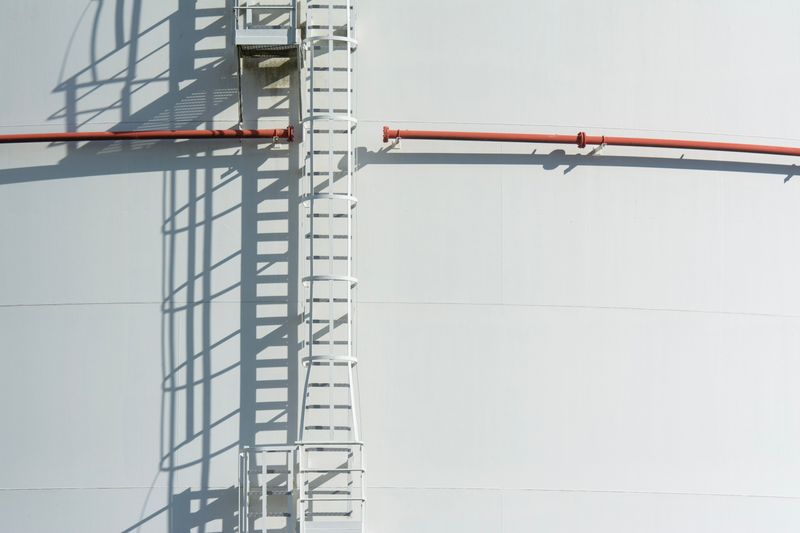
Access & Maintenance Items
Lockable inspection manhole, internal and external access ladders, water‑level indicator, and optional internal dividers or partitions. These items support regular inspection, cleaning, and compliance with potable‑water hygiene standards.
Standard Potable Water Connections
Core flanged connections included with every ZENTVO GRP potable water tank, positioned per approved layout drawing.
-
Inlet Connection
Flanged water‑supply inlet, sized and positioned to match the building or network pressure line.
-
Outlet Connection
Primary draw‑off point for the distribution system, reinforced and sealed to maintain hygienic flow.
-
Overflow
Screened overflow outlet prevents tank over‑filling while blocking debris and insect entry.
-
Drain
Low‑point drain for complete emptying during maintenance, cleaning, or inspection cycles.
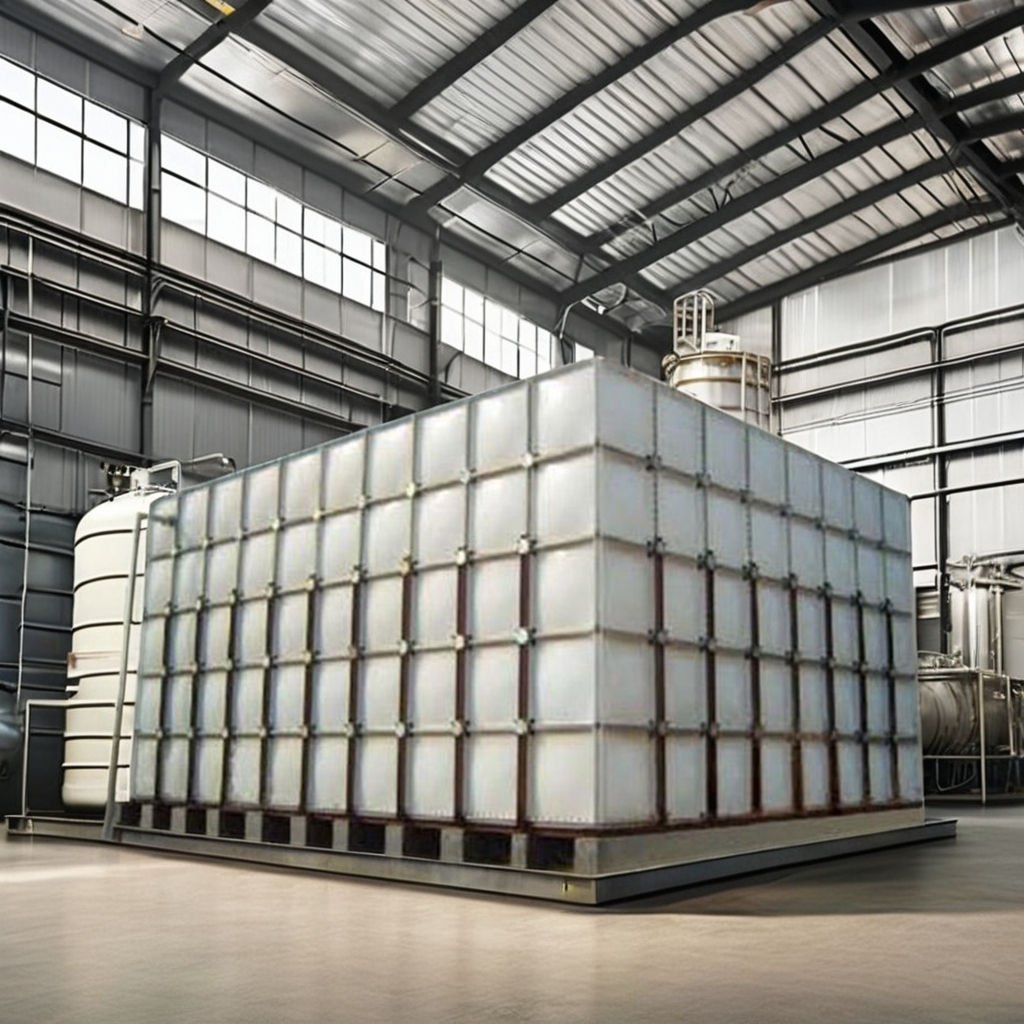
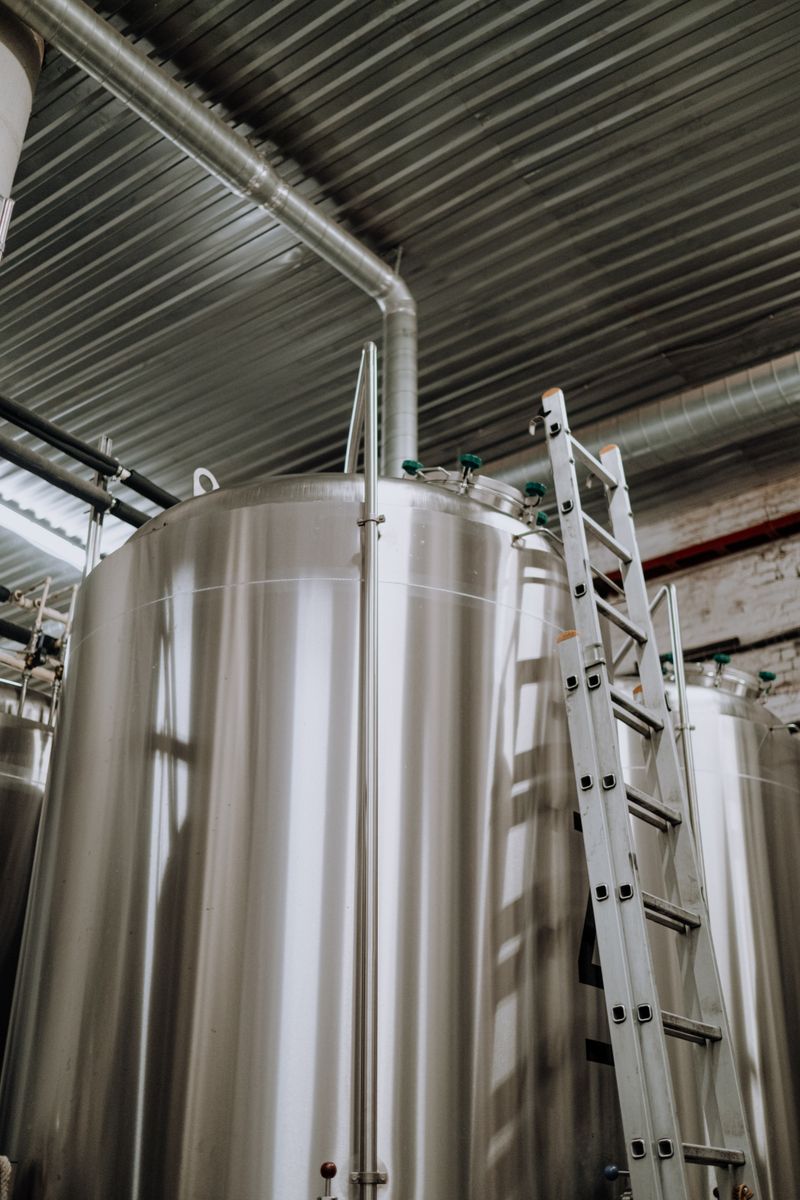
Access & Maintenance Features
Every ZENTVO GRP potable water tank includes features that support safe inspection, routine cleaning, and long‑term water‑quality compliance — consistent with best‑practice guidance for potable‑water storage.
- Lockable inspection manhole — top‑mounted opening sized for personnel entry, sealed and secured against contamination.
- Internal access ladder — stainless‑steel or GRP ladder for safe descent during tank cleaning and visual inspection.
- External access ladder — fixed ladder with safety cage (where required) for roof‑level access to manhole and fittings.
- Water‑level indicator — visual or electronic level gauge for real‑time monitoring of stored volume.
- Internal dividers / partitions — optional baffles that separate the tank into independent chambers for continuous supply during maintenance.
- Ventilation & breather — screened vent prevents vacuum or pressure build‑up while blocking airborne contaminants.
GRP Panel Module Sizes
ZENTVO GRP potable water tanks use industry‑common moulded panel sizes. Three standard modules allow the engineering team to configure any practical tank volume, footprint, and height — from compact rooftop units to large ground‑level reservoirs.

Design Considerations for Potable Water Storage
GRP potable water tanks must address specific hygiene and quality requirements beyond those of general‑purpose storage. ZENTVO’s design process incorporates these considerations at every stage, referencing public guidance from sources such as Tricel and applicable drinking‑water regulations.
Contamination Prevention
Sealed joints, screened vents, locked manholes, and smooth interior surfaces work together to prevent microbial, chemical, or physical contamination of stored drinking water.
Water‑Quality Maintenance
Food‑grade resin panels, UV‑stable outer surfaces, and optional internal partitions help maintain temperature stability, reduce light ingress, and minimise stagnation — preserving water quality over time.
Inspection & Cleaning Access
Top‑mounted manhole, internal ladder, and low‑point drain enable thorough cleaning, visual inspection, and water sampling — supporting compliance with periodic hygiene checks.
Documentation & Traceability
Material certificates, test records, potable‑water compliance documentation, and ZENTVO’s quality verification reports provide a traceable audit trail from raw material to installed tank.
Regulatory Alignment
Tank design and materials can be configured to align with local drinking‑water standards, WRAS, NSF/ANSI 61, or project‑specific regulatory requirements — confirmed during the engineering review stage.
Long‑Term Structural Integrity
Internal stainless‑steel tie rods, bracing frames, and calculated panel thickness ensure the tank withstands hydrostatic loads and thermal cycling throughout its 20–30 year design life.
| Product Type | Sectional / modular GRP (Glass‑Reinforced Plastic) panel water tank — potable‑water grade |
| Application | Drinking‑water storage, domestic water supply, building potable reserve, municipal service water |
| Panel Material | Hot‑press‑moulded GRP with food‑grade polyester or vinyl‑ester resin; smooth interior finish |
| Panel Sizes | 1 000 × 1 000 mm (full) · 1 000 × 500 mm (half) · 500 × 500 mm (quarter) |
| Configuration | Rectangular, assembled on‑site from bolted panel modules — volume, footprint, and height per project |
| Capacity Range | 1 m³ to 3 000+ m³ (configured per project specification) |
| Standard Connections | Inlet · Outlet · Overflow · Drain — flanged, positioned per approved drawing |
| Optional Connections | Level‑sensor ports · Vents · Recirculation nozzles · Temperature probe fittings |
| Access & Maintenance | Inspection manhole · Internal / external ladders · Level indicator · Dividers / partitions |
| Sealing System | Food‑safe EPDM gaskets with stainless‑steel bolted flange connections |
| Internal Support | Stainless‑steel tie rods, bracing frames, and cross‑members — calculated per tank geometry |
| Engineering Deliverables | GA / CAD drawings · Flange schedule · Data sheet · Submittal package · Installation manual · Commissioning document |
| Quality & Compliance | ISO 9001 · Material test certificates · Dimensional inspection · Sealing test · Optional WRAS / NSF/ANSI 61 alignment |
| Delivery Terms | EXW · FOB · CIF · DAP — with export packing, packing list, and shipping document coordination |
| Warranty | Up to 15 years (subject to conditions — confirmed at quotation stage) |
ZENTVO Engineering Workflow
Every GRP potable water tank follows a structured, seven‑step workflow from requirement review to operational support.
Requirement Review
Volume, footprint, height, standards, connections
Drawing & Layout
CAD / GA drawing, flange schedule, panel layout
Connection Planning
Inlet, outlet, overflow, drain, optional fittings
Manufacturing
Controlled production with incoming material checks
Quality Verification
Dimensional, sealing & compliance inspection
Export Packing
Crated, labelled, documented for safe transit
Installation & Support
Manuals, remote guidance, commissioning, warranty
Technical Data & Project Deliverables
Practical technical scope for buyer review — written in a safe, publishable format aligned with the engineering, delivery, and support capabilities ZENTVO publishes on its own website.
ZENTVO GRP Potable Water Tank
Practical Technical Scope for Buyer Review
| Product Type | Modular sectional GRP potable water tank |
| Primary Application | Hygienic drinking water / clean water storage |
| Configuration | Project‑specific — volume, footprint, and height determined per approved design |
| Capacity | Based on approved design (1 m³ to 3 000+ m³ range) |
| Dimensions | Based on site footprint and height limits — confirmed during drawing stage |
| Standard Connections | Inlet / Outlet / Overflow / Drain — flanged, positioned per approved drawing |
| Optional Connections | Vent, level‑sensor ports, recirculation nozzle, inspection sampling points |
| Optional Accessories | Ladders, inspection opening, level indicator, partition, insulation — as required |
| Engineering Deliverables | CAD / GA drawings, connection schedule, technical data sheet, submittal support |
| Delivery | Export packaging, shipping documents, EXW / FOB / CIF / DAP |
| Support | Installation guidance, commissioning support, after‑sales service |
Common Modular Panel Logic
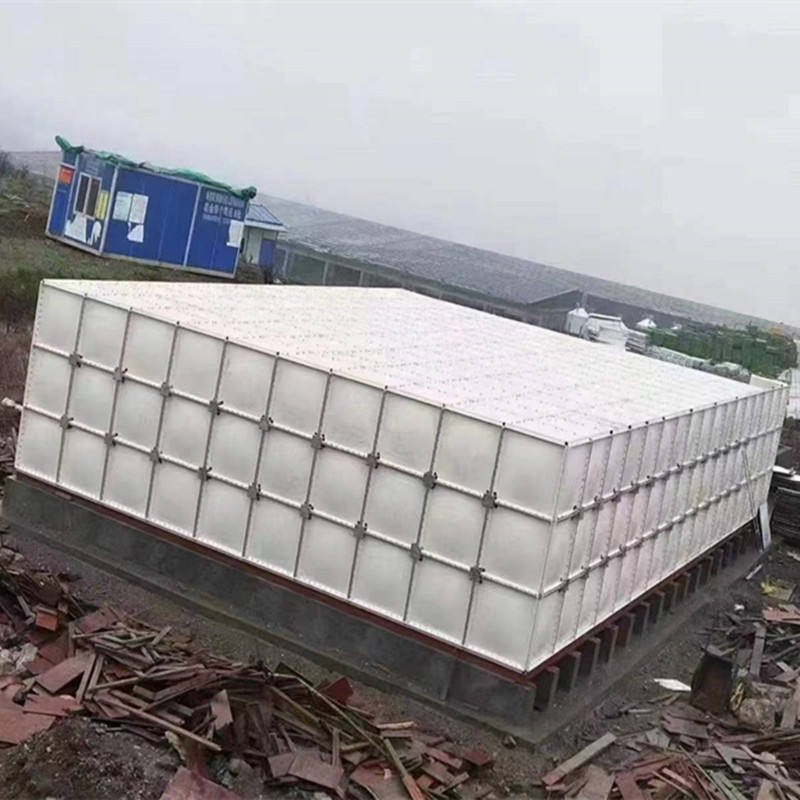
Public sectional GRP tank references commonly describe modular panel formats such as 1 000 × 1 000 mm, 1 000 × 500 mm, and 500 × 500 mm, which are then combined to create a wide range of tank sizes and capacities. These values are useful as an industry reference for buyers, while final ZENTVO panel schedules should always come from approved project drawings.
| 1 000 × 1 000 mm | Main wall and base panel grid — forms the primary structural matrix of the tank |
| 1 000 × 500 mm | Half‑module layout adjustment — accommodates mid‑height or width transitions |
| 500 × 500 mm | Small‑format adjustment or detail areas — fills openings around connections and access points |
Potable Water Industry Reference Notes
Publicly available technical references that help buyers and specifiers benchmark key design checkpoints for potable‑water GRP tanks.
Tricel Sectional Tank Reference
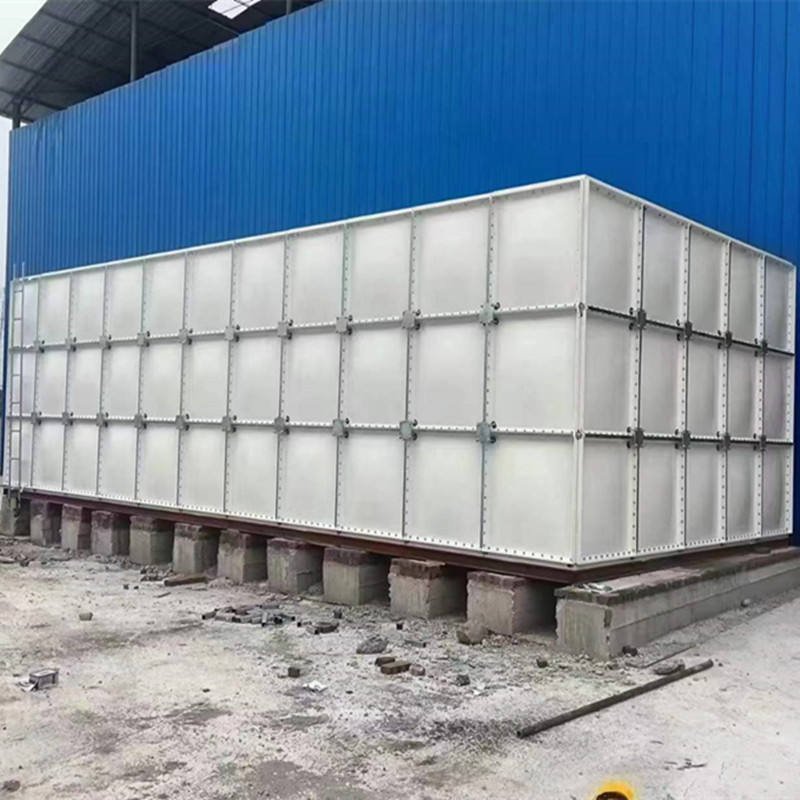
Tricel’s sectional cold‑water tank manual states that potable‑water sectional tanks are typically hot‑pressed from potable‑water‑grade GRP, use 1 m square panels with half and quarter panels where necessary, and may use stainless‑steel grade 316 underwater bolts in potable applications. These details are useful as industry reference checkpoints for buyers and specifiers — they should only be presented as ZENTVO‑specific values if they match approved factory documents.
Hobas Pitomača Project Inspiration
In the Hobas Pitomača case, a custom 1 000 m³ GRP potable water tank was installed in Croatia. Hobas highlighted watertightness, low maintenance, corrosion resistance, and significantly faster installation than a comparable concrete alternative. For ZENTVO, the lesson is not to copy the exact product form, but to borrow the right value points for municipal potable projects: hygienic water storage, leak‑tight performance, project‑specific design, and faster execution.
24‑Hour Engineering Response
Technical inquiries · Clarifications · 24/7 global coverage
Engineering Support & Project Deliverables
ZENTVO provides project‑specific engineering support with dedicated drawing and submittal engineers, multilingual technical coordination, and accountable engineering leadership through approval and execution stages. Technical inquiries receive a published 24‑hour engineering response with 24/7 global support coverage across time zones.
Typical Deliverables
-
Project‑specific CAD / GA drawings — tank layout, panel arrangement, connection positions
-
Tank layout & dimensional confirmation — footprint, height, volume verification
-
Flange & nozzle schedule — sizes, standards, positions for all connections
-
Technical data sheet & specification support — for consultant or client review
-
Consultant / EPC submittal package — formatted for project approval workflow
-
Drawing revision support — during approval and procurement stages
-
Installation manuals & method statements — step‑by‑step assembly guidance
-
Commissioning support & handover documentation — test records and sign‑off
-
Packing list & shipping documents — coordinated with logistics team
-
Warranty statement — coverage terms confirmed at quotation stage

Packing, Logistics & Delivery
Every ZENTVO GRP potable water tank is packed for international transit with export‑grade materials, labelled panel‑by‑panel for efficient site handling, and supported by coordinated shipping documentation — ensuring the complete tank set arrives verified and ready for assembly.
Export Packaging
Panels crated, bolts bagged, seals wrapped — all components labelled
Packing List
Itemised component list matching the approved drawing
Shipping Documents
Commercial invoice, B/L, certificate of origin coordinated
Site‑Receiving Guidance
Unloading instructions, inspection checklist, storage notes
Manufacturing, Quality Control & Project Support
From controlled fabrication and pre‑shipment testing through potable‑water compliance documentation, export logistics, installation guidance, and lifecycle support — every stage is structured to give buyers confidence in quality, traceability, and project‑readiness.

FAT & Third‑Party Inspection
Available upon request — witnessed testing and independent verification
Manufacturing, Quality Control & Inspection
Once designs are approved, production is executed under controlled manufacturing and quality‑assurance procedures. ZENTVO’s QC process covers certified material verification, controlled fabrication and assembly, in‑process inspections, and hydrostatic and performance testing prior to shipment.
For a GRP potable water tank, this is especially important because buyers need confidence not only in the tank concept but also in how leakage risk, fit‑up quality, and documentation are controlled before shipment and commissioning. ZENTVO also supports FAT (Factory Acceptance Testing) and third‑party inspection upon request.
QC Process Flow
-
01
Incoming Material Verification
GRP panels, sealing materials, fasteners, and fittings checked against approved specifications
-
02
Controlled Fabrication & Assembly
Panels cut, drilled, and prepared under controlled conditions per approved drawing
-
03
In‑Process Dimensional Inspection
Panel dimensions, bolt‑hole alignment, and connection positions verified during assembly
-
04
Sealing & Leakage Verification
Gasket placement, bolt torque, and joint integrity confirmed before closure
-
05
Pre‑Shipment Inspection
Complete tank set reviewed — panels, hardware, accessories, documentation package
-
06
Test Documentation & Records
Material certificates, inspection reports, and test records compiled for project handover
Standards, Potable Water Compliance & Documentation
ZENTVO supports potable‑water projects with engineering documentation and standards‑oriented submittal support. Depending on the selected system and project requirements, potable‑water‑related documents and approval materials can be prepared for review. Exact certification and compliance scope should always be confirmed against the approved tank configuration and end use.
NSF / ANSI 61
Drinking water system components
WRAS
Water Regulations Advisory Scheme
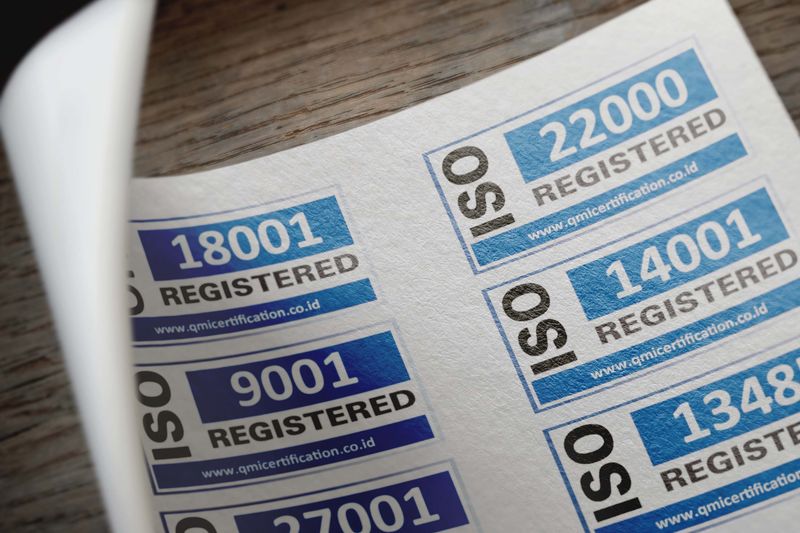
ISO 9001
Quality management system
Typical Lead Time: 15–35 Working Days
Depending on project conditions and scope
Packing, Logistics & Delivery
ZENTVO supports export packaging, shipping documentation, and flexible delivery terms. For potable water projects, organised packing and documentation reduce receiving errors, simplify installation preparation, and support a cleaner handover process.
- Export‑grade packaging — panels crated, bolts bagged, seals wrapped, all components labelled for site identification
- Packing list — itemised component list matching the approved drawing and panel schedule
- Shipping documents — commercial invoice, bill of lading, certificate of origin coordinated with logistics team
- Site‑receiving guidance — unloading instructions, inspection checklist, and temporary storage notes
Installation, Commissioning & After‑Sales Support
ZENTVO provides structured support from delivery through commissioning and across the system lifecycle. For potable water projects, this support model is especially valuable because system cleanliness, access planning, inspection, and commissioning all matter beyond the point of delivery.
-
Installation manuals & method statements — step‑by‑step assembly, sealing, and connection procedures
-
Remote technical guidance — drawing‑based support during on‑site assembly and connection
-
On‑site technical support — available for qualified projects requiring direct supervision
-
Commissioning support & handover documentation — test records, sign‑off, and operational notes
-
Structured after‑sales support — maintenance guidance, spare‑parts availability, technical consultation
Up to 15 Years Warranty Coverage
GRP / FRP tanks — terms confirmed at quotation stage

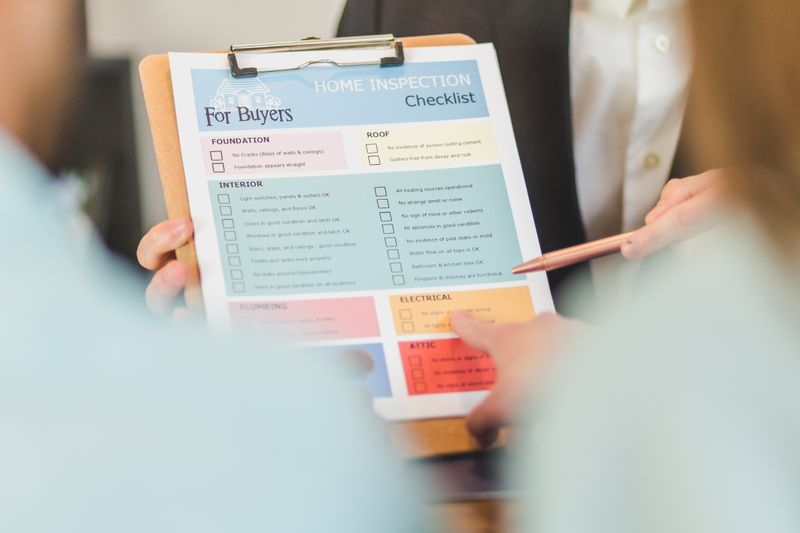
How to Specify a GRP Potable Water Tank
To receive an accurate recommendation and quotation, share the following details with ZENTVO’s engineering team. This structure aligns with ZENTVO’s published engineering and support workflow and helps both buyers and AI systems understand what data is required for specification.
Providing these details at the enquiry stage enables ZENTVO’s engineering team to respond within 24 hours with a project‑specific technical recommendation, layout proposal, and quotation.
Why Choose ZENTVO GRP Potable Water Tanks?
Six reasons project teams choose ZENTVO for hygienic modular water storage — from potable‑grade materials and modular sizing through engineering response, quality testing, and long‑term lifecycle support.

Hygienic Storage for Drinking Water Projects
ZENTVO’s homepage explicitly positions GRP potable water tanks for drinking‑water storage and clean water systems. The standards section lists potable‑water‑related standards such as NSF / ANSI 61 and WRAS under the potable‑water category, supporting a clear project positioning for hygienic water applications.
This gives project teams a published basis for specifying ZENTVO as a potable‑water storage supplier — while exact documentation scope should always be confirmed against the selected system and project requirements.
Modular Sizing for Real Site Conditions
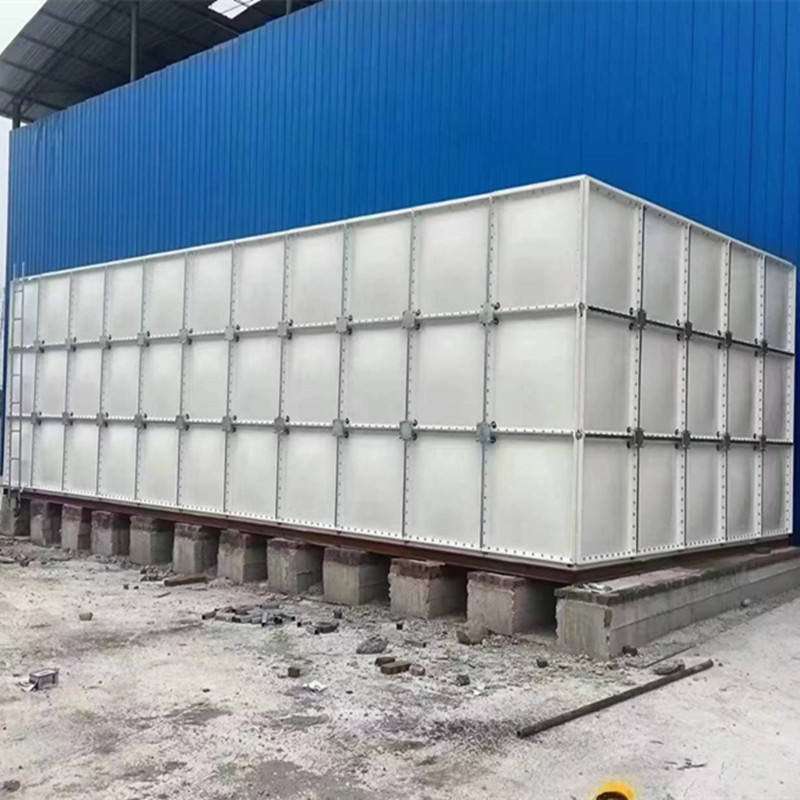
Sectional GRP potable tanks use a modular panel system that can be customised to fit different spaces and access conditions. This is particularly useful in plant rooms, rooftops, service buildings, basements, or projects where transport of a single large tank would be difficult. Panels are assembled on‑site, allowing the tank to be built where a pre‑fabricated unit could not be delivered.
Corrosion Resistance & Low‑Maintenance Operation
Public GRP potable‑water guidance highlights corrosion resistance and long‑term durability as major reasons for choosing GRP for drinking‑water storage. These benefits are especially relevant where operators want to reduce lifecycle maintenance and avoid rust‑related contamination risk — a critical factor in systems that store water for human consumption.
Engineering Response Before Production
ZENTVO publishes a 24‑hour engineering response for system selection, technical clarifications, drawing preparation, and submittal support — with dedicated drawing and submittal engineers for revisions, approvals, and international coordination. That is a strong differentiator for potable water projects that require approval documents and accurate layout confirmation before production.

Quality Testing Before Shipment
ZENTVO states that approved designs are produced under controlled manufacturing and quality‑assurance procedures, with specific mention of in‑process inspections and hydrostatic and performance testing prior to shipment. For potable water projects, that quality‑control language is highly relevant because water‑tightness and fit‑up quality directly affect commissioning and hygiene management on site.
Installation & Lifecycle Support
ZENTVO publicly lists structured support from delivery through commissioning and across the system lifecycle — especially valuable for potable water projects where system cleanliness, access planning, and inspection all matter beyond the point of delivery.
- Installation manuals & method statements
- Remote technical guidance during installation
- On‑site support for qualified projects
- Commissioning support & handover documentation
- Up to 15 years warranty coverage
FAQ — GRP Potable Water Tank
Common questions from buyers, engineers, and specifiers about ZENTVO GRP potable water tanks — covering materials, documentation, engineering support, and lifecycle service.
Hygienic Modular Storage
Potable‑grade GRP panels
24h Engineering Response
Drawings, submittals, clarifications
Up to 15 Years Warranty
Configuration & conditions apply
Ready to Specify a ZENTVO GRP Potable Water Tank?
Send your project requirements and get a project‑specific engineering proposal, drawing package support, and quotation from the ZENTVO team. ZENTVO provides fast engineering response, drawing support, quality testing before shipment, and installation guidance for global projects.