How to Buy FRP Water Tanks from China
The complete guide for international buyers — covering material selection, manufacturer evaluation, technical specifications, export packaging, and RFQ preparation for Middle East & Africa projects.
Start Reading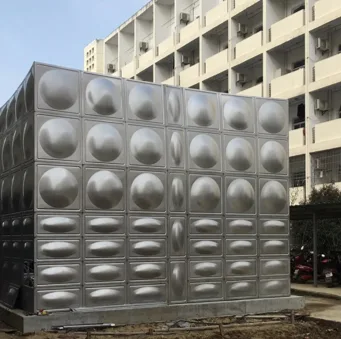
Served
Why Overseas Buyers Source FRP Water Tanks from China
Buying an FRP sectional water tank from China is not only about finding a low price. For buyers in the Middle East, Africa, and other international markets, the real decision is whether the supplier can provide the right tank configuration, export-ready documentation, reliable packaging, and practical installation support for the project.
Factory-Direct Supply & Broader Configuration Options
China is one of the largest manufacturing bases for GRP/FRP sectional water tanks, with a concentration of factories producing SMC-molded panels, stainless steel sectional tanks, and galvanized steel variants under one supply chain. Sourcing directly means access to a wider range of panel types, capacity configurations, and accessory options than what is available through regional distributors.
Manufacturers that focus on sectional tank production typically offer standard and custom dimensions, support potable water and fire reserve configurations, and can adjust panel thickness and reinforcement structure based on project-specific requirements. This flexibility matters when the buyer needs tanks for different applications across a single project — for example, a potable water tank for a commercial building and a fire reserve tank for the same compound.
Why Sectional Tanks Are Attractive for Export
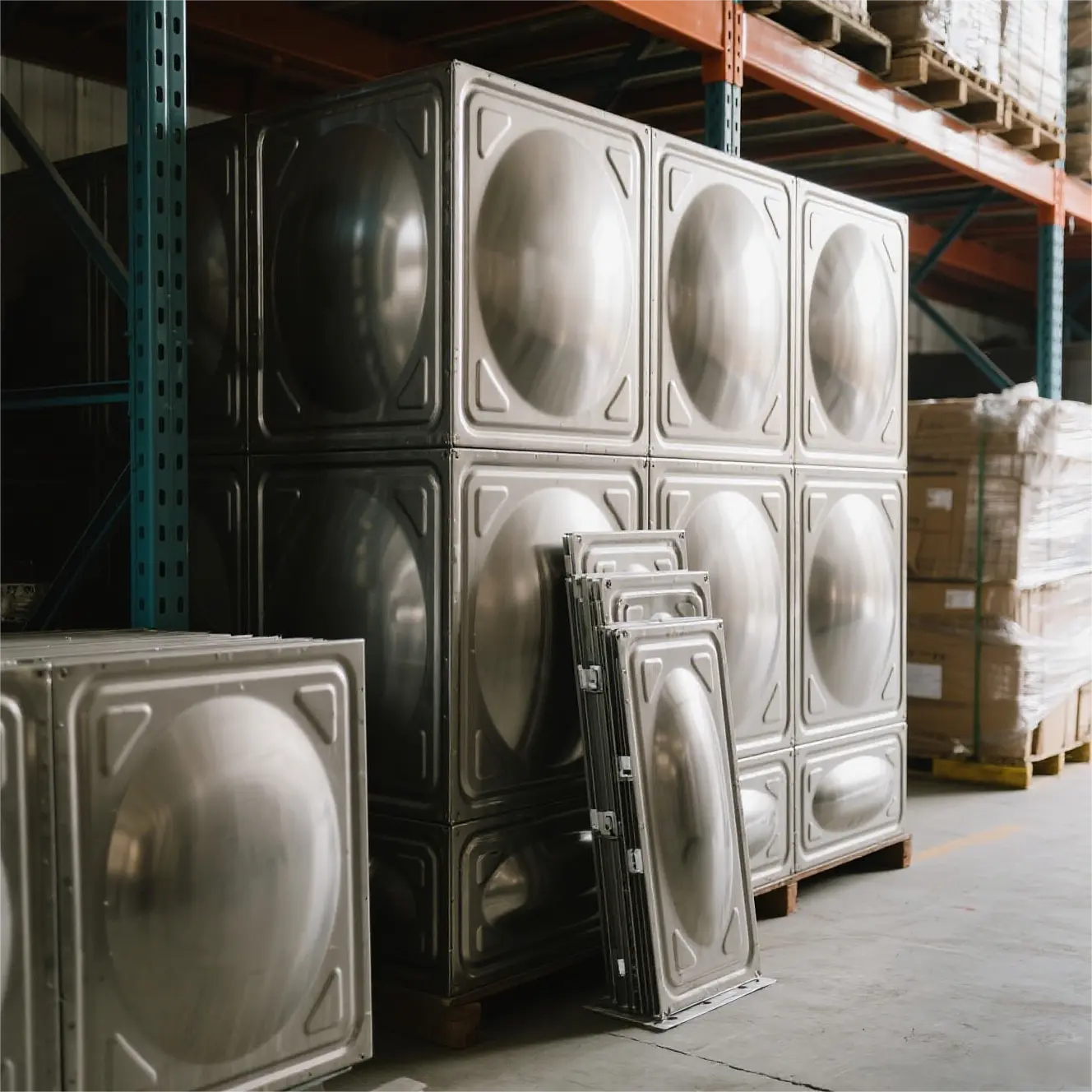
Sectional water tanks are assembled on-site from individual panels, fasteners, seals, and internal support frames. Unlike large welded tanks, sectional panels can be flat-packed to maximize container loading efficiency. A single 40-foot container can carry panels for a much larger total storage volume than would be possible with pre-assembled tanks.
Cost control advantage: Shipping a welded tank often means paying for air space. Shipping sectional panels means paying for actual product. For remote sites with restricted crane access, modular panels can be carried in by smaller vehicles and assembled manually or with light equipment.
Why This Matters for Middle East & Africa Projects
Water storage demand in the Middle East and Africa is driven by rapid construction, municipal infrastructure expansion, and the need for reliable backup water supply in commercial and industrial facilities. Large-capacity tanks are frequently required, and many projects are located in areas with extreme heat, high humidity, or coastal salt exposure.
FRP sectional tanks offer corrosion resistance that makes them well-suited to these conditions. Their modular format means contractors can install large-capacity systems on tight sites without relying on heavy lifting equipment. For buyers managing multiple projects across different regions, sourcing from a single China-based manufacturer can simplify procurement and reduce per-project sourcing effort.
What Is an FRP / GRP Sectional Water Tank?
Basic Definition
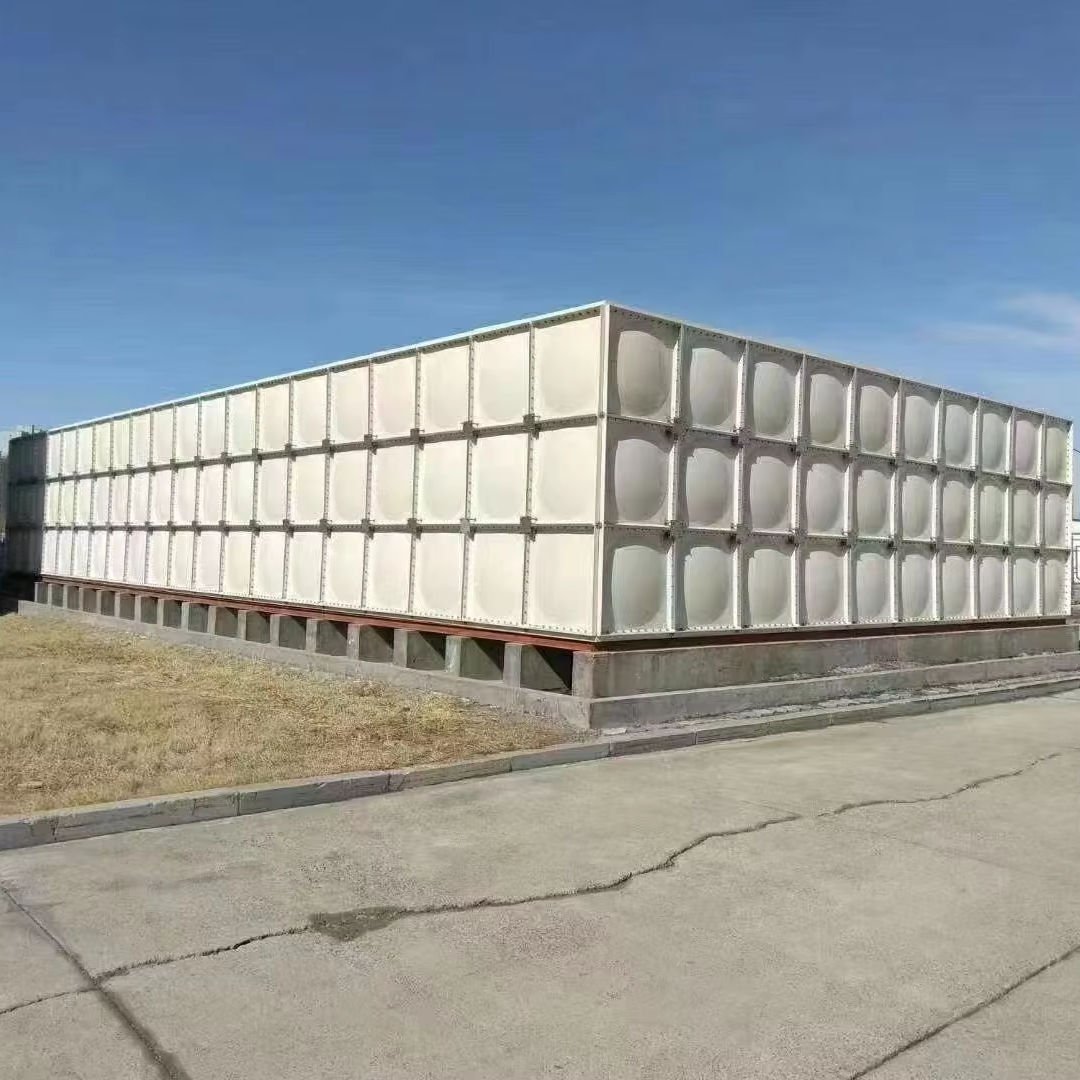
FRP stands for fiberglass-reinforced plastic. GRP — glass-reinforced plastic — refers to the same family of composite materials. In the water tank industry, these terms are used interchangeably. An FRP sectional water tank is a modular water storage system assembled from individual panels made through SMC (sheet molding compound) hot-press molding.
These tanks are used across municipal water supply, commercial building water storage, firefighting water reserve, and industrial utility water applications. The panel-based design allows the tank to be built in a wide range of sizes and capacities, from a few cubic meters up to several hundred cubic meters or more per unit.

How Sectional Construction Works
Each tank is assembled from bottom panels, side panels, top panels, internal bracing or tie rods, sealing gaskets, and stainless steel or galvanized steel fasteners. The panels are bolted together on-site, and joints are sealed with food-grade EPDM or similar gasket material.
Internal cross-bracing or support columns distribute hydrostatic load and maintain structural integrity. The tank’s final dimensions and capacity are determined by the number and layout of panels used. This means a 10-cubic-meter tank and a 200-cubic-meter tank can use the same panel type — only the panel count and structural support design differ.
This modular logic also means that if a project’s water storage needs grow, additional panels can extend the tank without replacing the existing structure entirely.
Typical Applications
FRP sectional tanks are commonly specified for potable water storage in residential and commercial buildings, firefighting water reserves in compliance with local fire codes, cooling water and process water storage in industrial facilities, and municipal water supply buffer storage. They are also used in schools, hospitals, hotels, and agricultural facilities where a reliable, low-maintenance water storage solution is needed.
When FRP Is the Right Choice — and When It Is Not
FRP Is Often a Strong Choice When
Corrosion resistance is a high priority. FRP does not rust, and it resists degradation from most water conditions encountered in municipal and commercial applications. This makes it particularly suitable for coastal environments, humid climates, and regions where steel tanks have historically suffered from premature corrosion.
Modular transport and on-site assembly are needed. If the project site has limited crane access, tight assembly space, or is located far from the nearest port, FRP sectional panels are easier to transport and handle than large welded structures.
The project wants a lower-maintenance option compared to some steel alternatives. FRP panels do not require repainting or re-coating under normal operating conditions, which reduces long-term maintenance costs.
FRP / GRP
Corrosion-resistant, lightweight, and modular. Ideal for coastal, humid environments with minimal maintenance.
Stainless Steel
Superior hygiene profile. Preferred for potable water, hospitals, and food & beverage facilities.
Galvanized Steel
Most budget-friendly for large capacity. Best for mild environments with non-potable water.
When Stainless Steel May Be a Better Fit
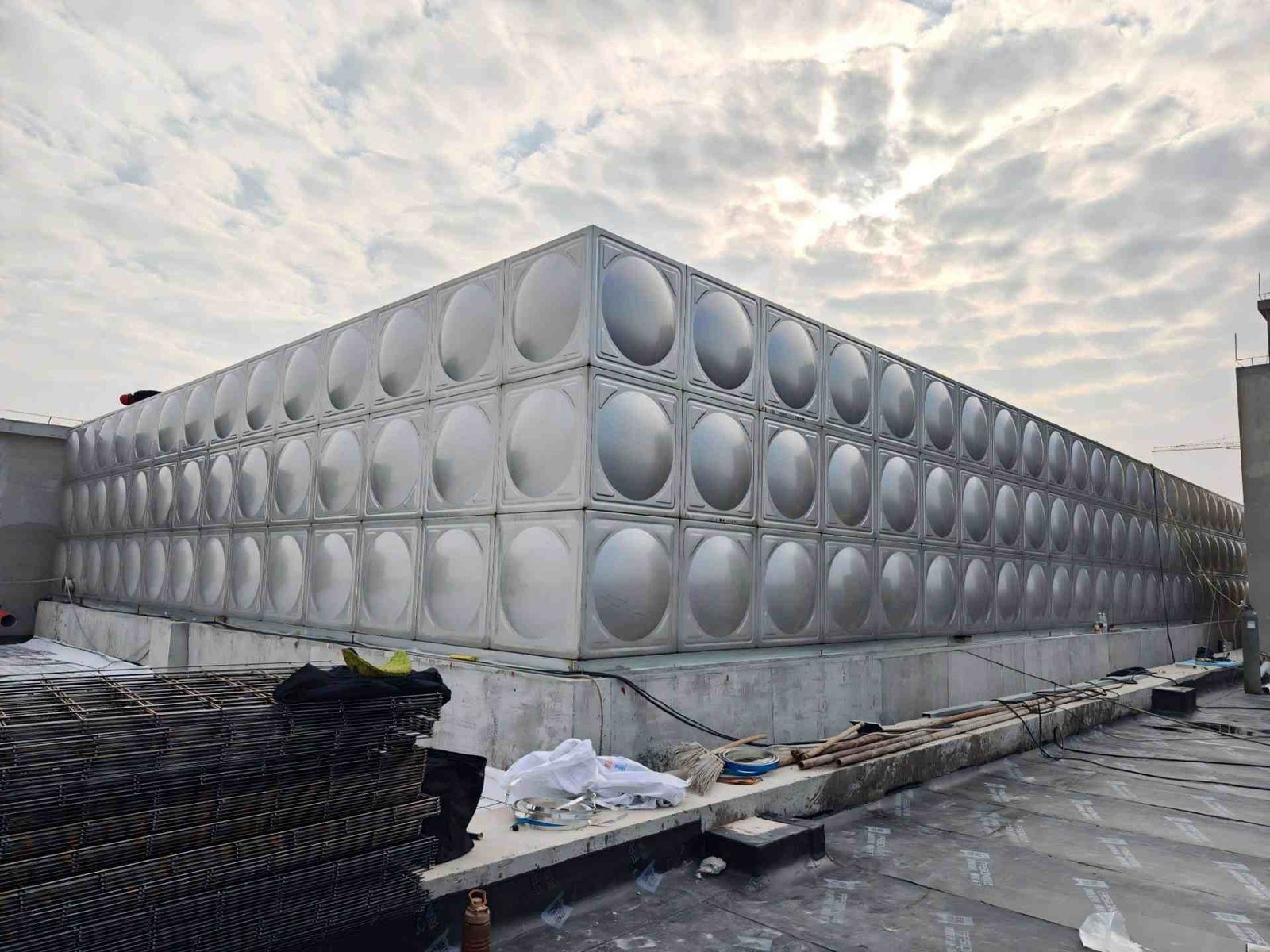
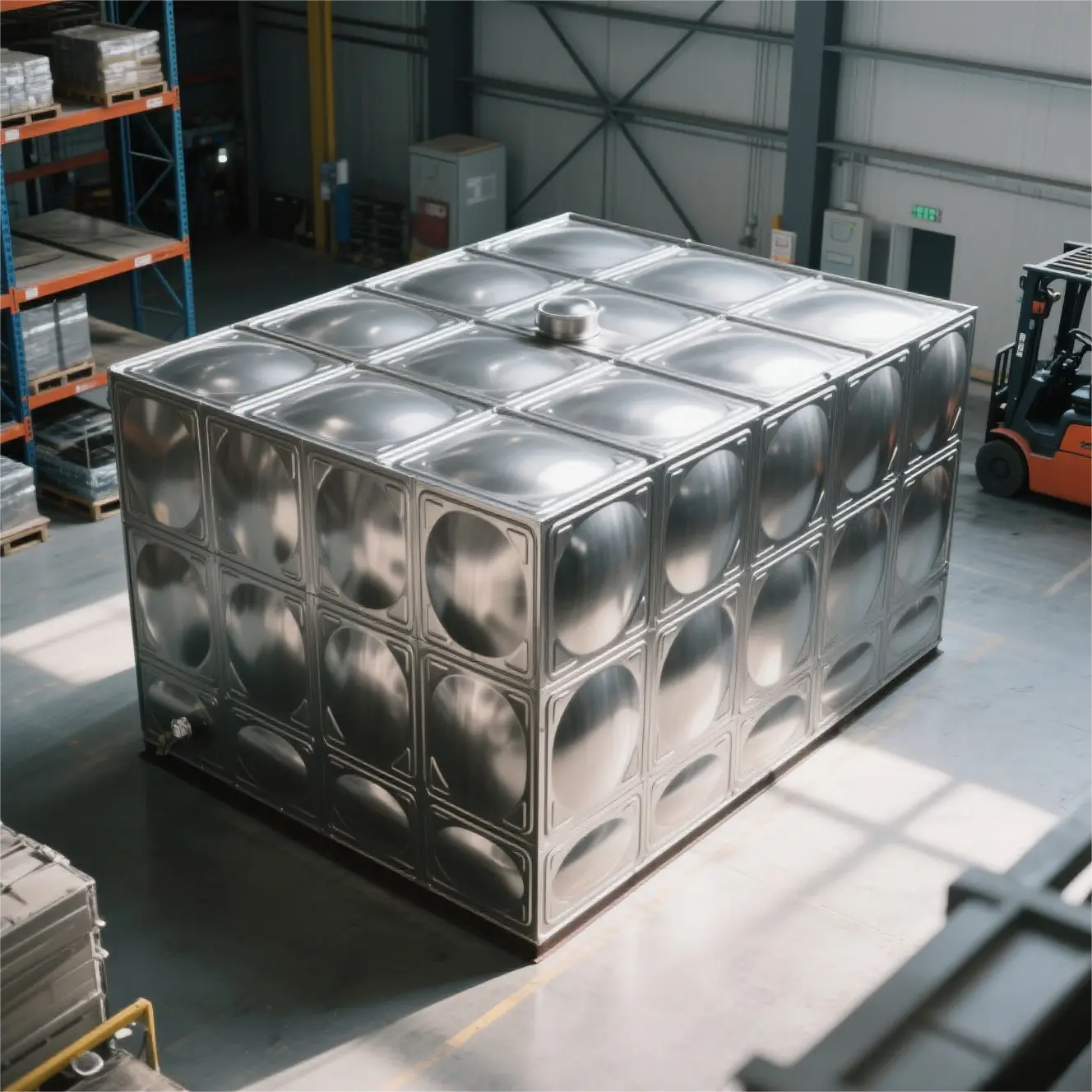
Stainless steel sectional water tanks — particularly those using 304 or 316 grade steel — are often preferred when higher hygiene expectations apply. For projects involving treated potable water, hospital water systems, or food and beverage facilities, some specifying engineers and local codes favor stainless steel because of its established hygiene profile and material traceability.
Stainless steel also carries a premium positioning in some markets. Buyers who need to demonstrate material quality to end clients or regulatory authorities may find stainless steel easier to justify in project documentation.
When Galvanized Steel May Be Considered
Hot-dip galvanized water tanks are generally the most budget-friendly option for large-capacity storage. For projects where the stored water is non-potable, where operating conditions are mild, or where initial cost is the dominant selection factor, galvanized steel remains a common choice.
However, galvanized coatings degrade over time, especially in aggressive climates. Buyers should evaluate the expected service environment carefully before choosing galvanized steel over FRP or stainless steel.
FRP vs Stainless Steel vs Galvanized Water Tanks
FRP vs Stainless Steel
FRP offers strong corrosion resistance at a lower material cost. It is lightweight, which benefits both shipping and installation. For many commercial and municipal water storage applications, FRP provides a practical balance between performance and cost.
Stainless steel offers superior hygiene positioning, higher mechanical strength, and a longer track record in high-specification potable water systems. It is heavier and more expensive per panel, and welding or bolted assembly requires more precision.
FRP vs Galvanized Steel
Galvanized steel panels are typically less expensive than FRP on a per-panel basis, making them attractive for large-volume, cost-sensitive projects. However, galvanized steel is more susceptible to corrosion in humid, coastal, or chemically aggressive environments.
FRP’s corrosion resistance means it generally has lower lifecycle maintenance costs. It also performs better in environments with high chloride exposure or temperature fluctuations. For projects in the Middle East or coastal Africa, FRP often provides better long-term value despite a higher initial unit cost.
| Attribute | FRP / GRP | Stainless Steel | Galvanized Steel |
|---|---|---|---|
| Corrosion Resistance | Excellent | Excellent | Moderate |
| Weight | Lightweight | Heavy | Medium–Heavy |
| Hygiene Positioning | Good | Premium | Basic |
| Material Cost | Medium | High | Low |
| Maintenance Needs | Low | Low | Periodic |
| Coastal Suitability | Excellent | Excellent (316) | Limited |
| Shipping Efficiency | High (flat-pack) | Moderate (heavier) | Moderate |
| Best For | General commercial, municipal, fire reserve | Potable water, hospitals, food & beverage | Budget-driven, non-potable, mild climate |
How to Make the Final Material Choice
The material decision should be driven by the water type being stored, the application and relevant standards, the climate and corrosion exposure at the project site, local regulatory or approval requirements, the available budget, and the installation conditions. Buyers who are still comparing materials should provide this information to the manufacturer early in the quotation process, so the supplier can recommend the most suitable option rather than simply quoting whatever is requested.
How to Evaluate a China FRP Water Tank Manufacturer
Product Specialization
A manufacturer that primarily produces sectional water tanks is more likely to deliver consistent quality than one that treats tanks as a side product. Ask whether they produce FRP, stainless steel, and galvanized variants. Ask whether they offer insulated tanks, potable water configurations, and fire reserve designs. A broader product range within the sectional tank category suggests deeper engineering capability.
Engineering Support
A reliable manufacturer should be able to provide project-specific CAD drawings, tank layout recommendations based on site dimensions, foundation requirement guidance, and capacity selection support. If a supplier cannot produce a basic tank drawing before order, it raises questions about their technical depth. Engineering engagement at the quotation stage is a useful signal of manufacturing seriousness.
Quality and Certifications
Quality control should be visible and documented. Ask about raw material traceability, panel dimensional consistency, sealing test records, and hydrostatic testing procedures. The most commonly referenced standards include ISO 9001 for manufacturing quality management, BS EN 13280 for GRP tanks used in potable water storage, NSF/ANSI 61 for drinking water system components, and WRAS approval for hygienic certification.
Export Delivery Capability
The packing method must protect panel surfaces and edges during long-distance container transport. Panels should be stacked and secured to prevent shifting, and accessories such as gaskets, fasteners, and internal supports should be packed and labeled separately. Ask for packing photos from previous export orders. Confirm export documentation including packing lists, commercial invoices, and certificates of origin.
After-Sales and Installation Support
A capable manufacturer should provide detailed installation manuals, assembly sequence drawings, bolt torque specifications, and sealing procedures. For international projects, remote installation guidance — including video support or written troubleshooting assistance — can prevent costly errors. Ask whether the manufacturer can supply spare parts or replacement panels if needed.
ZENTVO — Single-Source Sectional Tank Manufacturer
ZENTVO manufactures GRP/FRP sectional tanks, stainless steel tanks in both bolted and welded configurations, galvanized steel tanks, and insulated variants — all within a single engineering and production framework. This allows buyers to source different tank types for different project applications from one supplier, which simplifies procurement logistics and technical coordination.
Technical Details to Confirm Before You Buy
Project Basics
Before requesting a quotation, the buyer should be ready to provide the application type (potable water, fire reserve, commercial supply, industrial process water), the required storage capacity, the project location and climate conditions, and any local code or approval requirements that will affect the tank specification.
Tank Configuration
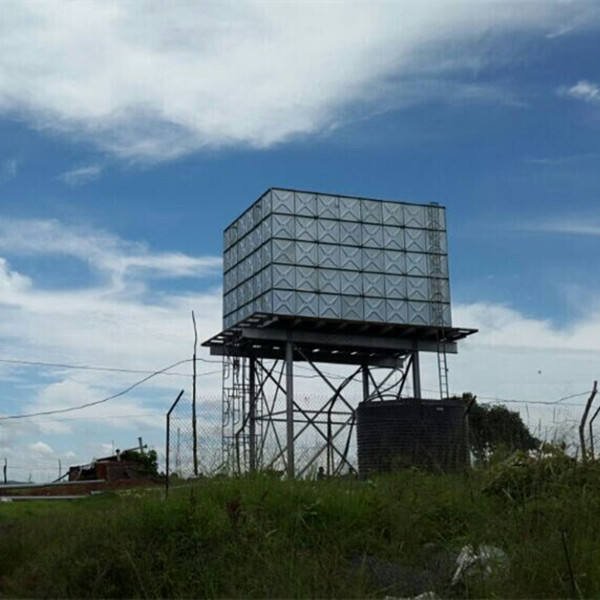
Confirm the preferred panel type, tank dimensions (length, width, height), any height restrictions due to building or site constraints, the internal support structure design, and the base requirement. Some projects require the tank to sit on a concrete foundation; others may use a steel support frame or rooftop installation. This affects the structural design of the tank.
Water Conditions
Specify whether the stored water is potable or non-potable. If the water is treated, chemically dosed, or at elevated temperatures, this affects resin selection, panel specification, and gasket material. Insulation requirements should also be confirmed at this stage, especially for cold climates or hot water storage — in such cases, an insulated GRP water tank may be the appropriate solution.
Site Access and Installation Conditions
The manufacturer needs to understand whether crane access is available, how much assembly space exists around the tank location, whether maintenance access is required on all sides, and whether the installation is at ground level, on a rooftop, or underground. These details affect panel size selection, delivery logistics, and assembly method.
Pro Tip: Providing complete site and project information upfront saves time and ensures the manufacturer’s quotation is specific to your actual needs — not a generic estimate. The more detailed your initial inquiry, the fewer back-and-forth rounds you’ll need.
Export Packaging, Delivery, and On-Site Installation
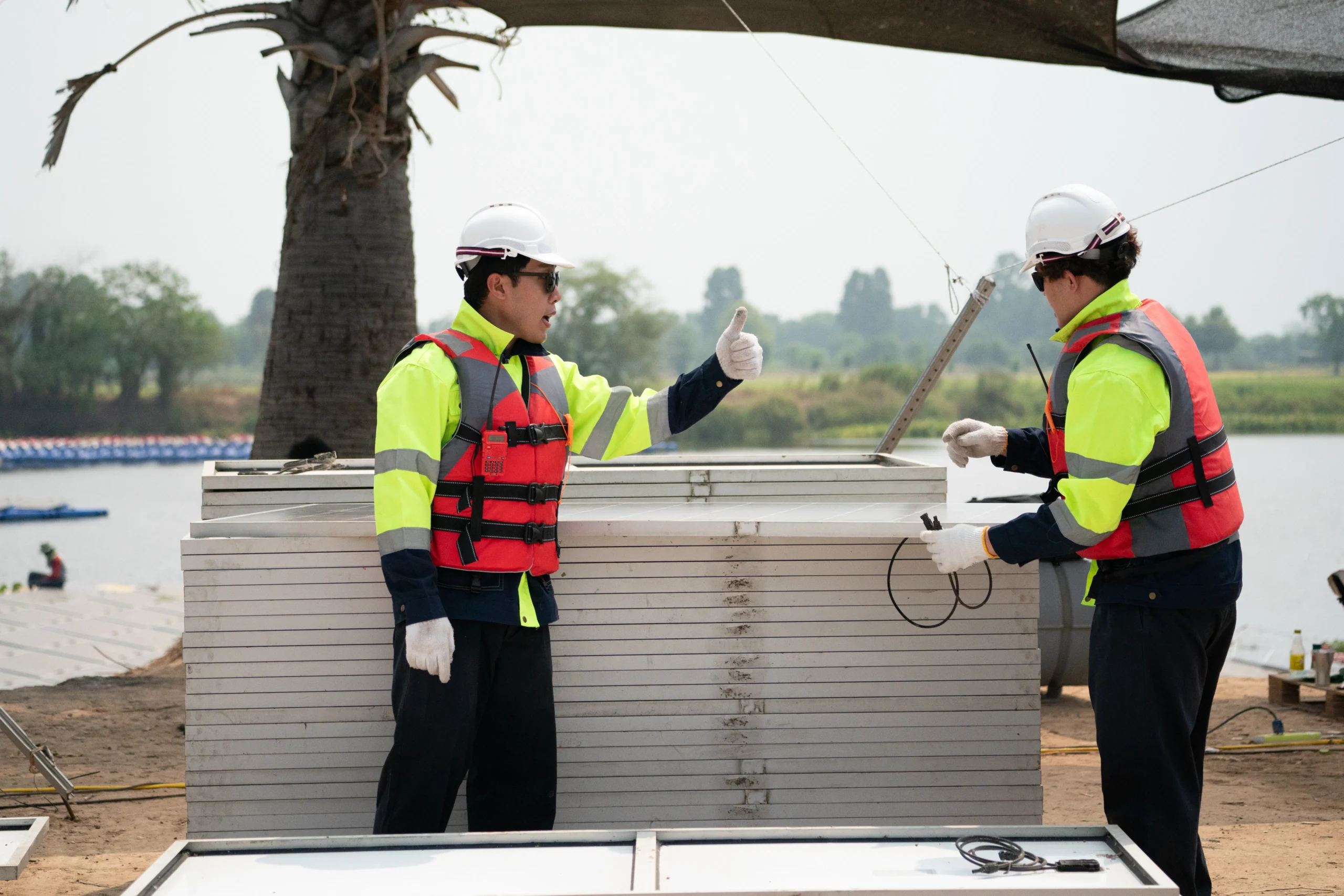
Why Sectional Tanks Are Easier to Export
Because FRP sectional tanks are shipped as flat-packed panels, they offer significantly better container utilization than welded or pre-assembled tanks. This packing efficiency reduces per-cubic-meter shipping costs and makes FRP sectional tanks especially practical for markets far from the manufacturing base.
What Buyers Should Confirm Before Shipment
Before the manufacturer ships, the buyer should verify the packing list against the order confirmation, confirm that all accessories — including gaskets, fasteners, tie rods, and internal supports — are included, ensure that assembly drawings, installation manuals, and any required inspection or test records are provided, and check that panels are labeled and organized in a way that supports efficient on-site assembly.
Critical reminder: Missing a single accessory type can delay installation by weeks if the replacement has to be shipped internationally. This is a preventable problem that should be addressed at the pre-shipment verification stage.
What Should Be Ready Before Installation
On the buyer’s side, the installation site should have a completed concrete base or steel support structure that meets the manufacturer’s specifications. A qualified installation team should be briefed on the assembly procedure. Required site tools — typically including torque wrenches, lifting equipment, and sealant application tools — should be on hand.
After assembly, the tank should undergo a leak test and hydrostatic test before being put into service. The manufacturer should provide the testing procedure, and the buyer should document the results for project handover records.
Why Middle East and Africa Buyers Need a More Careful Sourcing Process

Climate and Corrosion Exposure
Projects in the Gulf region, coastal East Africa, and sub-Saharan Africa face extreme heat, high UV exposure, humidity, and in many cases, salt-laden air. These conditions accelerate corrosion in steel tanks and can degrade seals and coatings that were not designed for such environments.
When sourcing from China, buyers in these regions should verify that the panel material, gasket compound, and surface treatment are rated for the specific climate at the installation site. A tank that performs well in a temperate climate may not hold up in a coastal Middle Eastern environment without the right material specification.
Project Approval and Documentation Requirements
Many projects in the Middle East require specific documentation for municipal or civil defense approval. This may include material test certificates, hygiene compliance documentation, structural calculation reports, and manufacturer qualification records. African markets increasingly require similar documentation, particularly for projects funded by international development agencies.
Buyers should identify their documentation requirements before placing the order, not after. A manufacturer with export experience should be familiar with these requirements and be able to prepare the necessary paperwork as part of the order process.
Logistics and Remote-Site Installation Challenges
Projects in Africa and parts of the Middle East are frequently located far from major ports. Inland transport, site access limitations, and the availability of skilled installation labor can all affect the project timeline.
Sectional tanks reduce some of these challenges because panels can be transported on standard trucks and assembled without heavy cranes. However, the buyer still needs to plan for foundation preparation, local labor coordination, and installation supervision. A manufacturer that provides clear, step-by-step installation guidance reduces the risk of assembly errors in the field.
Why Support and Documentation Matter as Much as Price
The cheapest quotation is not always the lowest-cost outcome. If documentation is incomplete, panels arrive damaged due to poor packing, or the installation team cannot follow the assembly instructions, the resulting delays and rework cost more than the price difference between suppliers.
Buyers in the Middle East and Africa should evaluate manufacturers not only on panel price but also on the quality of technical support, the completeness of documentation, and the reliability of export packing and logistics coordination.
RFQ Checklist: What to Send to a China FRP Water Tank Supplier
To receive an accurate and useful quotation, prepare the following information before contacting the manufacturer.
Your RFQ Preparation Checklist
Include these details when you first contact a manufacturer for the fastest, most accurate quotation.
A complete RFQ leads to a more accurate quotation, fewer back-and-forth exchanges, and a faster path to order confirmation.
ZENTVO’s engineering team can review your project requirements and provide a preliminary material recommendation, tank layout proposal, and export-ready quotation. Providing the details above when you first reach out will help ensure the response is specific to your project rather than generic.
Ready to Start Your FRP Water Tank Project?
Send your project details to ZENTVO’s engineering team. Receive a preliminary material recommendation, tank layout proposal, and export-ready quotation — typically within 24 hours.
Contact ZENTVO’s Engineering Team