
The Complete Guide to FRP Water Tanks: Types, Applications, Specs, Certifications & Buying Tips
A procurement reference for distributors, contractors, EPC, MEP engineers, and buyers—what FRP is, how it compares, tank types, specifications, compliance, and purchasing—especially from China. Not a product brochure.
Start reading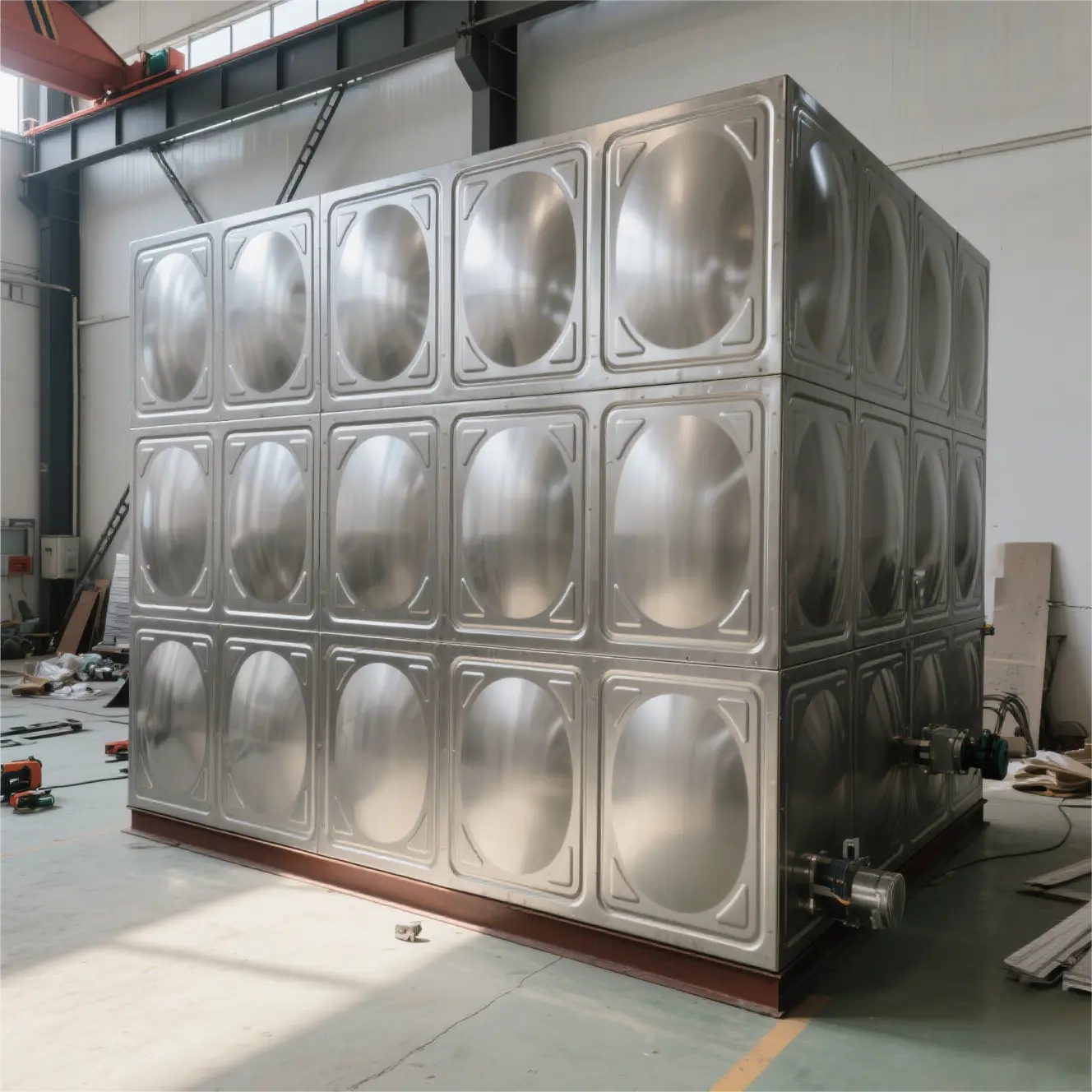

categories compared
What is an FRP water tank?
If you are evaluating FRP water tanks for a building project, municipal system, fire protection installation, or industrial facility, this guide is written for you. It covers what FRP tanks are, how they compare with steel and concrete alternatives, which types exist, what specifications matter, which certifications to verify, and how to approach purchasing—especially when sourcing from China. This is a procurement-oriented reference for distributors, contractors, EPC, MEP engineers, and procurement managers.
FRP, GRP & SMC—what the terms mean
FRP (fiberglass-reinforced plastic) is a broad term for composite materials combining a polymer matrix with glass fiber. GRP (glass-reinforced plastic) is the same family—in practice FRP and GRP are used interchangeably, with GRP more common in British English and many Middle East markets, and FRP in American English and parts of Asia.
SMC (sheet molding compound) describes a manufacturing process—hot-press-molded panels for sectional tanks—not a different “family” from FRP/GRP. When terminology is not standardized, confirm panel material, resin type, and production method with each supplier.
Basic material composition
An FRP water tank panel combines glass fiber reinforcement (tensile strength, rigidity) with a thermoset resin matrix (typically unsaturated polyester or vinyl ester) that binds fibers, resists chemicals, and forms the surface. For potable water, the resin must be food-grade. For industrial or chemical storage, vinyl ester or specialty resins may be required.
What FRP water tanks are used for
They serve potable storage, fire protection reserves, municipal buffer and distribution, industrial process / cooling water, and non-potable or wastewater holding. Tank type, resin, panel thickness, certifications, and accessories differ by application—a hospital potable tank and a factory fire reserve may look similar externally but differ in specification and compliance.
Why FRP water tanks differ from steel, concrete & PE
Corrosion resistance
FRP is inherently corrosion-resistant: it does not rust like steel, and unlike concrete it does not suffer from water absorption or typical chemical attack under normal conditions—suited to humid, coastal, or mildly aggressive environments. FRP vs stainless steel water tank comparison is useful when stainless steel water tanks are the alternative—stainless (304/316) also resists corrosion but at higher cost; galvanized steel relies on zinc with limited life in aggressive climates.
Weight & transport
FRP panels are typically lighter than steel or concrete—important for freight, container loading, and sites with limited lifting. For rooftop or crane-limited work, the weight advantage matters. Concrete needs heavy support and specialized lifting; PE tanks are light but limited in large-capacity structure.
Hygiene & water quality
With food-grade resin and smooth internals, FRP can suit potable storage when materials meet destination-market standards. Stainless steel is the premium choice for hygiene-sensitive projects; concrete may need internal lining. Always align with local regulations.
Maintenance & life-cycle
FRP usually needs less routine maintenance than many steel options; compare purchase price with maintenance, replacement horizon, and installation complexity.
| Factor | FRP / GRP | Stainless (304/316) | Galvanized | Concrete | PE |
|---|---|---|---|---|---|
| Corrosion resistance | High | High (esp. 316) | Moderate | Low–mod. | Moderate |
| Weight | Light | Mod.–heavy | Mod.–heavy | Very heavy | Light |
| Hygiene | OK with food-grade resin | High | Not typical potable | Needs lining | Limited cert. history |
| Maintenance | Low | Low | Periodic recoating | Mod.–high | Low |
| Modular assembly | Yes | Yes | Yes | No (cast in place) | No (one-piece) |
| Typical use | Potable, fire, commercial | Potable, food, high hygiene | Large industrial, budget | Municipal, underground | Small res., ag |
| Relative cost | Moderate | High | Lower | High (structure) | Lower (cap. limited) |
This table is general orientation. Actual fit depends on water type, climate, code, and budget.
Main types of FRP water tanks
Sectional / modular panel tanks
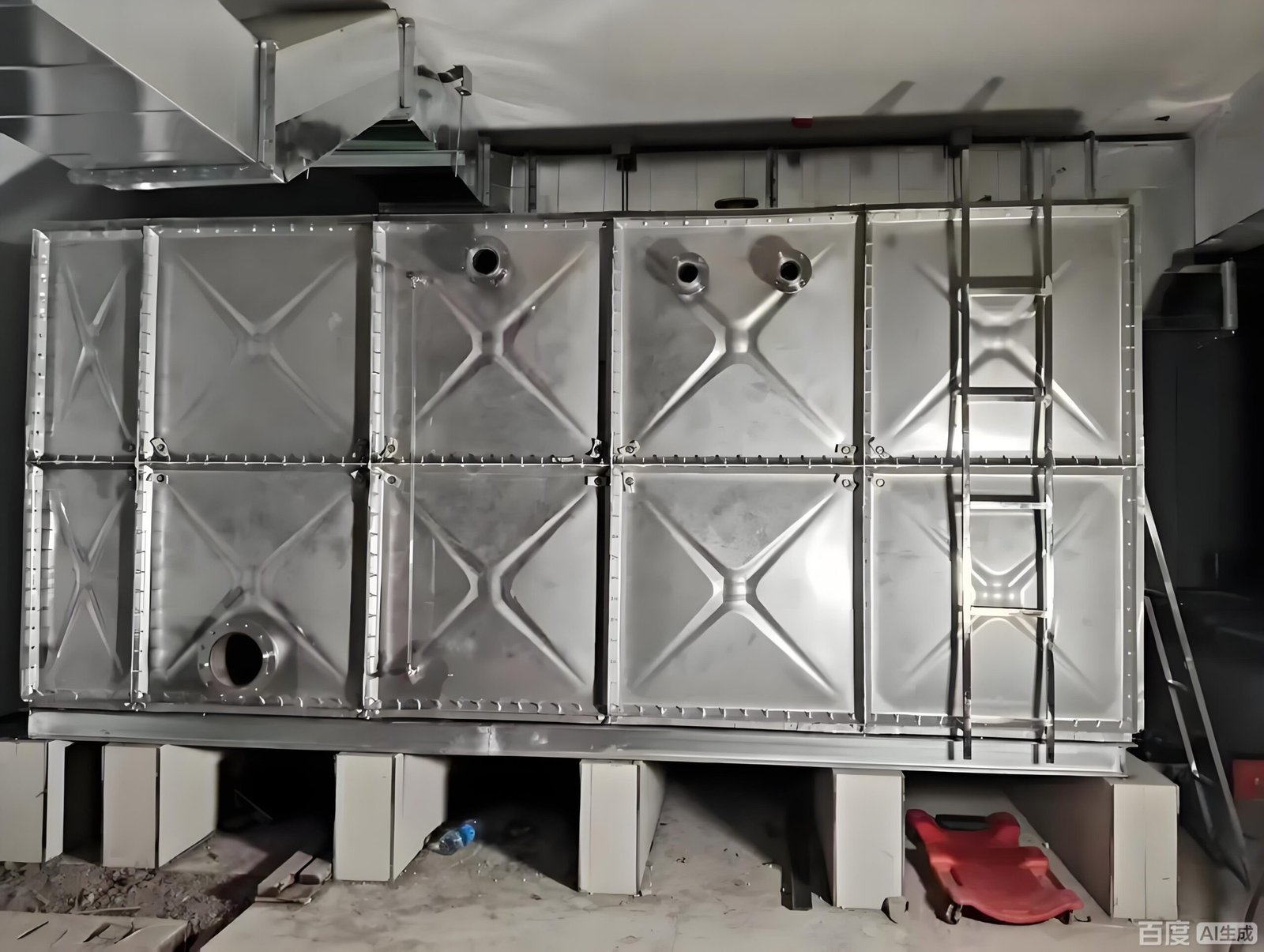
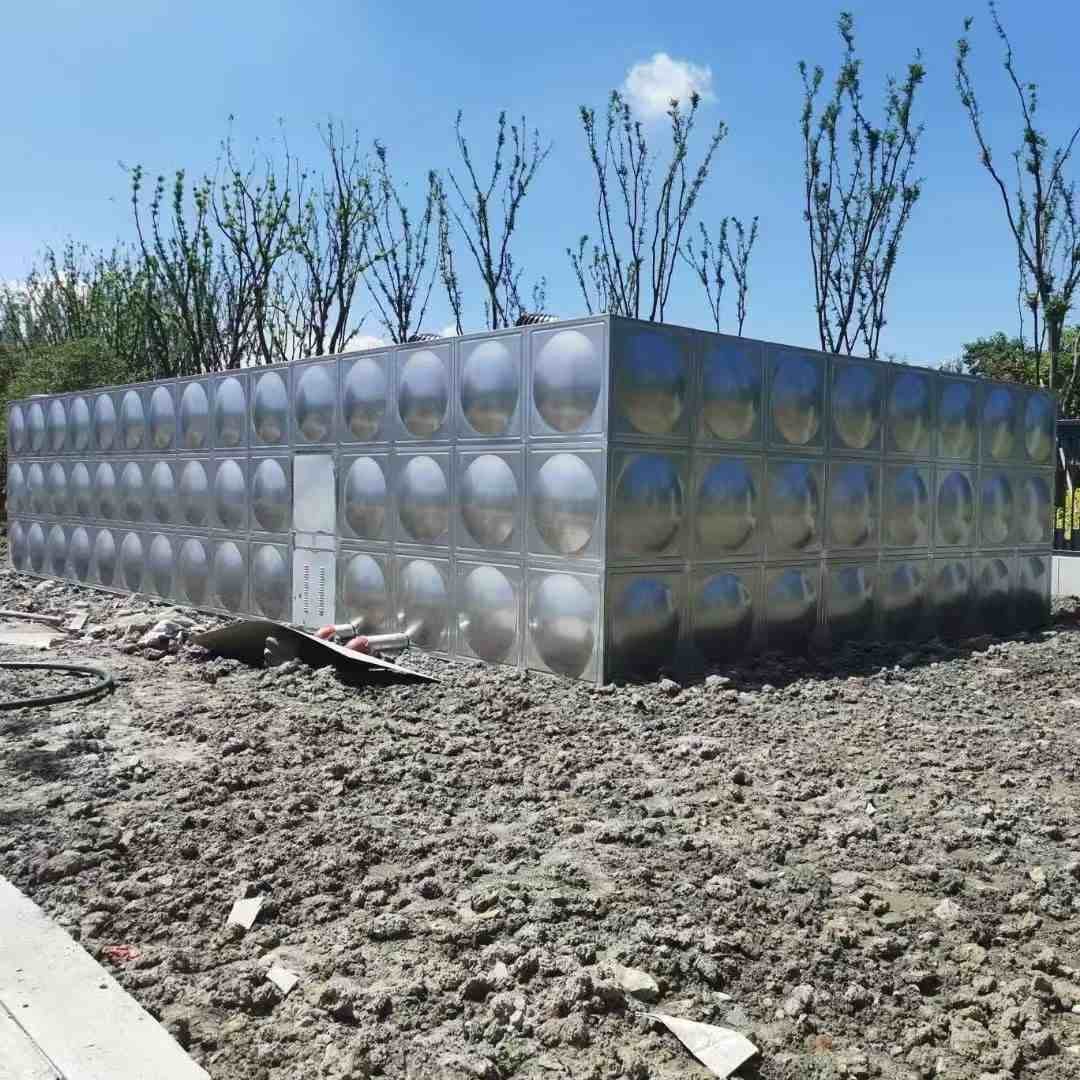
Assembled on-site from panels (often 1m×1m or 0.5m×0.5m) with bracing and food-grade gaskets—common for commercial, municipal, and fire storage. Suited to large capacity, limited access, custom footprints, and future expansion. Shipped in containers without heavy welding. Most exported from China for Middle East, Africa, and Southeast Asia. See also GRP sectional water tank.
One-piece tanks
Manufactured as complete units at smaller capacities; quick install, no on-site assembly—common residential rooftop or small commercial. Limited capacity range; higher shipping cost per volume vs flat-pack.
Cylindrical / vertical / custom
For industrial chemical storage, process water, wastewater, filament winding or hand lay-up may be used for pressure, temperature, or chemical exposure. Less common in building water supply.
SMC vs hand lay-up vs filament wound
SMC hot-press gives uniform, dimensionally consistent panels—the standard for modular potable, fire, and commercial water tanks. Hand lay-up depends on operator skill. Filament winding builds strong cylinders—typical for pressure or chemical vessels, not most building water storage. For most building and municipal use, SMC panel construction is the relevant method.
Typical applications

Potable water storage
Requires food-grade resin, hygienic internal surfaces, and market-appropriate certification. Request material test certificates and potable compliance docs—not every FRP tank is suitable; resin must be designed and tested for drinking water contact.
Fire protection water storage
Large capacities, on-site assembly, and corrosion resistance for static water. Specifications follow local fire codes. Explore FRP firefighting water tank product lines for category-specific options.
Building, municipal & industrial
Buffer storage for distribution, rooftop, ground, or basement must match structural and hygiene requirements. Industrial process water may differ in temperature, pressure, or chemical exposure. Non-potable / wastewater: confirm chemical resistance. Chemical storage: FRP can handle many mild chemicals; concentrated acids, strong alkalis, solvents, or high temperature may need specific resins. Standard potable panels are not suitable for chemical storage without design changes—provide composition, concentration, and temperature for compatibility checks.
Specifications buyers should check

Capacity, panels & structure
Sectional tanks span from a few m³ to hundreds of m³ via panel layout. Panel thickness and internal bracing must match height and hydrostatic load—ask for design basis or references. For elevated temperature, insulation, or pressure, state requirements up front; consider an insulated GRP water tank when temperature control matters.
Resin & scope of supply
Confirm resin type (polyester vs vinyl ester vs food-grade) vs water and chemical exposure. Verify quoted scope: bracing, gaskets, fasteners, nozzles, overflow, drain, manholes, ladders, vents, level instruments, and base details—missing accessories are a top cause of export delays.
Specification discipline: Treat specs as project variables—match capacity, site, water type, and compliance. Standard FRP panel tanks are for ambient, atmospheric/vented conditions unless engineered otherwise.
Standards, certifications & compliance
Potable water contact
Materials in contact with drinking water need evidence appropriate to the market—commonly NSF/ANSI/CAN 61, WRAS, and BS EN 13280 for GRP potable storage. For deeper per-market requirements, see our potable water tank certification guide (blog hub—dedicated article when published). These address leaching and material safety—not necessarily structural design or factory QMS.
Product & design references
Sectional SMC tanks often reference BS EN 13280. Filament-wound industrial tanks may reference ASTM D3299 / D4097. ISO 28765 can apply to broader GRP tank/vessel design. Do not assume one standard applies to all tank types—ask which code matches your tank type and application.
Factory QMS
ISO 9001 and ISO 14001 address process and environment—not product potable safety or structural performance alone.
| Layer | What it covers | Applies to | Request from manufacturer |
|---|---|---|---|
| NSF/ANSI/CAN 61 | Drinking water contact safety | Resin, gelcoat, gaskets, water-contact parts | Material-specific test reports |
| WRAS | Hygienic potable contact | Water-contact materials | WRAS letter/listing for specific materials |
| BS EN 13280 | Design & hygiene for GRP water tanks | SMC/GRP sectional potable | Product-level compliance statement |
| ASTM D3299 / D4097 | FRP chemical/industrial tank construction | Filament-wound / contact-molded | Design compliance reference for that tank |
| ISO 28765 | GRP tank/vessel design & construction | GRP tanks broadly | Design reference documentation |
| ISO 9001 / 14001 | QMS / environmental | Factory | Current certificates if required |
Request documentation for each layer and know what each certificate does not cover. Verify applicable standards for your destination market and application.
Key advantages of FRP water tanks
Corrosion resistance
No rust, anodes, or periodic recoating under normal water storage use.
Lightweight & modular
Lower shipping cost vs many steel or concrete options; easier handling on tight sites.
Service life & maintenance
Often multi-decade under good design and conditions; inspect seals and fittings regularly.
Additional strengths
Smooth, non-porous internal surfaces (when well made) help hygiene for potable use with certified materials. Sectional design allows field adjustment of capacity and layout—add panels to extend. Assembly uses bolting and gaskets, not field welding. Industry references often cite decades of service under favorable conditions; treat any figure as a general indicator, not a warranty—discuss with the manufacturer for your site.
Limitations & common mistakes
UV aging
Prolonged UV can degrade outer resin (chalking, color change). Outdoor installs need UV-resistant gelcoat or protection—ask explicitly for tropical, desert, or rooftop exposure.
Resin mismatch
Standard polyester may be wrong for certain chemicals, dosing, or temperature. Disclose full water chemistry and conditions at quotation. For field assembly pitfalls, see the FRP water tank installation guide on the blog (when published) together with the manufacturer’s manual and torque data.
Structure & installation
Large height/capacity needs adequate bracing and base design—request engineering justification. Many failures come from installation—bolt torque, gasket seating, foundation—not only manufacturing. Insist on manuals, torque values, and sequence drawings; remote support matters for export projects.
Manufacturer quality spread
Resin mix, fiber content, press control, and QC vary between factories. Low price without verification can mean warped panels, leaks, or short life. Request samples, test reports, and reference projects before locking a new supplier.
How to choose the right FRP water tank
Define water type & use
Potable, fire reserve, process, or non-potable—sets resin grade, surface treatment, and certification path.
Calculate required capacity
Base on demand, peak flow, reserves, and code minima. Fire capacity follows fire system design and regulations.
Match structure to site
Ground, rooftop, basement, or exposed outdoor—footprint, height limits, crane access, and foundation conditions drive panel size and logistics.
Confirm certification requirements
State destination country, project type, and end use—do not assume the factory knows your market’s rules.
Evaluate supplier capability
CAD, structural basis, material reports, potable/gasket documentation, export packing, and responsive engineering—not price alone.
Shipment, assembly, after-sales
Scope, Incoterms, packing, container plan, installation manual, spares, and warranty / support for troubleshooting.
Pre-RFQ buyer checklist
Complete information yields accurate quotations and fewer rounds of email.
When you’re ready, request a tank recommendation with this checklist in hand.
FRP water tank price overview
What moves the number
Pricing is not one universal figure. Capacity, resin type, and certification drive cost—potable, certified resins and large engineered tanks cost more. Accessories, base, and reinforcement (fittings, overflow, ladders, insulation, frames) add line items; quotes that omit them look cheap until you buy the rest.
Shipping & TCO
Export freight depends on volume, weight, destination, and Incoterms. Sectional panels load efficiently, but big orders can mean multiple containers. Compare total installed cost—engineering, shipping, accessories, assembly, and expected maintenance over service life—on a like-for-like scope, not bare panel price.
Compare apples to apples: Ask each supplier to quote a complete, working system scope so differences reflect engineering value—not missing parts.
Buying FRP water tanks from China
China is a major base for modular water tank manufacturing—many plants produce SMC panels alongside stainless and galvanized lines. Buyers gain configuration choice, competitive factory pricing, and export experience. For container logistics, packing, and documentation depth, also read the export sourcing guide for modular water tanks.
Standard vs OEM/ODM
Standard lines cover common capacities; OEM/ODM can tailor dimensions, materials, accessories, and documentation. State customization at RFQ.
Documents to request pre-order
Drawings and design basis, resin and material specifications, panel test data (mechanical, dimensional), potable/hygiene evidence if applicable, QC procedure, packing list and loading plan, installation manual, warranty and after-sales scope.
Packing, QC, Incoterms
Confirm stacking, separators, and edge protection. Ensure accessories are included and labeled. Agree pre-shipment inspection. Clarify EXW / FOB / CIF / DAP and where risk transfers.
Risks & mitigation
Spec drift, missing parts, impact damage from poor packing, weak documentation, and hard-to-reach after-sales. Mitigate with samples, PSI or third-party inspection, export references, and engineering-first suppliers.
ZENTVO
Single-source engineering for sectional FRP/GRP, stainless, and galvanized water storage—with export documentation and project support. Use this guide with ZENTVO’s product pages to align specification and compliance early.
Project-ready quotation
Send capacity, site, water type, and certification needs. We’ll align scope, documentation, and logistics for an apples-to-apples comparison—then get a project quotation that matches your real installation conditions.
Get a project quotation