FRP vs Concrete Water Tank: Cost, Lifespan and Installation Compared
Delivery method, total installed cost, maintenance burden, and site reality—not just a specification table. A framework for commercial, industrial, and export projects.
Start with construction method
models
Project delivery, not a simple materials pick
Choosing between FRP sectional tanks and concrete tanks is less a materials debate than a project delivery decision. The two options differ significantly in how they are installed, what they cost on a total basis, how they are maintained, and which project profiles they actually suit. For commercial buildings, industrial facilities, and export-oriented projects, FRP tanks are often the more practical option. For large permanent or underground civil works, concrete still has a legitimate place.
The goal here is not to declare one option universally better. It is to give buyers, EPC contractors, and procurement teams a clear framework for evaluating which choice reduces risk and fits actual project conditions.
Why construction method is the real starting point
Before comparing cost or lifespan numbers, it helps to understand that the construction method difference between FRP and concrete changes nearly everything else downstream: how the product ships, what site preparation is needed, how long installation takes, what trades are involved, and what the long-term maintenance burden looks like.
FRP tanks are factory-manufactured and assembled on site from modular panels. Concrete tanks are either cast in place or built from precast elements, typically as part of a larger civil works package. That fundamental difference shapes every other comparison that follows.
How FRP sectional tanks are built and installed
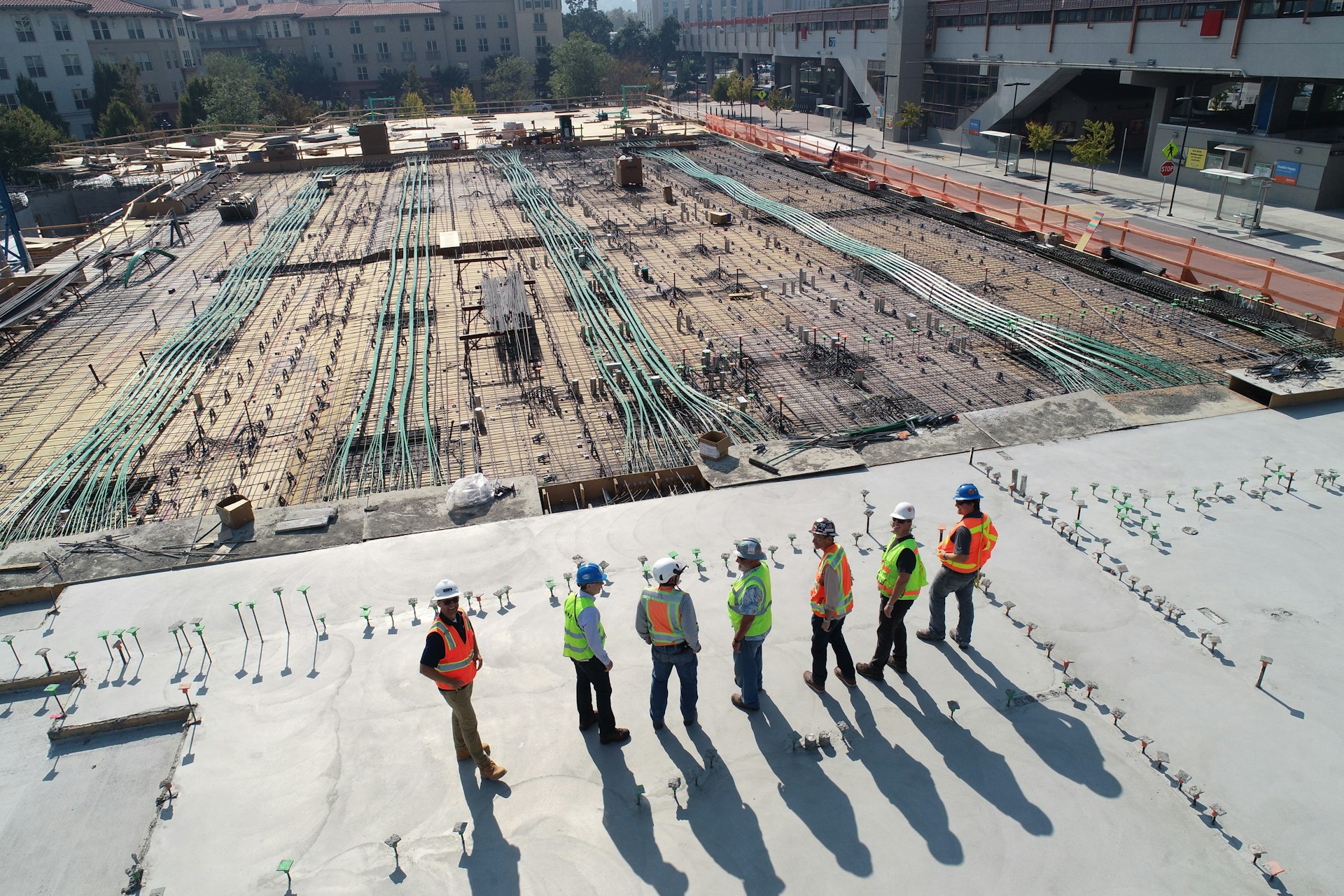
FRP sectional water tanks arrive on site as factory-made panels and are assembled using bolted connections. The installation model is one of their most commercially relevant advantages: it does not require wet trades, curing periods, or heavy formwork, and it is compatible with tight site schedules and logistically constrained projects.
A typical FRP sectional tank installation requires a prepared concrete or steel base, a small installation crew, and standard assembly tools. No on-site casting is involved. Installation time varies by tank size and site access, but FRP systems are consistently positioned in industry comparisons as significantly faster to bring to operational status than cast-in-place concrete construction.
This installation model also makes FRP tanks well suited to rooftop projects, retrofit work, and export delivery where modular packing and handling are practical requirements rather than optional preferences.

Speed and access
Panelized delivery reduces dependence on large civil crews and long cure cycles—advantages that show up in programme and indirect cost, not only in the tank line item.
How concrete tanks are built and what that involves
Concrete tanks are generally cast in place or assembled from precast units depending on project scale and design intent. They are most commonly used where the tank is integrated into a larger civil works package, particularly for underground, basement, or permanent infrastructure applications.
Compared with FRP, concrete construction typically involves excavation or formwork preparation, reinforcement placement, concrete pouring, curing, and the addition of a waterproofing or internal lining system. The 28-day benchmark for concrete strength development remains a widely recognized industry standard, which is one reason concrete tank construction timelines are substantially longer than modular FRP installation.
Concrete tanks are not inherently a poor choice. They are, however, a heavier civil commitment, one that suits projects already organized around permanent structural construction and less suited to fast-track or logistically complex delivery environments.
Cost comparison: unit price vs total installed cost
Concrete can appear cost-effective when evaluated on raw material price alone. That framing rarely reflects the full project picture. Concrete tanks typically require more site labor, more civil preparation, longer schedules, and a dedicated waterproofing system, all of which contribute to total installed cost in ways that a unit price comparison does not capture.
The more meaningful comparison for any project is total delivered and installed cost. On that basis, FRP tanks frequently offer advantages in:
- Transport efficiency and packing simplicity
- Installation labor requirements
- Time on site from delivery to commissioning
- Reduced dependency on civil sub-contractors
- Lower-cost maintenance and repair planning
Concrete may still be competitive in some large civil or underground projects where the tank is already integrated into a broader building structure and civil work is being carried out regardless. But for most above-ground commercial and industrial applications, the total cost burden of concrete construction is typically higher once all project inputs are accounted for.
Buyers are better served by requesting a fully installed cost estimate, not just a product quotation, when making this comparison seriously.
Lifespan: theoretical range vs effective service life
Concrete tanks are commonly associated with a longer theoretical service life. Industry comparisons typically describe concrete in the range of 30 to 50 years or beyond when design quality, waterproofing, and maintenance conditions are well managed. FRP or fiberglass tanks are generally described in the 20 to 30 year range, though specific figures vary by design, operating conditions, and supplier.
Those headline numbers, however, need context. Concrete tanks are vulnerable to cracking, moisture ingress, reinforcement-related deterioration, and waterproofing failure, and the waterproofing systems that protect them have their own service lives, which commonly run from roughly 10 to 30 years depending on membrane type and installation quality. That means the concrete tank’s lifespan advantage is only realized when the owner is prepared to invest consistently in inspection, maintenance, and periodic waterproofing renewal.
FRP tanks are typically chosen for lower maintenance complexity and more predictable operational behavior, even where their headline lifespan figure may not match concrete on paper. For many buyers, effective service life under realistic maintenance conditions is the more relevant metric, and FRP’s advantage here is often more durable than a straight number comparison suggests.
Weight and structural load implications
Weight is one of the clearest and most decisive factors in this comparison. FRP tanks are dramatically lighter than comparable concrete tanks, a difference that directly affects transport logistics, structural load requirements, foundation design, and installation feasibility.
For rooftop installations, this is often the deciding factor before cost or lifespan even enter the conversation. The structural loading implications of a concrete tank can rule it out entirely on many rooftop configurations. Review rooftop water tank installation constraints—foundation, clearance, and load paths—together with your structural engineer early. Even at ground level, the heavier mass of concrete construction usually demands a more substantial foundation strategy and more involved civil preparation.
For export-oriented projects or sites with limited heavy-equipment access, the weight advantage of FRP also simplifies handling at every stage from factory to final installation.
Maintenance: what each option actually requires
FRP tanks are generally positioned as lower-maintenance systems. Routine upkeep typically involves visual inspection, internal cleaning, and periodic checks of joints, hardware, and accessories. Because FRP does not rely on an internal waterproofing layer to protect the structure, the maintenance logic is simpler and less specialized. Non-porous tank surfaces can also be easier to clean and manage from a hygiene standpoint, which matters for potable water and food-industry applications. For drinking-water projects, potable water storage solutions are commonly specified with project-appropriate materials and certificates.
Concrete tanks require a more infrastructure-style maintenance approach. Depending on age and condition, that may include crack monitoring, waterproof lining inspection and repair, sealing work, and long-term management of moisture-related deterioration. Waterproofing quality is central to performance, and when it starts to fail, remediation can be disruptive and costly.
In practical terms, the maintenance burden for concrete is usually higher, more specialized, and harder to predict over time. That is not always a disqualifier, but it is a project risk that buyers should price into their long-term ownership model.
When FRP is the more practical choice
FRP tanks are typically the better project fit when:
- The installation location is rooftop, elevated, or structurally load-sensitive
- The project requires fast delivery and a short site installation window
- The tank will be exported or shipped cross-border in modular format
- The project is a retrofit or upgrade where access and site disruption are constraints
- Simple maintenance planning and lower long-term operational overhead are priorities
- The buyer’s team will handle local assembly with technical support from the supplier
These conditions describe a large share of commercial, industrial, and export water storage projects. They reflect the everyday reality of how many buyers actually encounter this decision.
When concrete still holds up
Concrete tanks remain a legitimate choice when:
- The project involves a very large permanent water reserve
- The tank is designed for underground or partially buried installation, with structural, soil, and groundwater design properly engineered
- The tank is integrated into foundation, basement, or civil infrastructure already under construction
- The project operates under a municipal or infrastructure framework with dedicated maintenance resources
- Local project norms already favor civil-built water storage and the owner’s maintenance system is designed around it
The key distinction is not that concrete is outdated, it is that concrete suits a specific project profile. Where that profile applies, it can still be the right choice.
How to choose: a project-first decision framework
The most reliable way to choose between FRP and concrete is to start from project constraints, not from material assumptions.
If your project is above-ground, weight-sensitive, time-sensitive, or logistically complex: FRP is usually the more practical direction. Its installation model reduces site dependency, simplifies transport, and keeps the project on a more predictable schedule. This applies to most commercial buildings, rooftop systems, industrial facilities, and export-oriented jobs.
If your project involves underground or civil-integrated design: Concrete may still be the better fit, particularly when the tank is part of a larger civil structure, when underground conditions have been properly assessed, and when the project owner has a maintenance program designed for permanent infrastructure. FRP may be appropriate in some underground applications, but only when structural design, soil conditions, groundwater pressure, and installation details have been properly engineered.
In summary: choose FRP when installation speed, lower structural load, and simpler delivery matter most. Choose concrete when structural permanence, underground integration, and long-term civil durability are the defining project requirements.
If neither set of criteria applies cleanly, define your specific capacity requirement, installation type, and site constraints, then evaluate each option against that project reality. For a broader product and application overview, use ZENTVO’s water tank selection guide (product families and typical uses) as a follow-on step. If your team needs a documented comparison to support internal approval, request an installed-cost style quotation for both routes where feasible.
Compare FRP and concrete on your real project data
Tell us your required capacity, installation type, and project location. We can help assess which route reduces risk for your site—and what a delivery and installation package looks like.
All links go to the ZENTVO contact team; use the CTA label that matches your internal process.