A hot-dip galvanized water tank is best for projects that need a strong steel storage structure, practical cost control and zinc-based corrosion protection. It is commonly used for fire reserve water, industrial water, agricultural water, construction water, municipal utility projects and general storage where galvanized steel is compatible with the water chemistry.
A hot-dip galvanized water tank is a modular steel storage tank protected by a zinc coating formed through the hot-dip galvanizing process. ZENTVO designs and manufactures these tanks for projects that need strong structural performance, reliable corrosion protection, efficient shipping and on-site assembly. Each tank can be customized according to capacity, installation conditions, water type, project standards and delivery requirements — and the same engineering approach extends across our full galvanized / steel tank series.
At-a-Glance Guidance
| Item | Practical guidance |
|---|---|
| Best project fit | Fire reserve water, industrial water, agricultural water, general storage and cost-sensitive infrastructure |
| Main advantage | Steel strength plus zinc coating protection at a practical project cost |
| Main selection risk | Using galvanized steel for water chemistry or potable requirements that need another internal protection system |
| Key buyer decision | Whether the stored water is compatible with galvanized steel or requires liner / coating / stainless steel |
| What buyers should send | Capacity, water type, pH/chloride data if available, installation environment and project standard |
When Galvanized Steel Makes Sense
Hot-dip galvanized water tanks are strongest as a practical engineering option. They are not selected because zinc coating is suitable for every water type — they are selected when the stored water, installation environment, operating temperature and maintenance plan match the behavior of galvanized steel.
This tank type is often a strong choice when:
- The project needs a steel tank with better corrosion protection than bare steel.
- The stored water is fire reserve, utility, raw, agricultural or general industrial water.
- The buyer needs a modular tank that can be shipped efficiently.
- The project budget cannot justify stainless steel.
- The site needs faster installation than concrete or fully site-welded construction.
- The tank will be inspected and maintained on a planned schedule.
For drinking water projects, galvanized steel should be reviewed carefully. Depending on local rules and water quality, a liner, coating, stainless steel tank or other water-contact solution may be more appropriate.
What Is a Hot-Dip Galvanized Water Tank?
A hot-dip galvanized water tank is built from steel panels that are galvanized after fabrication or formed from galvanized steel components depending on the project design. In the hot-dip galvanizing process, steel is protected by a zinc layer that acts as a barrier between the steel and the surrounding environment. The result is a steel water tank system that combines:
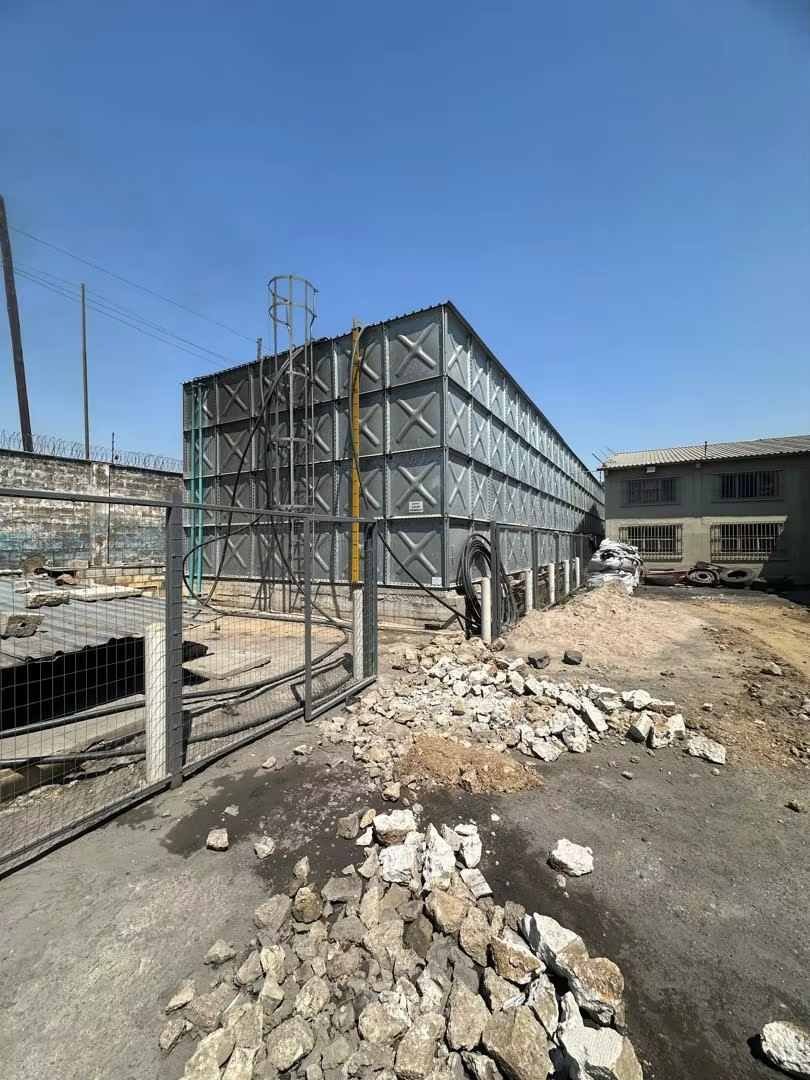
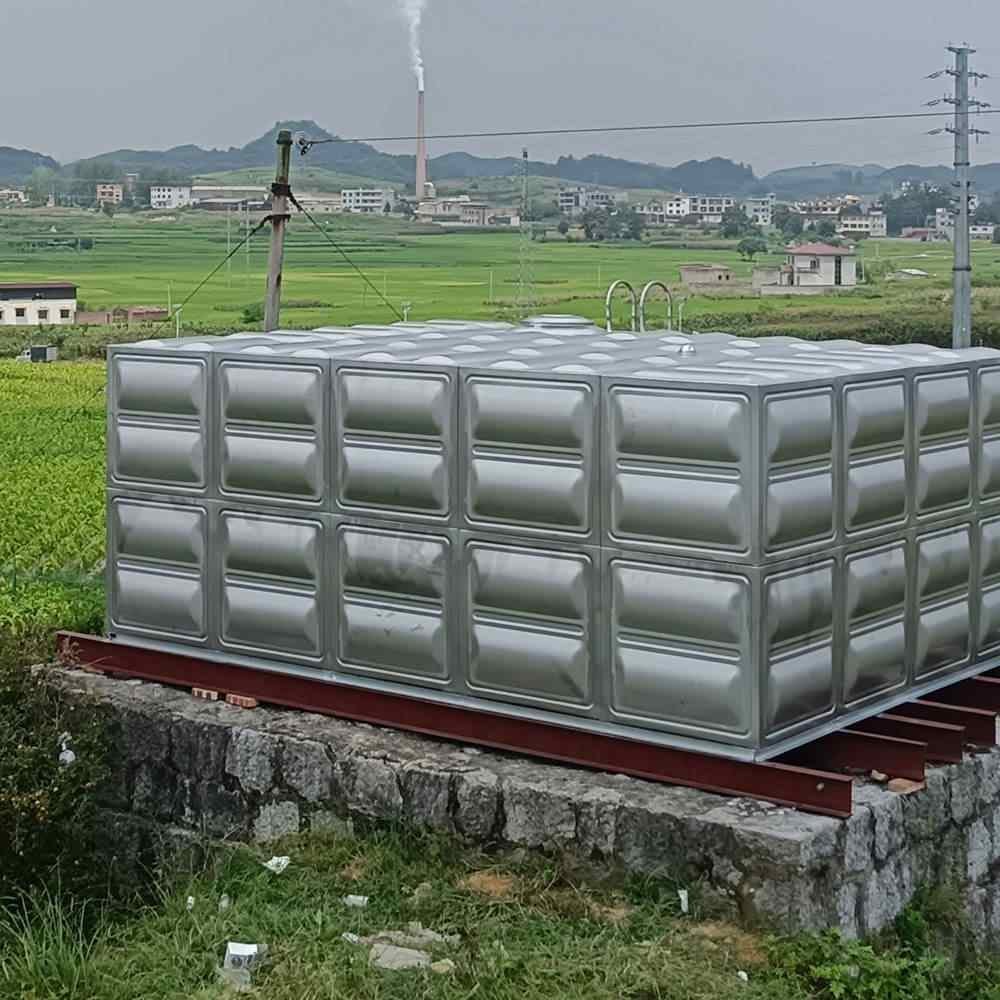
- Structural strength from steel
- Corrosion protection from zinc coating
- Modular panel construction for transport and assembly
- Flexible sizing for different project capacities
- Practical cost performance for many infrastructure applications
Key Advantages
Hot-dip galvanized water tanks are widely used because they provide a strong balance between cost, strength and corrosion resistance.
For buyers comparing galvanized steel water tanks with coated steel, stainless steel or concrete tanks, galvanized systems are often selected when the project needs a robust steel structure with controlled budget and reliable delivery speed.
Material Compatibility
The most important question is not simply “How much does a galvanized water tank cost?” The better question is: “Is hot-dip galvanized steel suitable for this water and this site?” Review these factors before final selection:
| Factor | Why it matters |
|---|---|
| pH level | Very acidic or very alkaline water can affect zinc coating performance |
| Chloride content | Higher chloride exposure can increase corrosion risk |
| Water temperature | Higher temperatures may change corrosion behavior |
| Potable water requirement | Drinking water projects may need specific approved water-contact materials |
| Stagnation | Long-term stagnant water can affect internal tank conditions |
| Outdoor exposure | Humidity, industrial air and coastal conditions affect external corrosion |
| Maintenance access | Inspection and cleaning access help extend service life |
If water chemistry is unknown, ZENTVO can still provide a preliminary proposal, but final material approval should be made after project review.
Typical Applications
ZENTVO hot-dip galvanized water tanks can be used in a wide range of water storage projects.
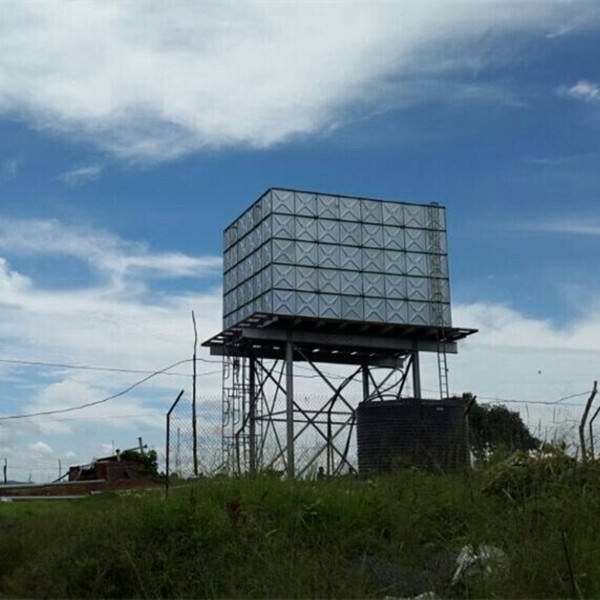
Municipal & Utility Water Fire Reserve Storage
 Agriculture & Irrigation
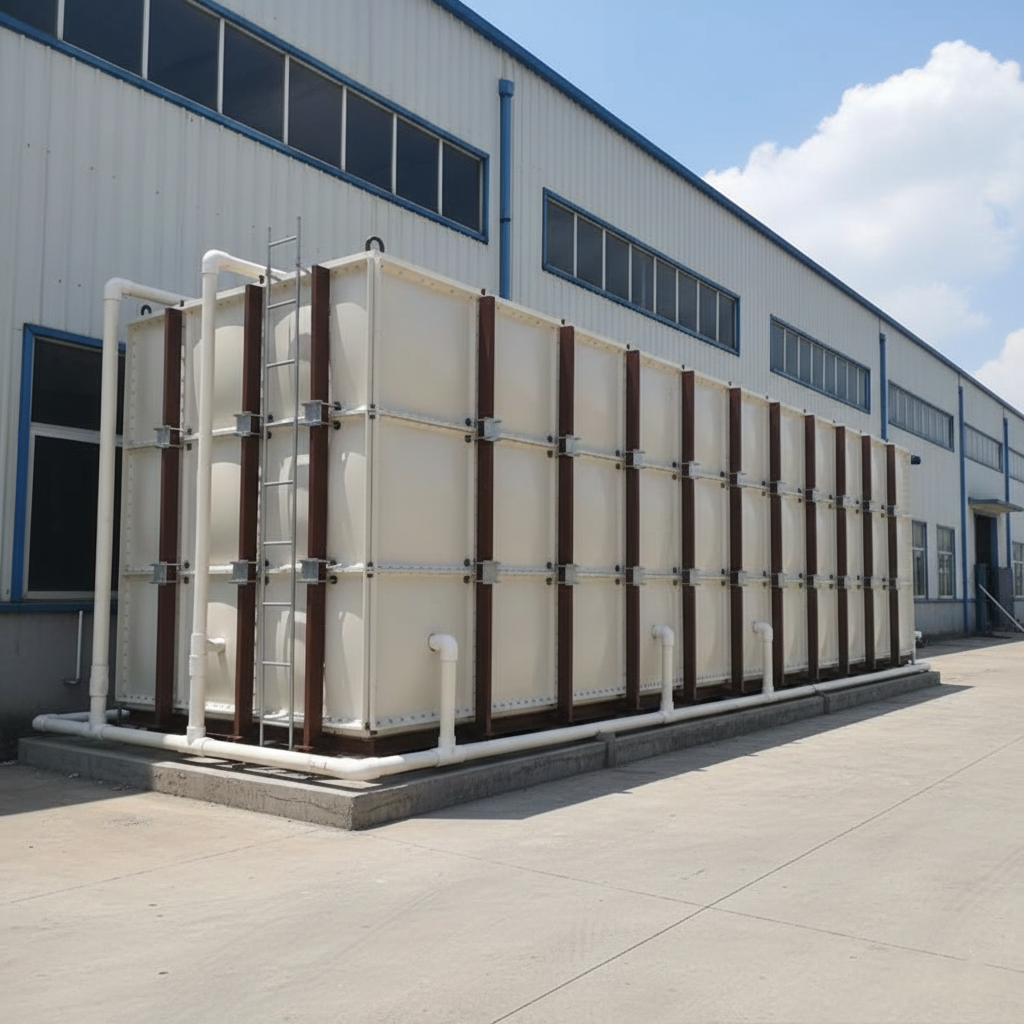 Industrial Utility Water
- Municipal water supply projects · Fire protection reserve water storage
- Industrial process water systems · Agricultural water storage
- Construction site & temporary water storage · Mining, oil and gas support facilities
- Commercial and public building water storage
For potable water projects, the internal surface, sealing system and water-contact materials should be reviewed according to the project requirements. In some cases, a liner, coating, stainless steel option or other material may be recommended depending on the water quality and local standard.
Galvanized vs Galvanised: Same Product, Different Spelling
International buyers search for this product in different ways. In the United States and many global markets, the spelling is usually “galvanized water tank.” In the United Kingdom, Middle East, Africa and other Commonwealth-influenced markets, “galvanised water tank” is also common.
Both terms normally refer to the same type of zinc-protected steel water tank. ZENTVO can support projects using either specification language in drawings, purchasing documents and technical communication.
Main Components
A complete hot-dip galvanized water tank system normally includes galvanized steel panels; bolts, nuts and connecting accessories; sealing gaskets or sealing strips; internal or external reinforcement structure; roof panels or cover system; manhole and inspection access; inlet, outlet, overflow, drain and vent connections; plus ladder, level indicator and optional accessories. The final component list depends on the tank size, water type, installation site and project standard.
Technical Selection Factors
| Selection item | Why it matters |
|---|---|
| Capacity | Determines panel quantity, foundation load and project cost |
| Installation environment | Outdoor, coastal, industrial and high-humidity sites may require extra protection |
| Water type | Potable, fire reserve, process or raw water may require different material-contact review |
| Tank height | Affects hydrostatic pressure, reinforcement design and installation method |
| Connection layout | Inlet, outlet, overflow and drain positions should match site piping |
| Foundation condition | Flatness and load capacity affect tank stability and sealing performance |
Galvanized vs Coated Steel vs Stainless Steel
Many buyers compare these three steel tank options. A simple selection rule is:
For example, a fire reserve water project in an industrial area may be suitable for galvanized or coated steel. A potable water tank for a hospital may be better reviewed as stainless steel or a certified coated / liner system. A coastal infrastructure project may require additional protection even if the original budget assumes galvanized steel.
Project Scenarios
Firefighting Reserve Tank
Hot-dip galvanized steel is often considered for fire reserve water because the project needs a large, strong, cost-effective tank. The design should still consider water turnover, internal condition and periodic inspection.
Industrial Utility Water Tank
Factories may use galvanized tanks for process support, cleaning water, non-potable storage or utility water. The specific water chemistry should be checked before confirming material.
Agricultural or Rural Water Storage
Galvanized panel tanks can be practical for remote sites because modular panels are easier to transport than large prefabricated tanks.
Municipal Non-Potable or Support Storage
Municipal projects may use galvanized steel for certain non-potable or utility applications. For potable water, water-contact requirements must be confirmed carefully.
From Inquiry to Delivery
ZENTVO supports galvanized steel water tank projects from inquiry to delivery, converting project requirements into practical tank specifications. For EPC contractors and distributors, this makes it easier to respond to tender requirements, prepare submittals and confirm project feasibility before order confirmation.
Capacity & Dimension
Capacity and dimension proposal plus material and coating recommendation.
CAD & Nozzle Review
CAD drawing support and nozzle location review.
Packing & Export
Packing and export delivery plan with technical document support.
Installation Guidance
On-site installation guidance and field documentation.
Quality Control
The performance of a hot-dip galvanized water tank depends on both steel fabrication and coating quality. ZENTVO applies quality checks throughout the production process, under certified management systems.
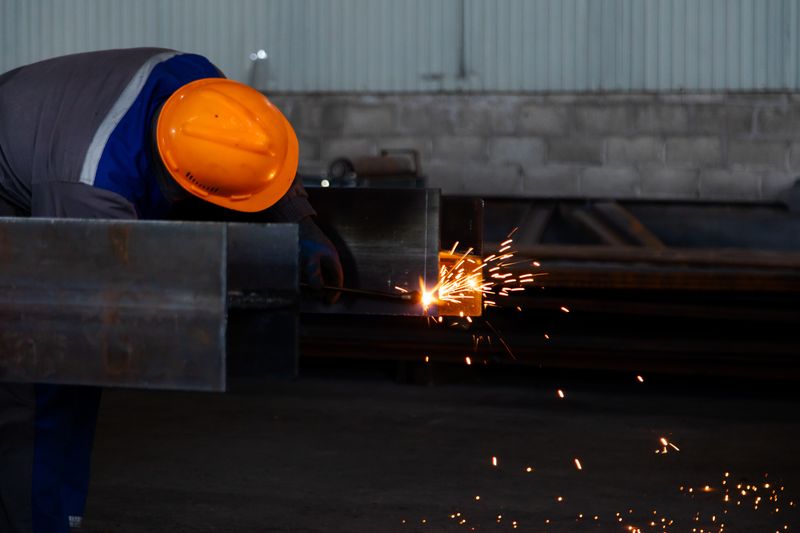
- Steel material verification
- Panel dimensional inspection
- Hole position and assembly matching check
- Galvanized surface inspection
- Accessory and gasket matching
- Packing inspection before shipment
Installation Notes
Correct installation is essential for tank performance. Before assembly, the foundation should be level, stable and prepared according to the tank drawing. During installation, panels should be aligned correctly, gaskets should be placed carefully, and bolts should be tightened according to the recommended sequence. After assembly, the tank should be inspected before full operation, with water filling and leakage checking carried out gradually, especially for large-capacity tanks.
How to Specify — Inquiry Template
To receive a useful galvanized water tank proposal, send the details below. This information helps ZENTVO determine whether hot-dip galvanized steel is suitable or whether coated steel or stainless steel should be reviewed.
Send With Your Inquiry
- Project country & installation site
- Application: fire / industrial / agri / municipal
- Required capacity
- Water type & analysis, if available
- Indoor or outdoor installation
- Coastal / industrial air exposure: yes / no
- Required tank shape or size limit
- Nozzle schedule
- Required accessories
- Delivery term: EXW / FOB / CIF / DAP
- Required documents or standards
Is Galvanized Steel Right for Your Project?
Send capacity, water type, country and site environment. ZENTVO can recommend hot-dip galvanized, coated steel or stainless steel based on the actual project conditions — with a free 24-hour engineering package.
Standards, Compliance and Engineering Support
ZENTVO hot-dip galvanized tanks are engineered to recognised structural standards — AWWA D103 (bolted steel tank) and EN standards as applicable — and built under ISO-certified management systems with certified materials, factory inspection, and dimensional and sealing tests. Where a project requires potable water, the water-contact solution (liner, coating, or stainless steel) is reviewed against NSF/ANSI 61 and WRAS rather than assuming bare galvanized steel is compliant.
Every project includes a free 24-hour engineering package (CAD/GA drawings, structural load calculation, and material recommendation) so the galvanized-vs-coated-vs-stainless decision is made on water chemistry and site exposure, not price alone.
Engineered Water Storage Systems
ZENTVO designs and manufactures engineered water storage systems for municipal, industrial, and firefighting use, in GRP/FRP, stainless steel, and galvanized/steel series. Manufacturing is backed by certified materials and factory QC at our manufacturing facility, export packaging, delivery in roughly 15–35 working days (EXW / FOB / CIF / DAP), installation guidance, spare parts, and a 24/7 technical hotline.
Compliance covers NSF/ANSI 61 and WRAS (potable), AWWA D103 and API 650 (structural), EN standards, and ISO-certified management systems. Contact: info@zentvo.com · +86 153-1889-6990.
FAQ — Hot-Dip Galvanized Water Tank
What is the difference between galvanized and hot-dip galvanized water tanks?
“Galvanized” is a general term for zinc-protected steel. “Hot-dip galvanized” usually refers to steel protected through immersion in molten zinc, forming a zinc coating that helps protect the steel from corrosion.
Can a hot-dip galvanized water tank store potable water?
It may be used in certain water storage projects, but potable water applications should be reviewed carefully based on water quality, internal contact materials, local requirements and project documentation. ZENTVO can help recommend a suitable material or lining option.
Is galvanized steel cheaper than stainless steel?
In many projects, galvanized steel tanks are more cost-effective than stainless steel tanks. Stainless steel may be preferred for higher hygiene requirements, stronger corrosion resistance or more demanding water chemistry.
Can the tank size be customized?
Yes. ZENTVO can customize tank capacity, dimensions, connection layout and accessories according to the project requirements.
What information is needed for a quotation?
Please provide capacity, tank dimensions if fixed, installation country, water type, indoor or outdoor installation, connection requirements and any project standards or drawings.