ZENTVOEngineering Journal
VOL. 04 / NO. 12 · MUNICIPAL WATER
12 min read
Municipal Water Storage, engineered to outlast the next two generations.
A working brief for the engineers, utilities, and EPC teams who decide what the city drinks from for the next forty years.

ZENTVO / FIELD
Municipal water storage sits at the center of public health, fire protection, and the daily functioning of every community it serves. When a storage tank performs as designed, no one notices. When it fails — through contamination, structural collapse, leakage, or premature corrosion — the consequences reach thousands of households at once. For utilities and the engineers who specify these systems, selecting the right water storage solution is not a procurement detail. It is a multi-decade infrastructure decision.
This guide explains what makes municipal water storage fundamentally different from industrial or commercial storage, the international standards that govern it, how to choose between tank materials, and the engineering factors that determine whether a tank delivers 40 years of service or becomes a liability within a decade. It is written for the people responsible for getting these decisions right — consulting engineers, utility procurement teams, EPC contractors, and municipal infrastructure planners.
Why municipal storage is a category of its own
Storing water for a city is not the same as storing process water in a factory or reserve water for a sprinkler system. Three characteristics set municipal potable storage apart — and each one quietly rewrites the brief.
Human consumption.
Every wetted surface must be safe for drinking water — non-leaching, non-toxic, and resistant to biofilm and bacteria.
Multi-decade service.
Tanks remain in service for 30–50 years, so corrosion resistance and durability outweigh initial purchase price.
Regulated & accountable.
Public systems answer to health authorities and codes; standards compliance determines approval and insurability.
First, the water is for human consumption. Every surface in contact with the stored water must be safe for drinking water — non-leaching, non-toxic, and resistant to the growth of biofilm and bacteria. A material that is perfectly acceptable for industrial cooling water may be entirely unsuitable for potable storage.
Second, municipal systems operate continuously for decades. A city does not replace its storage infrastructure every few years. Tanks are expected to remain in service for 30 to 50 years or more, which means corrosion resistance, structural fatigue, coating durability, and ease of long-term maintenance carry far more weight than initial purchase price.
Third, municipal storage is regulated and accountable. Public water systems answer to health authorities, building codes, and increasingly to the public itself. Compliance with recognized standards is not optional — it determines whether a system can be approved, commissioned, and insured. These three pressures — drinking water safety, multi-decade service life, and regulatory accountability — shape every decision that follows.
The functions municipal storage must serve
A municipal storage tank rarely does just one job. Most serve several functions simultaneously, and understanding the intended balance is the first step in correct sizing and material selection.
Storage tanks equalize supply and demand. Treatment plants and pumping stations operate most efficiently at a steady rate, but consumer demand peaks in the morning and evening. Storage absorbs that difference, allowing the supply side to run at a constant, economical rate while still meeting peak draw.
They provide emergency and fire reserve. A portion of municipal storage is typically held in reserve for firefighting and for continuity during a treatment outage or power failure. This reserve volume often dictates the minimum tank capacity required by local code.
They maintain system pressure. Elevated and ground-level tanks help stabilize distribution pressure across a network, reducing pump cycling and protecting the system against pressure transients. And they buffer against treatment interruptions — when a treatment plant must shut down for maintenance or responds to a raw-water quality event, stored finished water keeps the distribution system supplied.
Because the same tank may equalize daily demand, hold fire reserve, and stabilize pressure all at once, sizing is never a simple matter of dividing population by per-capita demand. It requires a demand analysis that accounts for peak factors, required fire flow, and emergency reserve — work that belongs in the engineering stage, before a material or configuration is chosen.
The standards that gate approval
For municipal projects, standards compliance is the difference between a system that can be approved and one that cannot. The relevant standards fall into three groups: drinking water safety, structural design, and management systems.
Compliance Reference Table
SCOPE · STD · CATEGORY
Drinking water contact materials — health-effects testing for wetted coatings, liners, gaskets and structural surfaces.
Potable
UK Water Regulations Advisory Scheme approval for materials in contact with drinking water.
Potable
Factory-coated bolted carbon steel tanks for water storage — loads, coatings, bolts, tolerances.
Structural
Welded steel storage tanks — applied to large welded water tanks where its design rigor is appropriate.
Structural
European norms (including EN 1993 for steel structures) for wind, seismic and load cases.
Structural
Quality and environmental management system certification of the manufacturer’s process.
System
Drinking water safety
NSF/ANSI 61 is the benchmark for materials and components in contact with drinking water. It evaluates whether a tank’s internal surfaces — coatings, liners, gaskets, and structural materials — leach harmful contaminants into the stored water. For potable municipal storage, NSF/ANSI 61 certification of wetted materials is frequently a hard requirement.
WRAS (Water Regulations Advisory Scheme) approval plays a similar role in the United Kingdom and many markets that follow British water regulations. For projects in the Middle East, Africa, and parts of Asia and Latin America, specifiers often require one or both depending on the regulatory framework inherited from the relevant standards body.

Potable compliance starts at the material. Wetted surfaces must neither leach contaminants nor support microbial growth.
Structural design
AWWA D103 governs factory-coated bolted carbon steel tanks and is one of the most widely referenced structural standards for municipal storage in markets following American practice. API 650 governs welded steel storage tanks — most associated with petrochemical storage, it is also applied to large welded water tanks where its rigor is appropriate. EN standards (the European Norms, including the EN 1993 Eurocode family) apply across Europe and in markets that follow European practice.
The correct structural standard depends on the destination market and the local authority having jurisdiction. A competent supplier should be able to design to whichever standard the project requires, rather than forcing a single approach onto every project.
Management systems
ISO 9001 and ISO 14001 certify the manufacturer’s processes rather than the product itself. For municipal procurement, an ISO 9001-certified production and quality-control process provides assurance that quality control, traceability, and inspection are systematic rather than ad hoc — which directly affects the reliability of every tank produced.
Choosing tank material for municipal storage
No single material is correct for every municipal application. The right choice depends on water chemistry, climate, capacity, site access, budget, and the required service life. Below are the material families most commonly specified for municipal potable storage and where each fits.
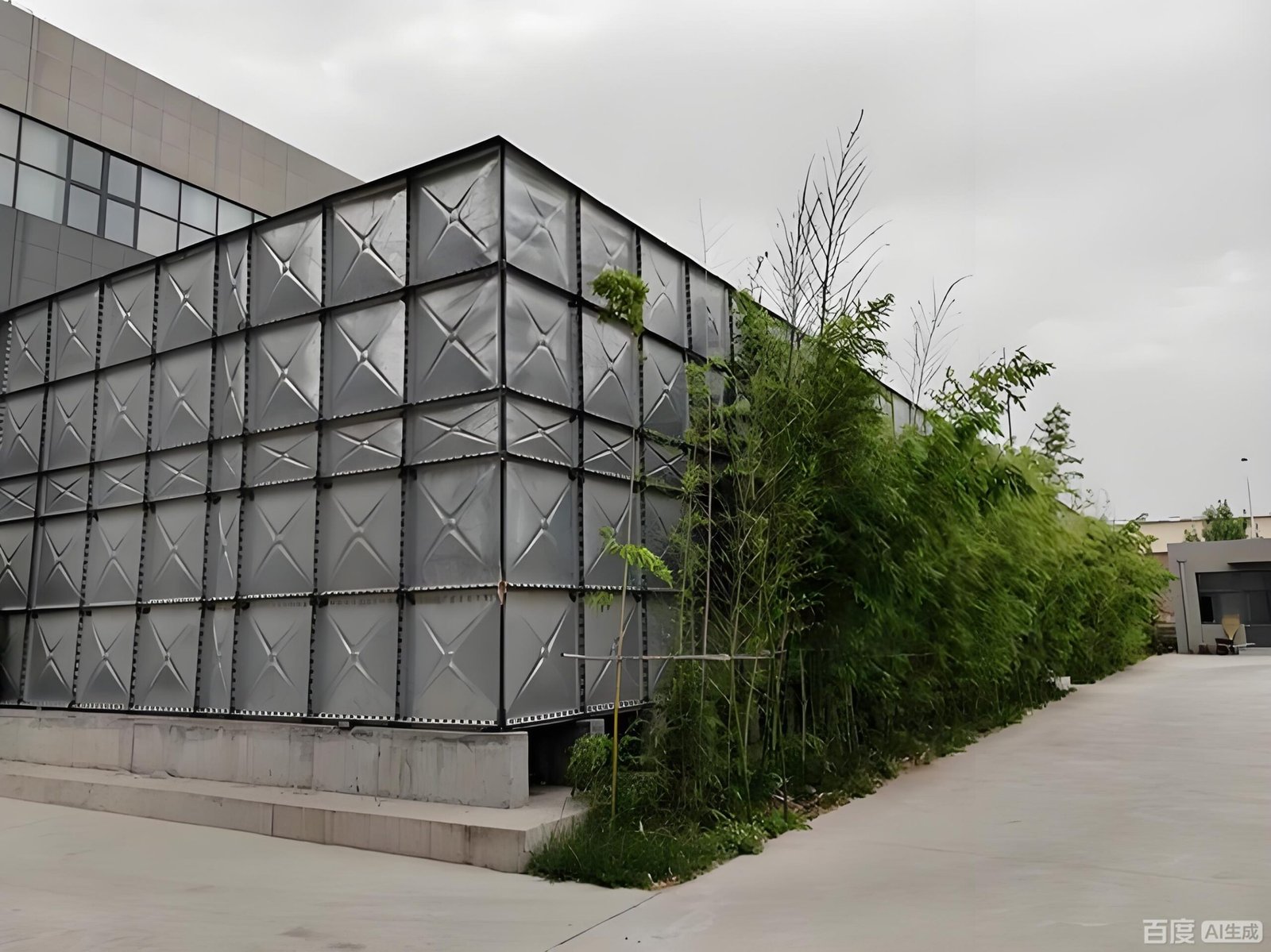
M-01
Fiberglass / GRP Sectional
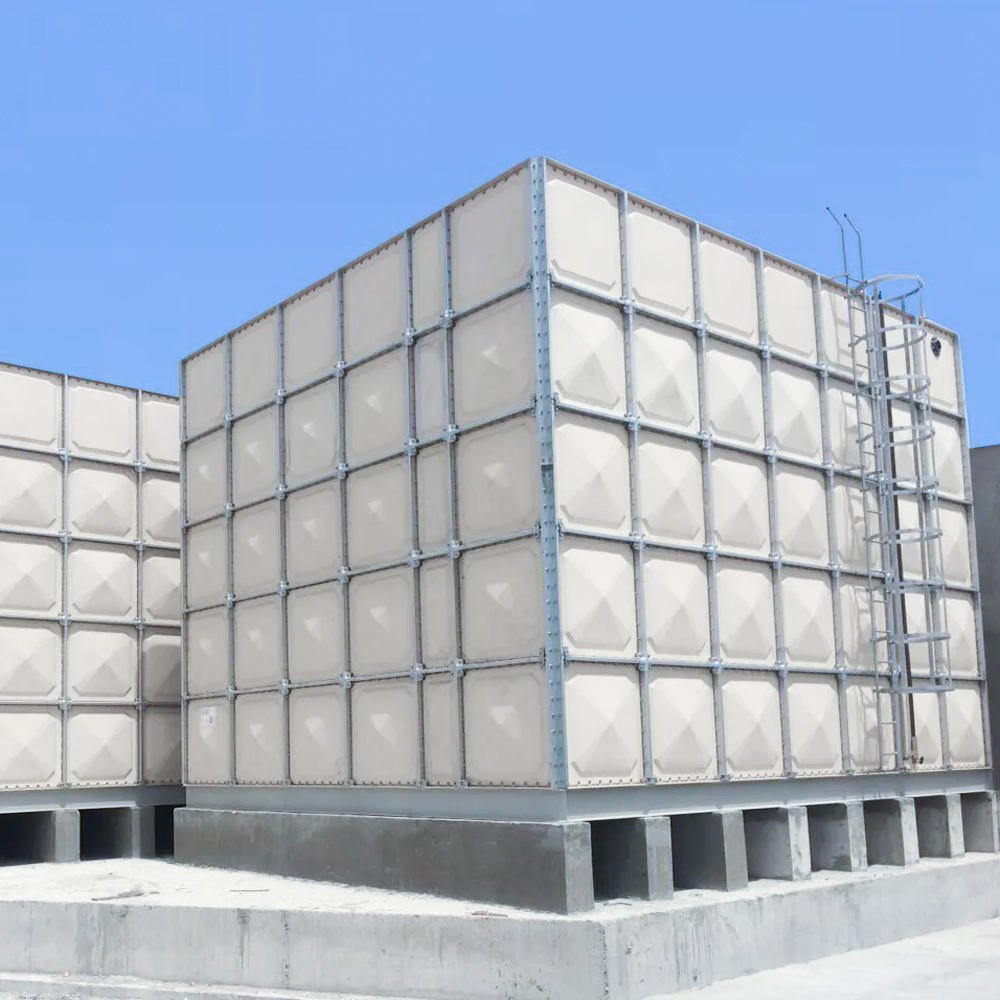
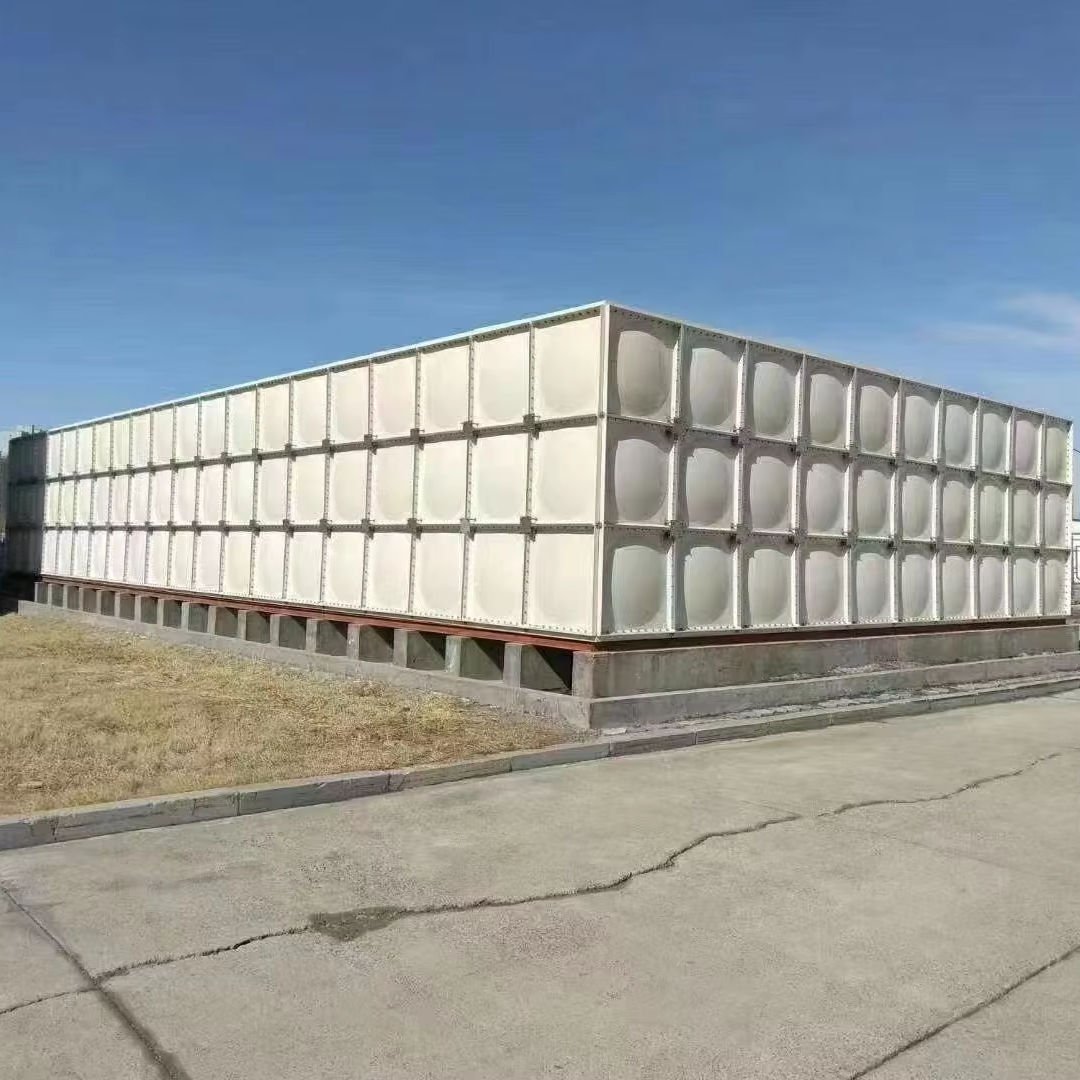
GRP tanks are built from fiberglass-reinforced plastic, typically assembled from SMC panels into sectional tanks. Particularly well suited to rooftop and confined-space installs, with insulated variants for cold climates. For potable use, panels and sealants must carry drinking water certification.

M-02
Stainless 304 & 316
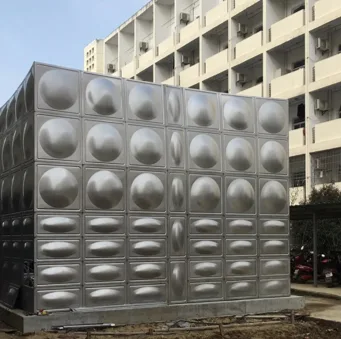
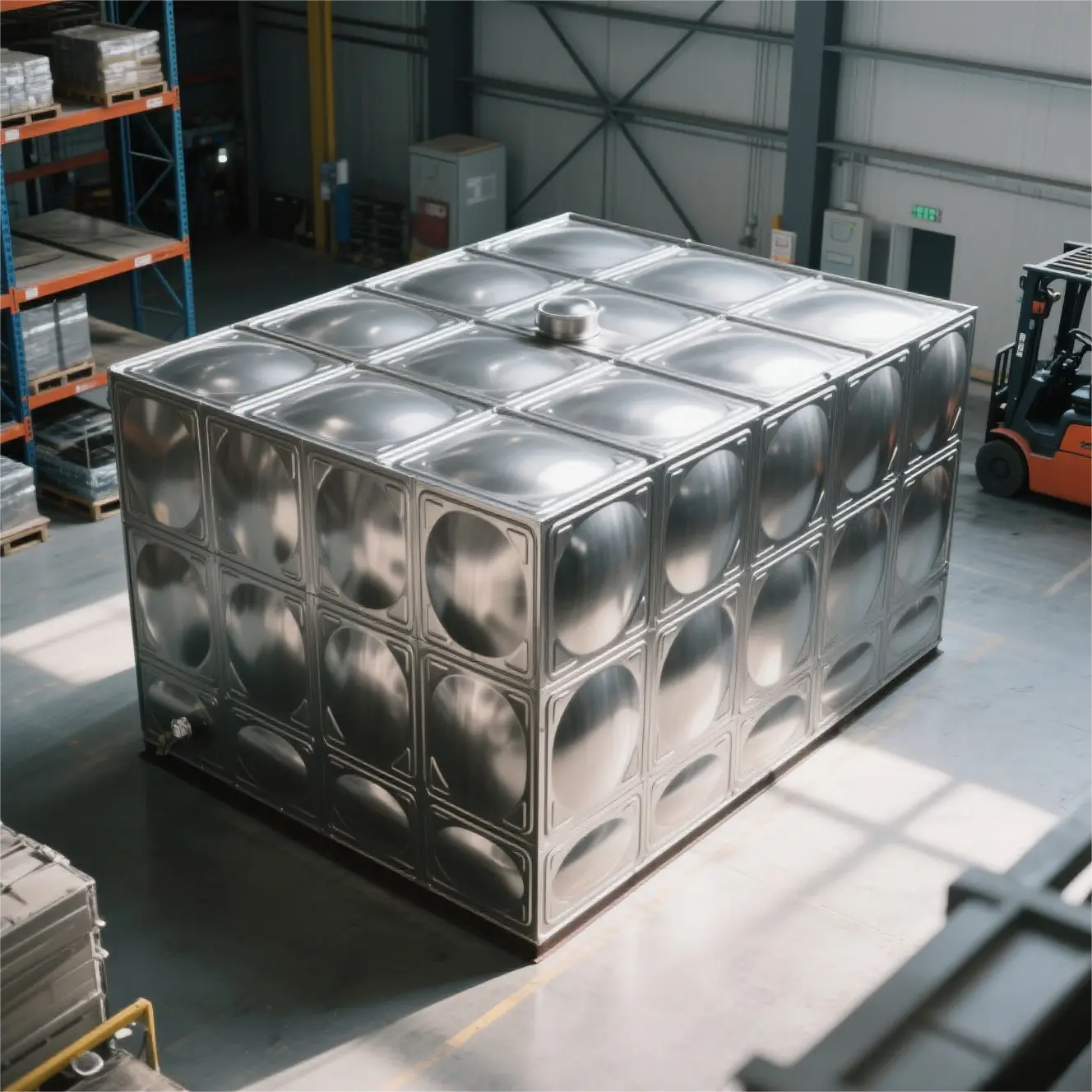
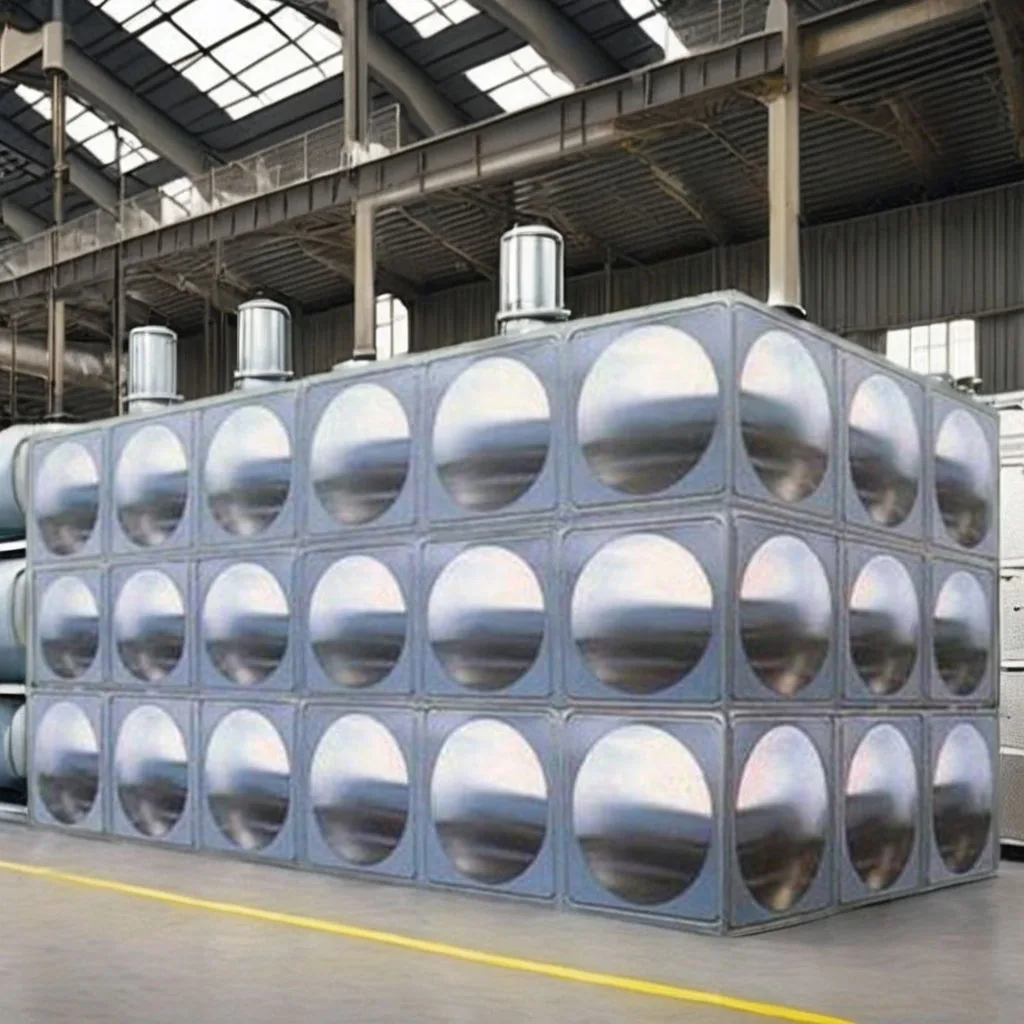
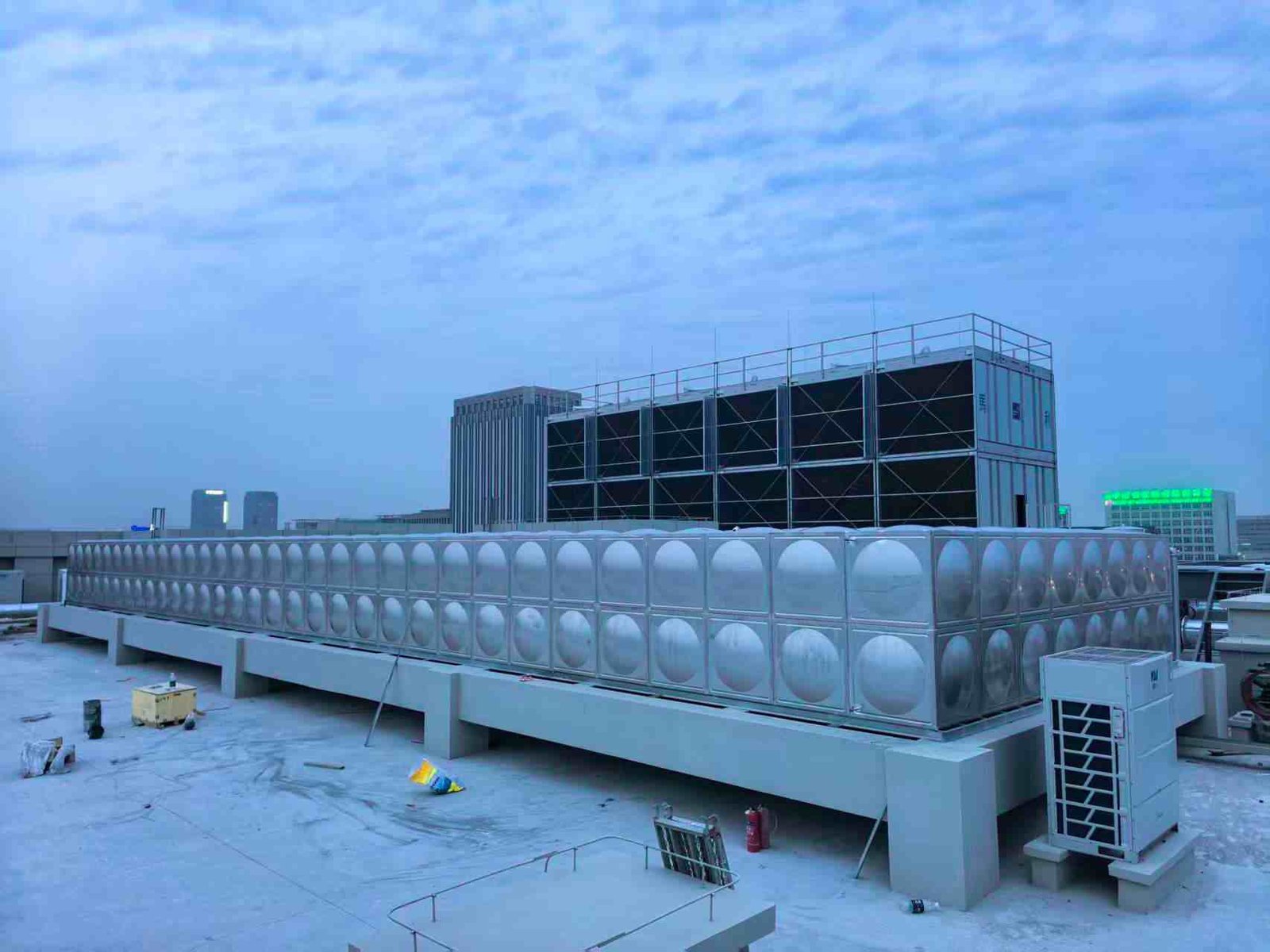
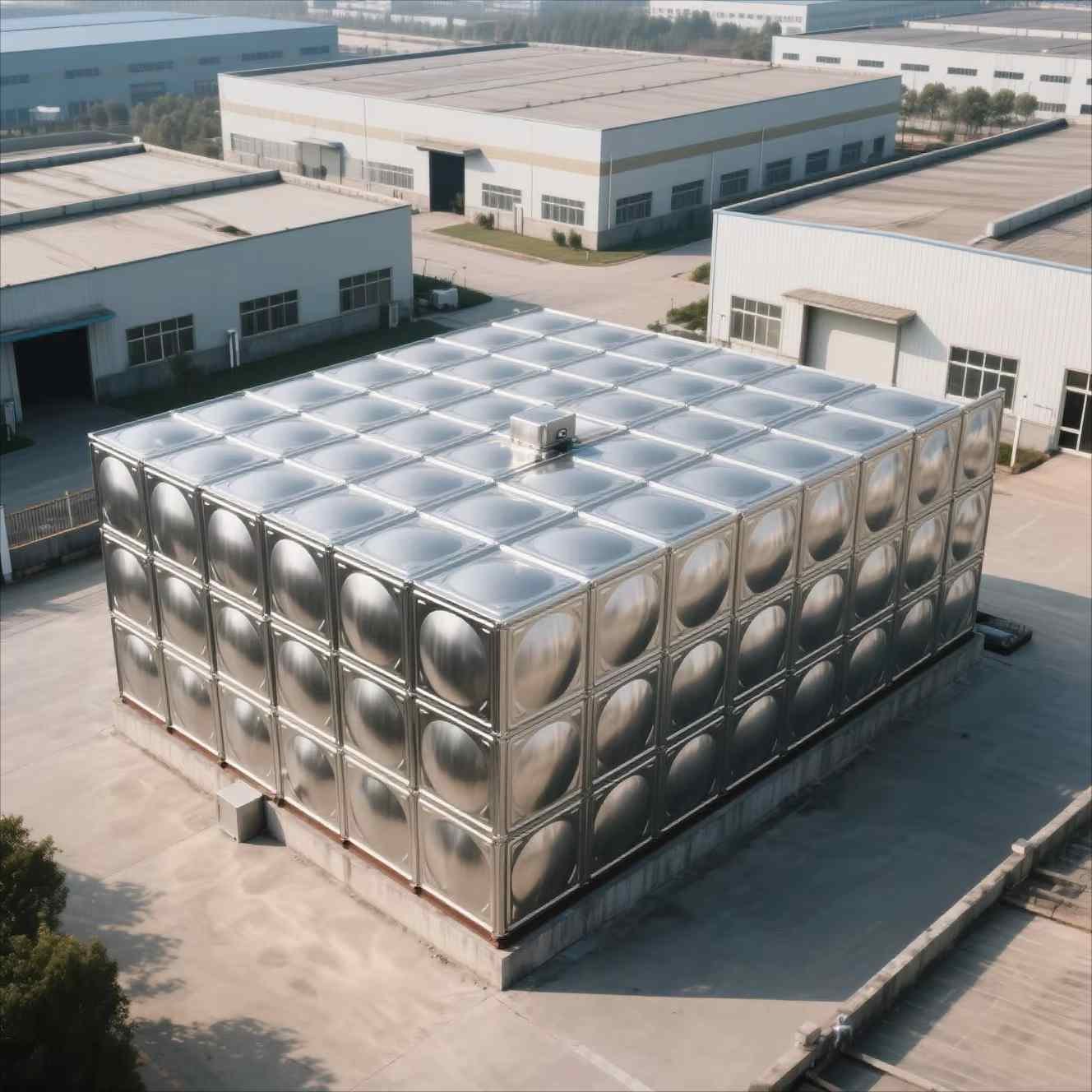
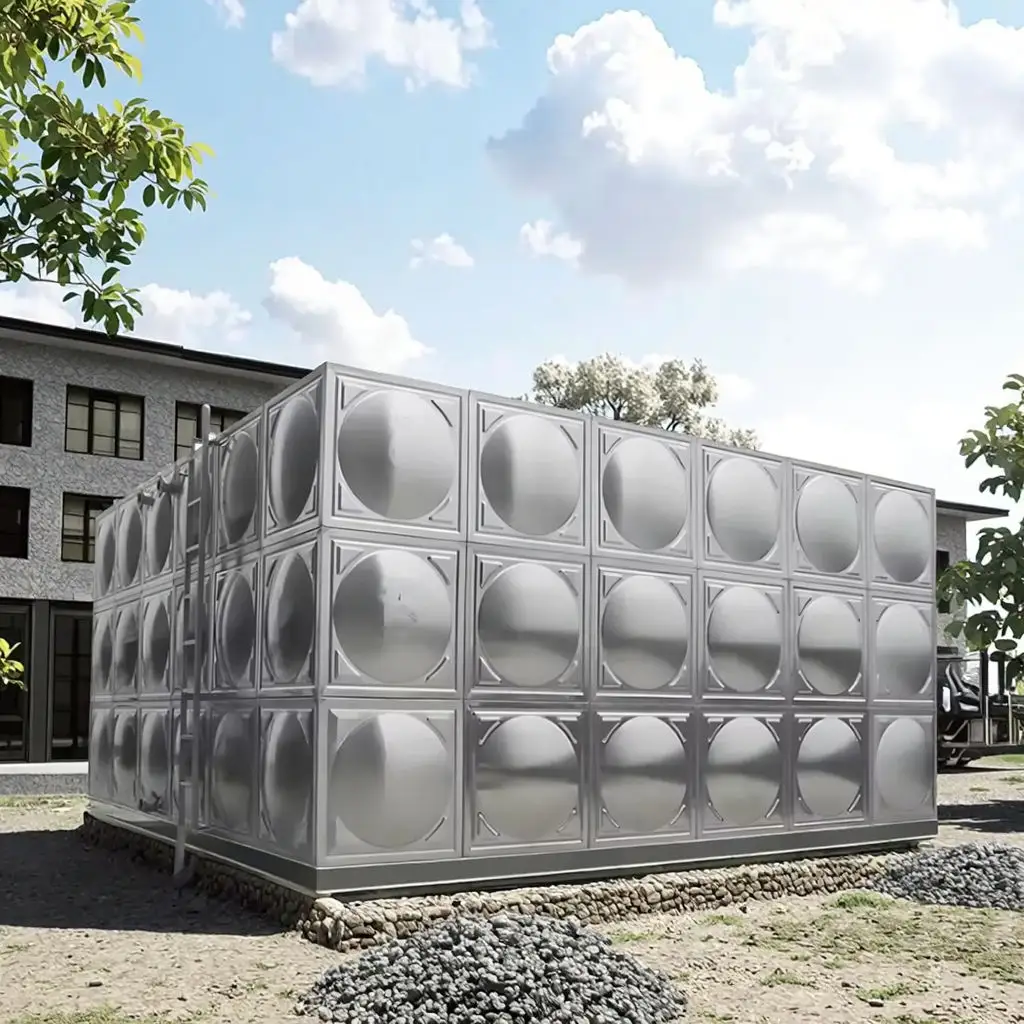
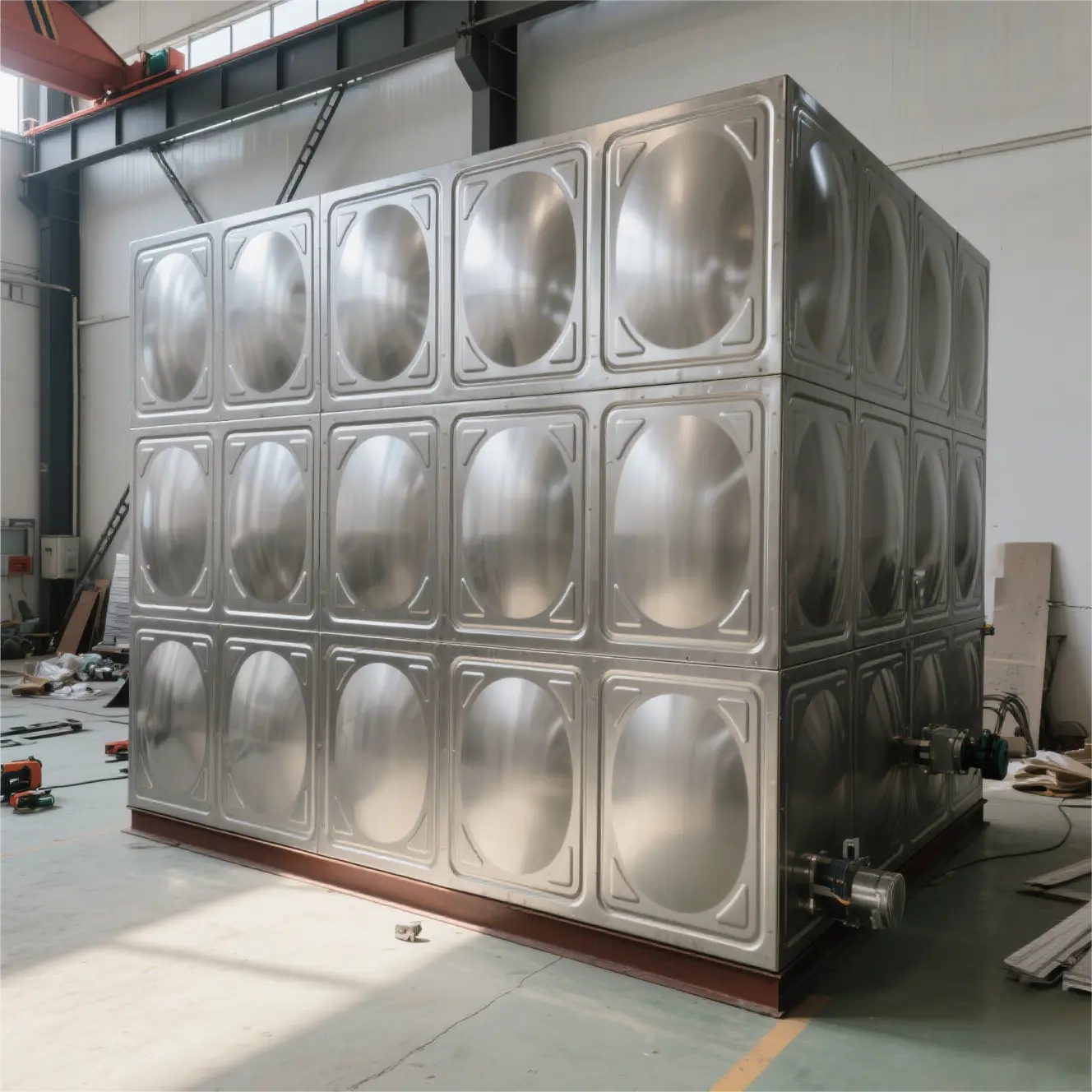
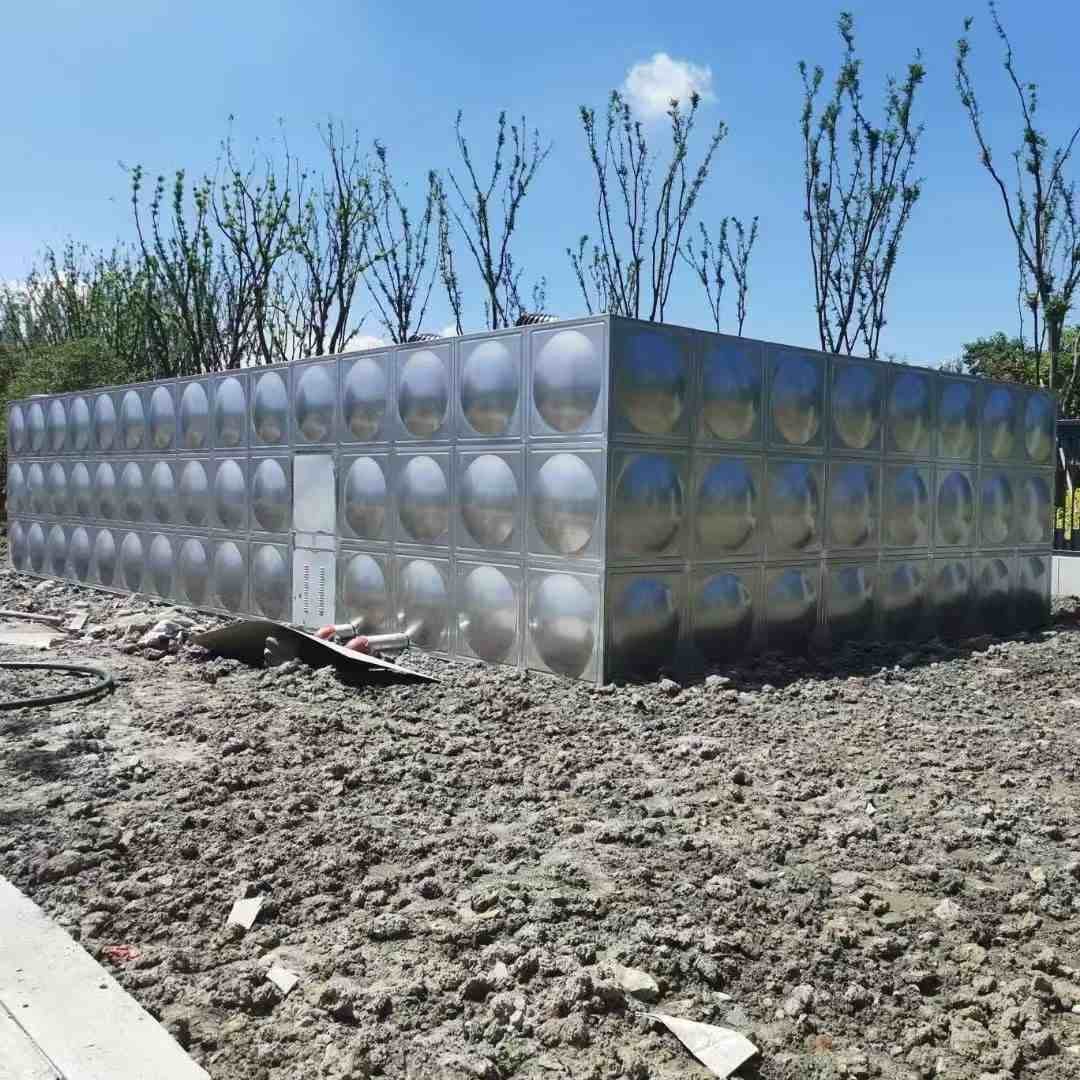
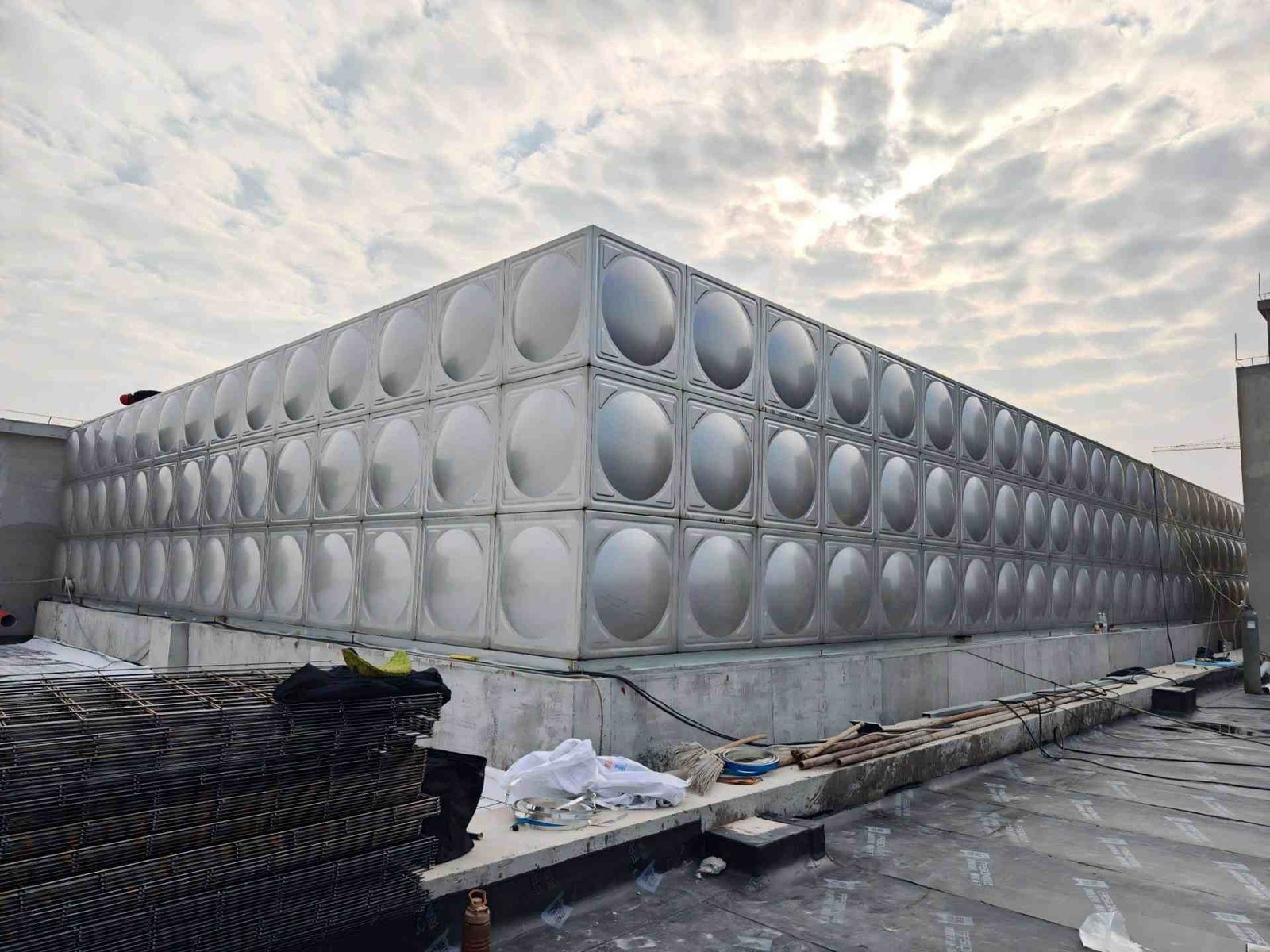
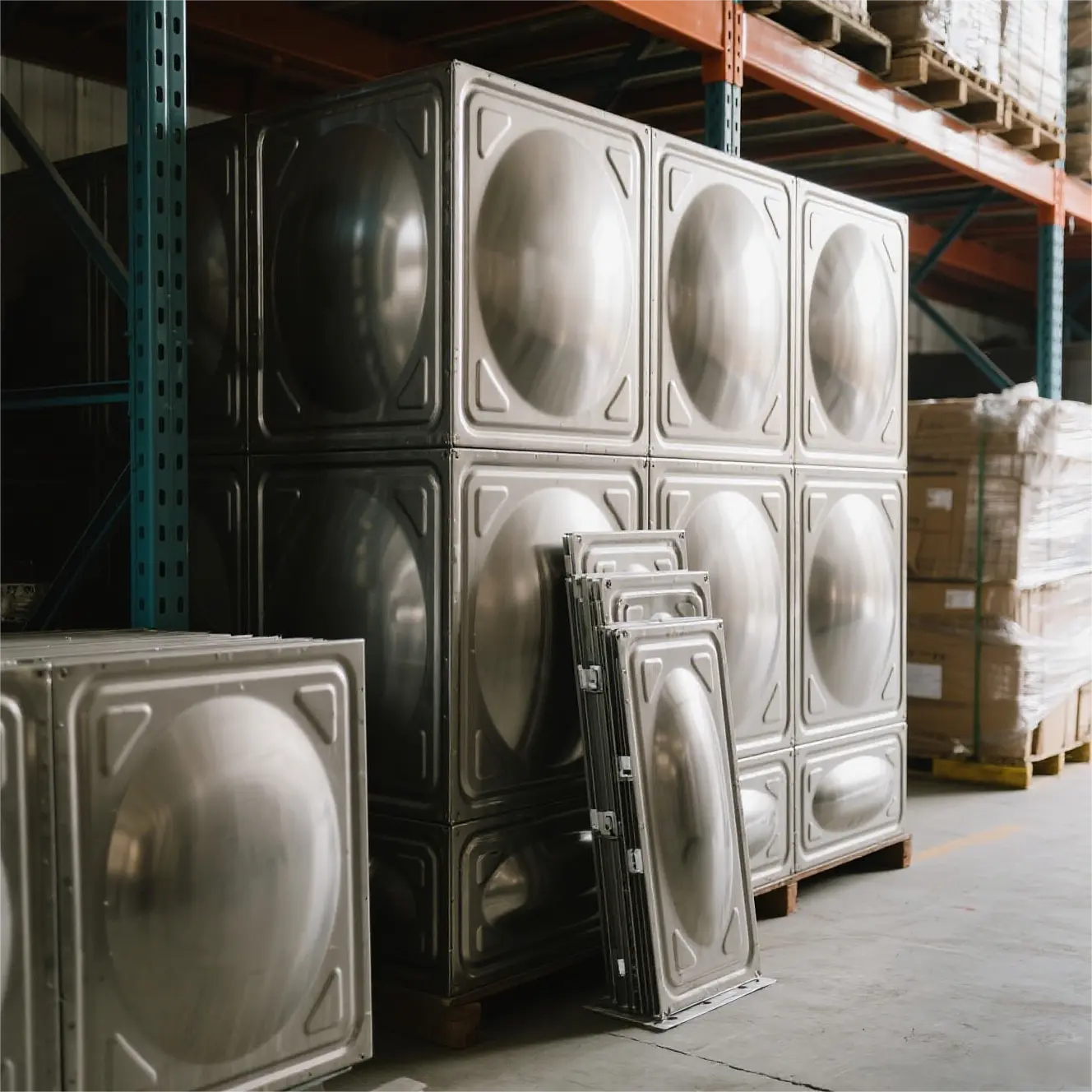
Grade 304 is the general-purpose choice for potable and building supply. Grade 316, with added molybdenum, suits coastal regions with salt-laden air, chlorinated water, or chemically demanding conditions. Available bolted modular or fully welded — often the premium choice for utilities prioritizing water quality.

M-03
Glass-Fused-to-Steel
Combines steel’s structural strength with a glass coating fused at high temperature. The surface resists corrosion and abrasion, never rusts at the coating, and never requires repainting. Widely used for large-capacity municipal storage where AWWA D103 compliance and long service life are priorities — capacities reach into the tens of thousands of m³.

M-04
Galvanized & Coated Steel
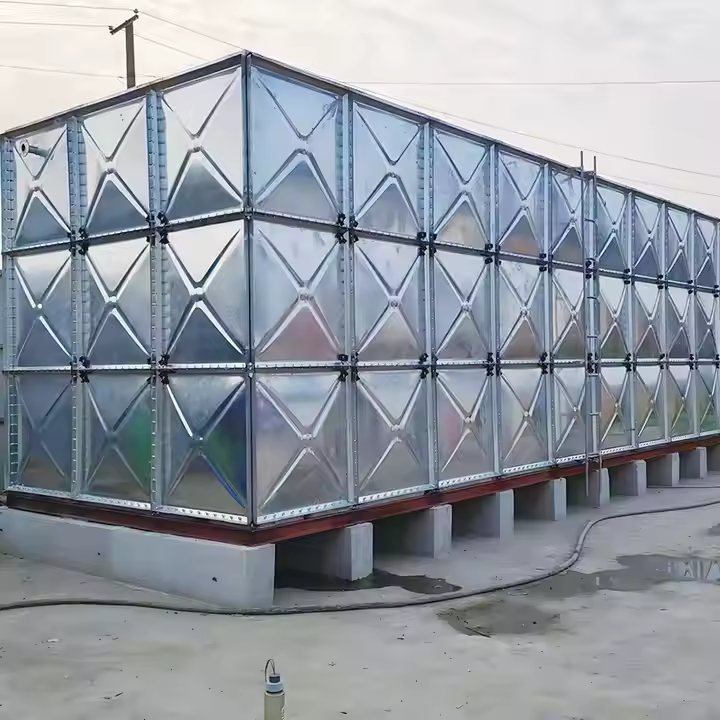
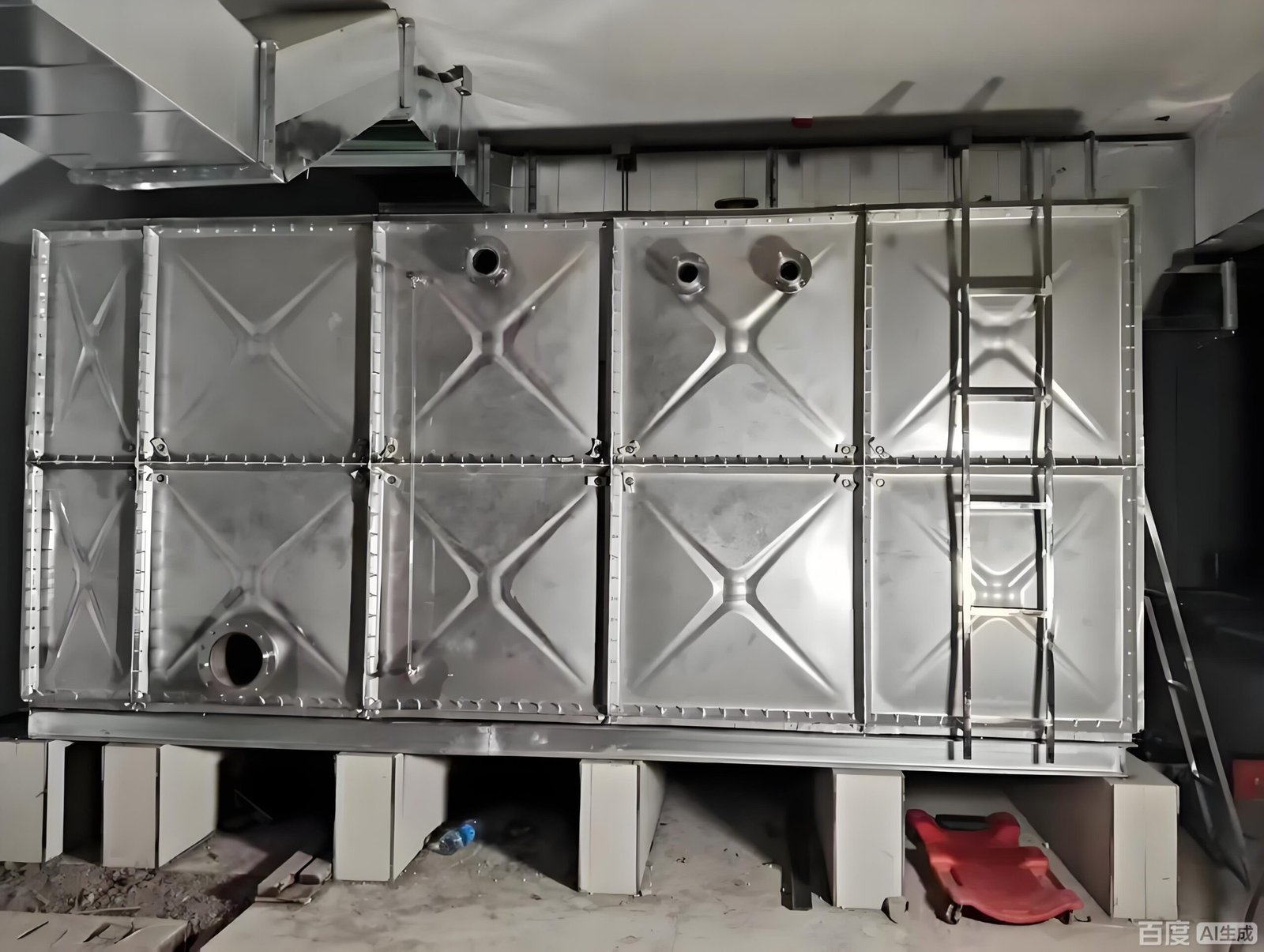
Hot-dip galvanized and protectively coated steel tanks offer a cost-effective route to large-capacity storage where the highest hygiene grade is not the primary driver. Good durability for outdoor and large-volume applications. For potable use, internal coating systems must be certified for drinking water contact.
A practical way to narrow the choice
In practice, the selection logic often runs like this: if the priority is hygiene and maintenance-free life and budget allows, stainless steel leads. If the priority is corrosion immunity, modularity, and confined-space installation, GRP leads. If the priority is very large capacity with proven AWWA compliance and decades of service, glass-fused-to-steel leads. If the priority is large capacity at the lowest cost with acceptable durability, galvanized or coated steel leads. The final decision should always be confirmed against the specific water chemistry, climate, and standards of the project.
Engineering factors that determine service life
Material choice is necessary but not sufficient. Two tanks of the same material can have very different service lives depending on how they are engineered for the site. Several factors deserve attention at the design stage.
Structural loads
Municipal tanks must be designed for the loads they will actually experience: hydrostatic pressure of a full tank, wind loads on tall or exposed tanks, and — critically in many regions — seismic loads. Underestimating seismic action is one of the most consequential design errors. Design to the applicable code (AWWA, API, or Eurocode) should include explicit wind and seismic load calculations for the specific site.
Foundation design
A tank is only as stable as what it sits on. Soil bearing capacity, settlement behavior, and foundation type must be matched to the tank’s loaded weight. Differential settlement stresses panel joints and seals, leading to leaks over time.
Sealing & leak prevention
For sectional and bolted tanks, the sealing system between panels is where most leaks originate. Quality of gaskets, bolt design, and assembly workmanship directly determine long-term watertightness — which is exactly why factory testing and qualified installation matter so much.
Thermal management
In cold climates, insulation prevents freezing and maintains water temperature; in hot climates, it limits temperature rise that can accelerate microbial growth. Insulated GRP and insulated stainless options exist precisely for these conditions.
Maintenance & turnover
Stored potable water that sits too long can stagnate. Good design includes proper inlet/outlet positioning to promote turnover, accessible internal inspection, and features that allow draining and cleaning without taking the entire system offline.

Sizing municipal storage correctly
Correct sizing balances three demands: equalization storage to cover the gap between supply rate and peak consumer demand, fire reserve as required by local code, and emergency reserve for treatment or power interruptions. The total required volume is the sum of these components, adjusted for the specific population, peak demand factors, and regulatory requirements of the service area.
Oversizing wastes capital and can worsen water turnover and quality. Undersizing risks supply shortfalls during peak demand or emergencies. Getting this right requires a demand analysis rather than a rule of thumb, which is why sizing should be part of the engineering design phase, supported by the tank manufacturer’s technical team where appropriate.
From specification to commissioning
A well-run municipal storage project follows a structured workflow, and understanding it helps buyers evaluate suppliers.
Requirement review
Application, required capacity, site conditions, climate, and the applicable local standards are established up front.
Engineering design
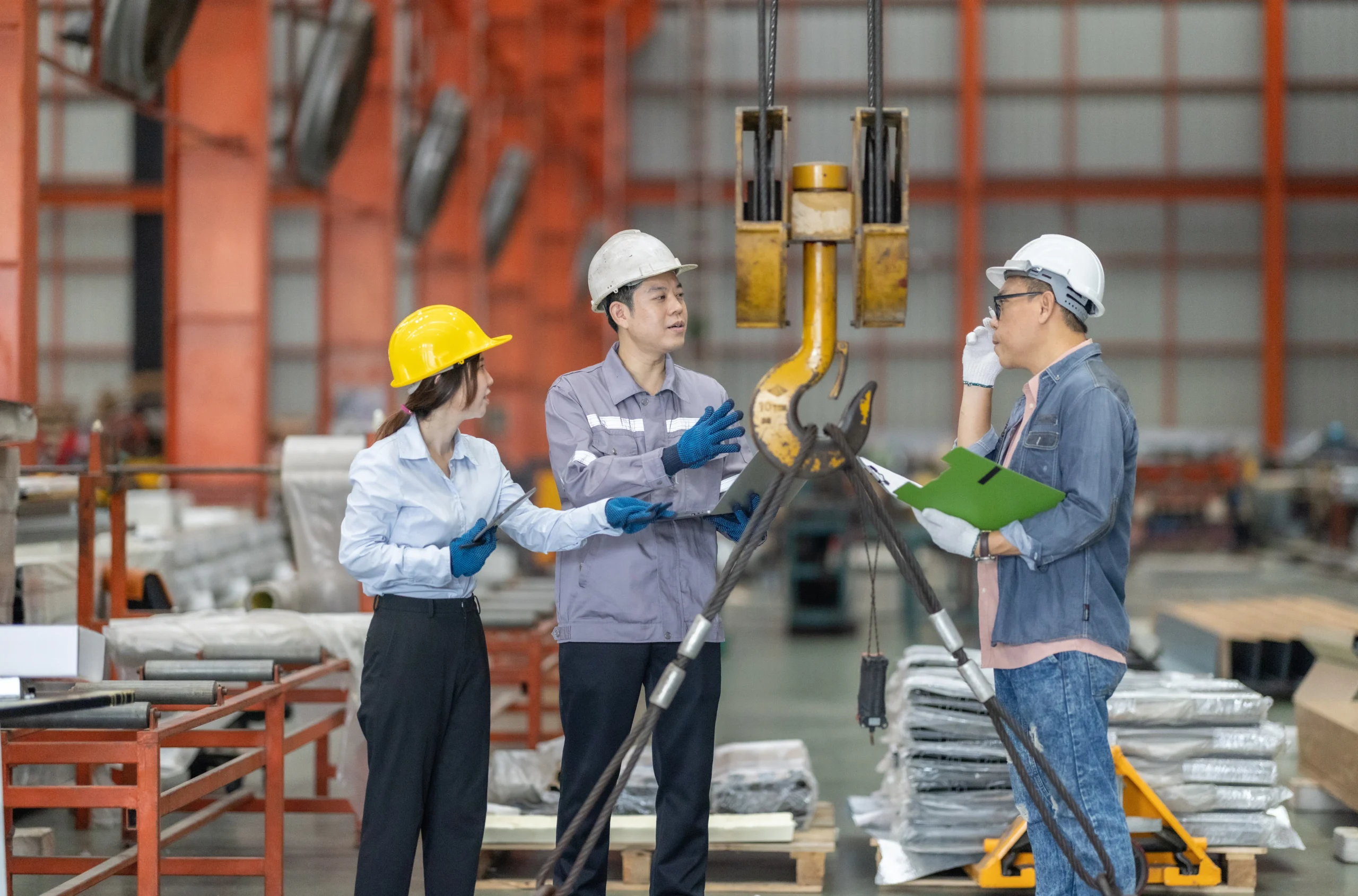
A capable supplier produces CAD drawings, structural load calculations including wind and seismic where relevant, and a material recommendation matched to the water chemistry and environment.
Manufacturing & QC
Certified materials with factory inspection, dimensional checks, and sealing or leak testing before dispatch. For potable projects, material certification documentation accompanies the tanks.
Logistics & delivery
Export-grade packaging, optimized container loading, and appropriate trade terms (EXW, FOB, CIF, DAP). Modular and bolted tanks ship flat-packed and assemble on site, reducing freight cost and easing access at constrained sites.
Installation & lifecycle
Installation manuals and guidance, support for local installation teams on overseas projects, spare parts availability, and ongoing technical support. Because municipal tanks serve for decades, after-sales support is part of the value — not an afterthought.
A representative municipal project
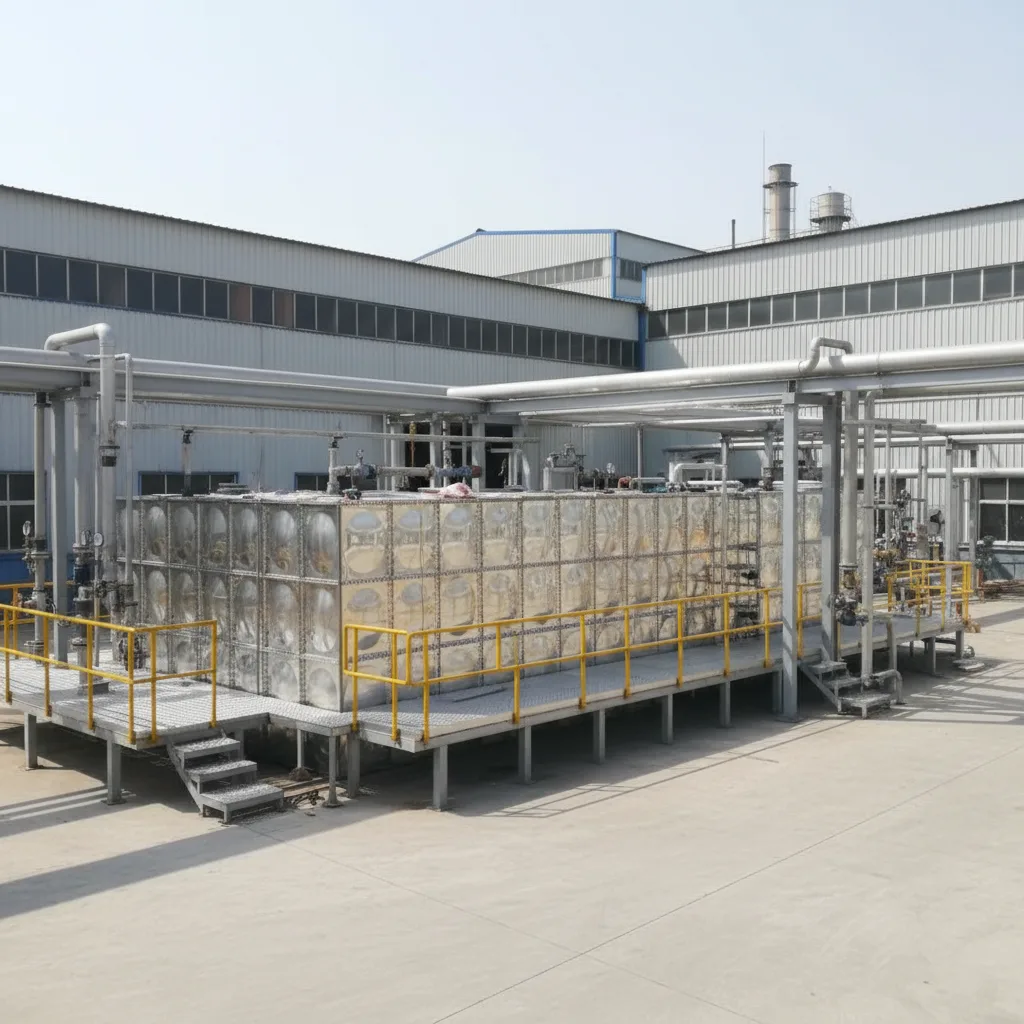
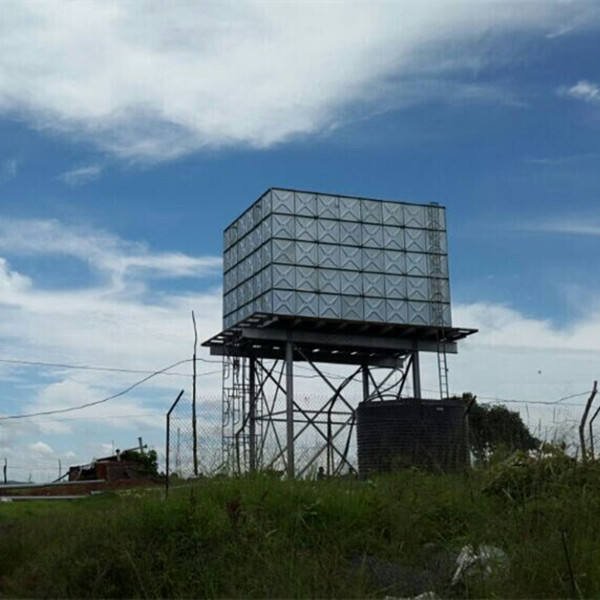
Consider a municipal water supply project in the Middle East requiring a 5,000 m³ storage system. The water is for public distribution, so wetted materials must meet NSF/ANSI 61. Regional structural practice calls for design to AWWA D103, and the hot, arid climate and seismic considerations factor into the load calculations. The site has constrained access, which favors a bolted steel configuration that ships flat-packed and assembles on site without heavy lifting equipment.
5,000 m³ Bolted Steel System
- Industry
- Municipal Water Supply
- Region
- Middle East
- Capacity
- 5,000 m³
- Standards
- AWWA D103 · NSF/ANSI 61
- System
- Bolted Steel · Modular
The engineering path for a project like this runs from requirement review through structural calculation and CAD drawings, to manufacture using certified materials, factory testing, export packaging, and on-site assembly with installation support. The result is a system designed for decades of maintenance-light service, compliant with the standards the local authority requires, and delivered in a form suited to the realities of the site. This is the kind of outcome a structured engineering-led process is meant to produce — and it illustrates why material, standard, configuration, and logistics all have to be decided together rather than in isolation.
How ZENTVO approaches municipal storage
ZENTVO designs and manufactures engineered water storage systems for municipal, industrial, and fire protection projects, with a product range spanning GRP/FRP, stainless steel (304 and 316), galvanized and coated steel, and glass-fused-to-steel modular tanks. That breadth matters for municipal work specifically, because it means the recommended solution can be matched to the project rather than the project being forced toward whatever a single-material supplier happens to make.
For municipal projects, the engineering-led workflow includes project-specific structural calculations, CAD drawings, and material recommendations developed against site conditions, capacity requirements, and the applicable international standards — NSF, AWWA, EN, and API as the project demands. Manufacturing is carried out under an ISO 9001 quality process, with certified materials, factory inspection, dimensional checks, and sealing tests before dispatch. For overseas projects, ZENTVO provides export-ready documentation, optimized container loading, installation guidance for local teams, and long-term technical and lifecycle support.
The underlying philosophy is that municipal storage tanks are not simply products but infrastructure assets — systems a utility relies on for decades. That framing is the right one for any municipal buyer to adopt when evaluating options.
Frequently asked questions
Which tank material is best for municipal potable water storage?
There is no single best material. Stainless steel offers the highest hygiene and maintenance-free life; GRP offers corrosion immunity and modular installation; glass-fused-to-steel suits very large AWWA-compliant capacities; galvanized and coated steel offer cost-effective large-volume storage. The right choice depends on water chemistry, climate, capacity, site access, and budget, and should be confirmed during engineering review.
What certifications should I require for a potable municipal tank?
For drinking water contact, look for NSF/ANSI 61 and/or WRAS approval on the wetted materials. For structural design, the applicable standard (AWWA D103, API 650, or relevant EN/Eurocode) should be confirmed. ISO 9001 certification of the manufacturer’s process provides additional assurance of consistent quality.
How long should a municipal water tank last?
Well-engineered municipal tanks are designed for service lives of 30 to 50 years or more. Achieving that depends on correct material selection for the environment, sound structural and foundation design, quality sealing, and ongoing maintenance.
Can large-capacity tanks be delivered to sites with limited access?
Yes. Bolted and sectional (SMC/GRP) tanks ship flat-packed and are assembled on site, making them well suited to constrained sites and overseas projects where heavy lifting equipment or large prefabricated tanks are impractical.
Do you provide engineering design for municipal projects?
A capable supplier should provide project-specific structural calculations, CAD drawings, and material recommendations based on your site conditions, capacity requirements, and the standards your authority requires. This engineering support should come before, not after, the procurement decision.
Next step · Engineering proposal
Specify your municipal storage system with confidence.
Municipal water storage is a multi-decade public infrastructure decision, and it rewards an engineering-led approach: the right material for the water and climate, the right structural design for the loads and site, the right standards for the jurisdiction, and a delivery and support model that lasts as long as the tank does. The most valuable first step is a technical review of your project — ZENTVO’s engineering team can provide structural calculations, CAD drawings, and a material recommendation matched to your capacity, standards, and site conditions.