
Fire Water
Storage Tank
The dedicated emergency water reserve that feeds sprinklers, hydrants, hose reels or fire pumps. Sized by code-mandated demand × duration — not by ordinary water demand. Supplied to NFPA 22, EN 12845, FM Global DS 3-2, LPCB LPS 1276 and BS 9990.
What Is a Fire Water Storage Tank?
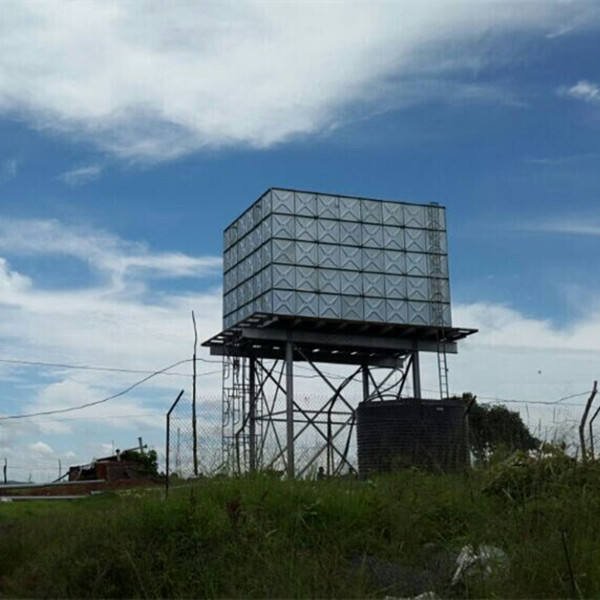
A fire water storage tank is the dedicated emergency water reserve that feeds sprinklers, hydrants, hose reels or fire pumps when public mains supply is insufficient or unreliable. It is the only component in the fire protection chain that is sized by code-mandated demand × duration, anchored to the building’s hazard classification — not by ordinary water demand.
Correct specification must satisfy NFPA 22, EN 12845, FM Global Data Sheet 3-2, LPCB LPS 1276, BS 9990, AS 2118.1 or NBC 2016 Part 4 — depending on the jurisdiction and insurance carrier.
The standard route matters because the same nominal tank can be accepted by one authority and rejected by another due to listing, refill time, suction geometry or cold-weather provisions. ZENTVO fixes the route before quotation so that material selection, effective volume and documentation match the approval path.
ZENTVO does not manufacture one material. We cross-compare GRP/FRP, glass-fused-to-steel, hot-dip galvanized, coated steel and stainless steel against your standard, water chemistry and site constraints — and recommend the material that actually passes approval.
| Item | ZENTVO specification |
|---|---|
| Governing standards | NFPA 22, NFPA 13, NFPA 14, NFPA 20, EN 12845, BS 9990, AS 2118.1, NBC 2016 Part 4, FM Global DS 3-2, LPCB LPS 1276 |
| Capacity range | 10 m³ – 5,000+ m³ (single tank); larger via tank farm |
| Material options | GRP/FRP sectional, glass-fused-to-steel, hot-dip galvanized, coated steel, 304 / 316 stainless |
| Approval routes | FM Approved, LPCB-listed, WRAS for dual-use potable, UL where specified |
| Cold-weather provisions | NFPA 22 §16 — insulation + heating to maintain water ≥ 4.4 °C / 40 °F |
| Auto-refill rate (NFPA 22) | 36 h for fire-only; 8 h for combined fire + domestic |
| Anti-vortex pump suction | Per NFPA 20 §4.15 — submergence H ≥ 0.6 D + 0.4 m typical |
| Design life | 30+ years (steel); 25+ years (GRP/FRP) |
| Engineering turnaround | CAD/GA drawings within 24 hours of confirmed inputs |
Fire Water Tank Capacity — Worked Examples
The most common procurement mistake is buying nominal volume when the standard requires effective volume between low-level alarm and suction outlet. The worked examples below show minimum effective volume by hazard class, then explain where freeboard, hydrant demand and pump-suction submergence must be added.
| EN 12845 — Hazard Class | Density (mm/min) | Area (m²) | Duration | Min. Effective Volume |
|---|---|---|---|---|
| LH (Light Hazard) | 2.25 | 84 m² | 30 min | 5.7 m³ |
| OH1 (Ordinary — Schools) | 5.0 | 72 m² | 60 min | 21.6 m³ |
| OH2 (Ordinary — Office) | 5.0 | 144 m² | 60 min | 43.2 m³ |
| OH3 (Ordinary — Retail) | 5.0 | 216 m² | 60 min | 64.8 m³ |
| OH4 (Ordinary — Heavy Retail) | 5.0 | 360 m² | 60 min | 108.0 m³ |
| HHP1 (High Hazard Process) | 7.5 | 260 m² | 90 min | 175.5 m³ |
| HHP2 | 10.0 | 260 m² | 90 min | 234.0 m³ |
| HHP3 | 12.5 | 260 m² | 90 min | 292.5 m³ |
Add hydrant and hose reel demand separately per EN 12845 §6.2. Add anti-vortex submergence + freeboard (+5 to +10%) on top.

NFPA 13 (US, Canada, FM-aligned markets)
| Sprinkler Hazard | Density (gpm/ft²) | Duration | Approx. Volume |
|---|---|---|---|
| Light Hazard | 0.10 | 30 min | ~17 m³ |
| Ordinary Hazard 1 | 0.15 | 60–90 min | ~51–77 m³ |
| Ordinary Hazard 2 | 0.20 | 60–90 min | ~68–102 m³ |
| Extra Hazard 1 | 0.30 | 90–120 min | ~255–340 m³ |
| Extra Hazard 2 | 0.40 | 90–120 min | ~340–455 m³ |
For NFPA 14 standpipe systems add 500 gpm for the first standpipe + 250 gpm each additional, capped at 1,000 gpm typical Class I, 30 min minimum duration.
| BS 9990 (UK fire mains) | Flow / Duration | Minimum Volume |
|---|---|---|
| Wet rising mains | 1,500 L/min, 45 min minimum | 67.5 m³ for riser duty |
What Counts as “Effective Volume”
A 100 m³ nominal tank typically delivers only 85–90 m³ of effective fire reserve. Always quote your fire reserve as effective volume and require the supplier to confirm it on the GA drawing with the LWLA and outlet centreline dimensions.
| Volume loss item | Typical allowance | Standard reference |
|---|---|---|
| Freeboard above overflow | 150 – 300 mm | NFPA 22 §4.6 |
| Volume above overflow → high-level alarm | 50 – 100 mm | Project-specific |
| Volume between LWLA and suction outlet | 200 – 500 mm + anti-vortex submergence | NFPA 22 §4.6 |
| Anti-vortex submergence above outlet centreline | H ≥ 0.6 × D + 0.4 m (D = suction DN) | NFPA 20 §4.15 |
| Sediment allowance below outlet | 100 – 150 mm | NFPA 22 §4.6 |
Fire Tank Classification — Three Splits That Change the Spec
Gravity vs Suction Tank
- Gravity — elevated, no fire pump, pressure by height
- Suction — at-grade or basement, fed to fire pump (NFPA 20)
- Selection: building height, available elevation, pump availability
- Most common globally: at-grade suction tank + dedicated fire pump
Dedicated vs Combined
- Dedicated fire — water reserved exclusively for fire
- Combined fire + domestic — shared with potable reserve
- Combined: NSF 61 / WRAS coating required; refill 8 h not 36 h
- Combined requires insurer acceptance; NFPA 22 §4.2
FM Approved vs Code-Compliant
- FM Approved — mandatory for FM-insured industrial & warehouse
- NFPA 22 / EN 12845 compliant — sufficient for non-FM AHJs
- LPCB LPS 1276 — UK third-party listing
- Confirm with the insurance broker before tendering
Pump Suction Geometry — The Detail Most Tanks Get Wrong
NFPA 20 governs the fire pump, not the tank — but the tank suction outlet must respect pump-side geometry or the tank will fail factory acceptance. Without the anti-vortex plate and correct submergence, air entrainment cavitates the fire pump within seconds of fire-pump start.

NFPA 20 §4.15 Suction Requirements
Key parameters ZENTVO verifies on every GA drawing before shipment
Material Selection by Standard
Not every tank material is accepted by every fire code. This table is the single most useful filter at concept stage. ZENTVO supplies all five rows — see each product page for full specifications.
| Material | NFPA 22 | EN 12845 | FM Global DS 3-2 | LPCB | Common use |
|---|---|---|---|---|---|
| Bolted steel (HDG) | NFPA 22 §6 | EN 12845 accepted | FM DS 3-2 approved variants | LPS 1276 | Industrial, municipal, large-volume |
| Coated / welded steel | NFPA 22 §6 | EN 12845 accepted | FM DS 3-2 approved variants | Project-specific | Large dedicated fire tank |
| GRP / FRP sectional | NFPA 22 §10 | EN 12845 with LPCB approval | FM case-by-case | LPS 1276 listed | Building plant rooms, rooftops |
| Glass-fused-to-steel | NFPA 22 §6 | EN 12845 accepted | FM DS 3-2 approved variants | LPS 1276 | Industrial process plant, remote |
| 316 Stainless steel | NFPA 22 §6 route | EN 12845 accepted | FM project route | Project-specific | Hospital, coastal, hygiene-critical |
| Concrete | NFPA 22 §7 | EN 12845 civil route | FM project route | Not typical | Civil works, very large reserves |

Material Trade-Off at a Glance
| Material | Capacity fit | CAPEX index | Plant room access |
|---|---|---|---|
| GRP/FRP sectional | 10–500 m³ | 1.00× | Excellent |
| HDG steel sectional | 50–1,500 m³ | 0.85× | Good (half-panels) |
| Glass-fused steel | 100–5,000 m³ | 1.15× | Limited |
| Coated welded steel | 500–5,000 m³ | 0.95× | Not feasible |
| 316 Stainless | 10–500 m³ | 1.80× | Limited |
Failure Modes Specific to Fire Water Tanks



Pump cavitation at fire-pump start
Insufficient submergence / no anti-vortex plate
Prevention
H ≥ 0.6 D + 0.4 m submergence + anti-vortex plate per NFPA 20 §4.15
Stagnant water corrosion
Reserve sits months / years unused — no turnover
Prevention
GFS or 316 stainless interior; or coated steel + annual inspection per NFPA 25
Frozen tank in winter
No heating in dedicated fire tank in cold climate
Prevention
NFPA 22 §16 heating + insulation; verify lowest-recorded ambient; ZENTVO supplies to −40 °C
Effective volume shortfall at acceptance test
Nominal volume quoted, not effective volume
Prevention
Document effective volume on GA drawing; supplier signs off LWLA / outlet centreline
Insurer rejects tank at inspection
Material not FM Approved — discovered at delivery
Prevention
Confirm FM Approval requirement before PO; FM-insured sites only — ask the broker
Anchor failure in earthquake
No seismic design for anchor or shell
Prevention
NFPA 22 §14 / ASCE 7 / EN 1998 anchor design submitted with GA drawing
Typical Applications and Specification Path
Commercial Building Sprinkler Reserve
EN 12845 OH / NFPA 13 OH — GRP sectional (plant room), bolted HDG steel (basement)
20 – 200 m³
High-Rise Combined Sprinkler + Standpipe
NFPA 13 + 14, EN 12845 + BS 9990 — Bolted steel, GFS, or 316 stainless for combined potable
100 – 500 m³
Warehouse / Logistics
NFPA 13 EH, FM Global DS 8-9 — Bolted steel or welded steel, often FM Approved
200 – 1,500 m³
Industrial Process Plant
NFPA 22 + FM DS 3-2 — Glass-fused steel, welded coated steel
500 – 5,000 m³
Hotel / Hospital
NFPA / local code; combined fire + domestic — 316 stainless or WRAS-coated steel, NSF 61
50 – 300 m³
Remote / Oil & Gas Infrastructure
NFPA 22, API-related — GFS or welded coated steel; insulated for cold climate
500 – 5,000 m³
Fire Water Tank RFQ Checklist
Send these fourteen RFQ inputs to request a quote within 24 hours. The three highlighted items are the most decision-critical because they determine effective volume, approval route and pump-suction geometry before ZENTVO returns a draft GA drawing.
- 1Required effective fire reserve volume (m³) — not nominal
- 2Sprinkler hazard class (LH / OH1–4 / HHP1–4 / EH1–2) or raw demand × duration
- 3Hydrant / standpipe / hose reel additional demand
- 4Pump suction DN, NPSH-required, pump start sequence (NFPA 20 / EN 12845)
- 5Governing standard (NFPA 22 / EN 12845 / BS 9990 / AS 2118 / NBC 2016 / local)
- 6FM Approval / LPCB listing required? State Yes or No after insurer review; FM-insured warehouses normally require FM Approval.
- 7Dedicated fire reserve, or combined with domestic / process?
- 8Gravity tank (elevated) or suction tank (at-grade / basement)?
- 9Site lowest-recorded ambient temperature (cold-weather sizing)
- 10Seismic zone / design category
- 11Site space envelope and access (door / lift / crane)
- 12Indoor / outdoor / underground
- 13Country of installation
- 14Required FOB date
Frequently Asked Questions
How do I calculate the required fire water tank capacity?
What is the difference between nominal and effective volume?
Which standard governs the tank itself?
Do I need an FM Approved tank?
Can a fire water tank also store potable water?
What is the minimum water temperature for a fire tank in a cold climate?
What pump suction details does the tank need to support?
What information is required to quote a fire water tank?
Sources & Technical Review
This page combines ZENTVO manufacturing documentation with public fire-protection, approval and potable-water references. Final compliance should be checked against the edition required by the engineer of record, insurer and local authority having jurisdiction.
- NFPA 22 — water tanks for private fire protection.
- BS EN 12845 — automatic sprinkler system design, installation and maintenance.
- FM Global resources — FM-insured fire-protection design references, including property loss prevention data sheets.
- LPCB LPS 1276 — approval standard for sectional tank systems used in fire protection.
- NSF/ANSI/CAN 61 — drinking-water system components for combined fire + domestic tanks.
Ready to size and specify your fire reserve?
LPCB LPS 1276 · FM Global DS 3-2 · NFPA 22 · EN 12845 · ISO 9001 · ISO 14001 · BS EN ISO 1461. GA drawing and effective-volume confirmation within 24 hours of complete inputs.
Request the ZENTVO Fire Water Tank Capacity Calculator — EN 12845 / NFPA 13 worked sheet, free download.
Download CalculatorRequest the Fire Tank Material Decision PDF — single-page filter by code, capacity range and approval requirement.
Download PDFSend the 14-item RFQ list to info@zentvo.com. GA drawing and certifications package within 24 hours.
Request a Quotation