Bolted Steel Water Tank
Factory-fabricated steel panels, shipped compactly and bolt-assembled on site — engineered for municipal, fire protection, industrial and remote-infrastructure water storage.
A bolted steel water tank is best for projects that need steel strength, modular shipping, fast site assembly and flexible capacity. It is commonly used for municipal water storage, fire protection reserve, industrial water, agricultural water, mining support, commercial building storage and remote infrastructure projects.
A bolted steel water tank is a modular water storage system assembled from factory-fabricated steel panels. The panels are shipped to site and connected with bolts, gaskets and structural components to form a complete storage tank. ZENTVO provides bolted steel water tanks for projects that require reliable storage, flexible capacity, practical installation and export-ready logistics — supplied as a hot-dip galvanized steel tank, coated steel tank or stainless steel bolted tank depending on project requirements.
At-a-Glance Guidance
| Item | Practical guidance |
|---|---|
| Best project fit | Export projects, remote sites, municipal storage, fire reserve, industrial water and fast-track construction |
| Main advantage | Factory-made steel panels can be shipped compactly and assembled on site |
| Material options | Hot-dip galvanized steel, coated steel or stainless steel depending on water type |
| Main selection risk | Choosing the construction method without checking water chemistry, foundation and site access |
| What buyers should send | Capacity, water type, site location, installation environment, tank dimensions and connection schedule |
What Buyers Actually Need to Decide
Most teams specifying a bolted steel tank are not looking for a definition — they are solving a project constraint: delivery time, remote installation, limited site welding, shipping volume, large capacity, or maintenance access. The decisions that matter are:
- Can the tank be shipped in containers?
- Can it be assembled without extensive site welding?
- Which steel material is suitable for the water?
- How should the foundation be prepared?
- What accessories and drawings are needed before production?
- What information is required for an accurate quotation?
This page answers each of those below.
What Is a Bolted Steel Water Tank?
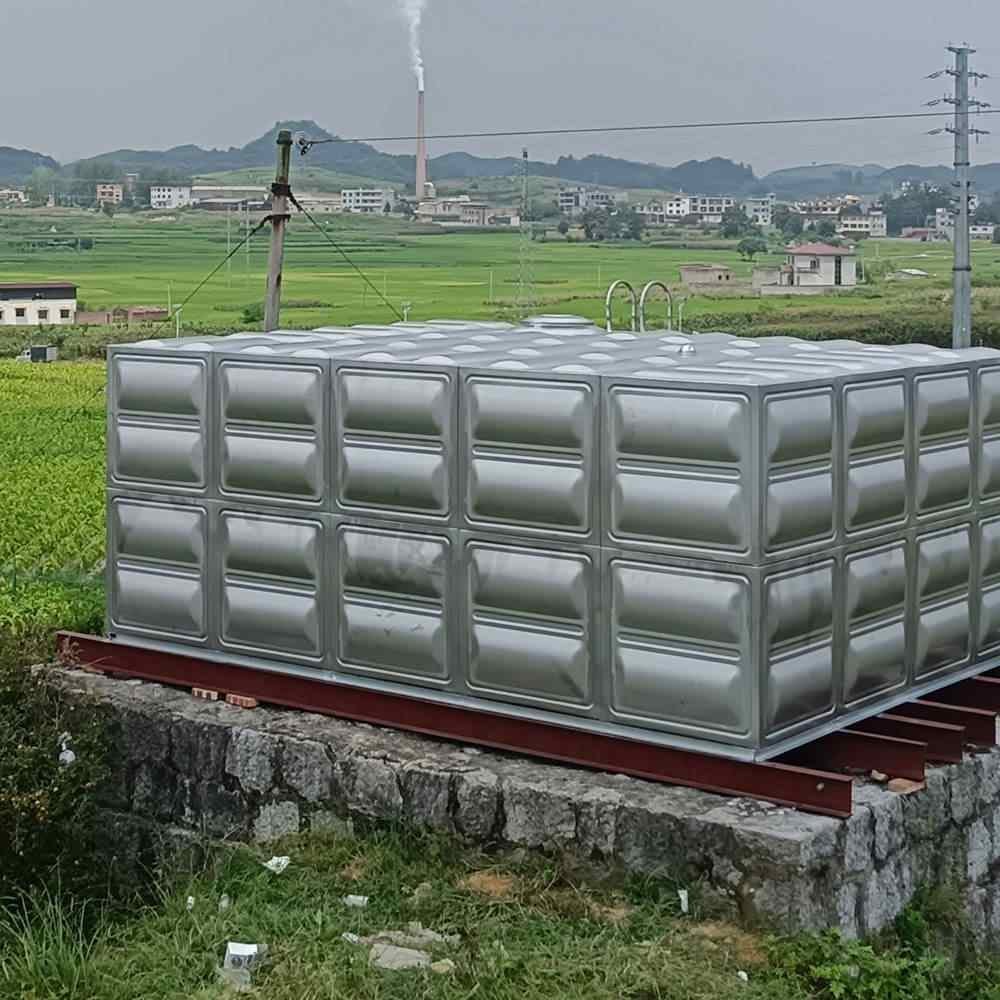
A bolted steel water tank is different from a traditional welded tank. Instead of welding the main shell on site, the tank is built from prefabricated modular panels manufactured in a controlled factory environment, packed for shipping and assembled at the project location.
The bolted design is especially useful when:
- The project is located far from a large fabrication workshop.
- Site welding is difficult, restricted or expensive.
- The tank needs to be delivered in containers.
- Installation speed is important.
- The tank capacity or layout needs to be customized.
- Future maintenance access and component replacement are valued.
For many international infrastructure projects, bolted steel storage tanks provide a practical balance of strength, cost and construction efficiency. If you are weighing construction methods, our guide on bolted vs welded steel water tanks compares both for real project conditions.
Material Options
Bolted steel tanks can be supplied in different material systems. The right option depends on water type, environment, budget and project standards.
Material Selection by Water Type
| Stored water | Often considered | Engineering note |
|---|---|---|
| Potable water | Stainless steel, approved coated/liner system, project-specific bolted steel | Confirm water-contact requirements and local standard |
| Fire reserve water | Hot-dip galvanized steel, coated steel, bolted steel | Review stagnation, inspection access and corrosion protection |
| Industrial process water | Coated steel, stainless steel, galvanized steel if compatible | Water chemistry should drive material choice |
| Raw water | Coated steel or galvanized steel depending on chemistry | Sediment and maintenance access matter |
| Agricultural water | Galvanized or coated bolted steel | Cost, transport and site assembly are usually important |
| Coastal project storage | Stainless steel 316 or suitable coating system | Salt exposure increases corrosion risk |
Use this table as an early screen for matching water type to tank material; final material is confirmed by water analysis and site review.
Typical Applications
Bolted steel water tanks are used across many sectors:
For large projects, bolted steel tanks are often selected because the modular design can reduce transportation difficulty and shorten the installation schedule compared with some site-built alternatives.
Why Choose a Bolted Steel Tank?
Faster Project Delivery
Factory-fabricated panels are produced, packed and shipped efficiently, then assembled on site using the installation drawing — reducing extensive site fabrication.
Easier Logistics
Large welded tanks can be hard to transport whole. Bolted tanks ship as panels and accessories, suiting export projects, remote locations and containerized delivery.
Flexible Capacity
The modular panel system allows different heights, diameters or rectangular configurations depending on the tank type and project requirement.
Controlled Manufacturing
Panel forming, punching, coating or galvanizing and accessory preparation are carried out under factory quality control before shipment.
Practical Maintenance
Because the tank is assembled from defined components, access, inspection and future maintenance can be planned more clearly.
Design Considerations
To design a reliable bolted steel water tank, several engineering factors must be reviewed.
Capacity & Dimensions
The required storage volume determines tank height, panel quantity, foundation load and shipping volume. If site space is limited, review tank shape and height early.
Water Type
Potable, fire reserve, raw, process and industrial water may require different material and sealing recommendations.
Installation Environment
Outdoor exposure, coastal climate, industrial atmosphere, high temperature, freezing conditions and seismic or wind loads can all influence the design.
Foundation
A stable and level foundation is essential. Design should consider filled tank weight, local soil conditions and project requirements.
Connections & Accessories
Inlet, outlet, overflow, drain, vent, manhole, ladder, level indicator and other accessories should be confirmed before production to match site piping.
Site Access
Door width, lifting space and assembly clearance affect whether panels and bundles can reach the installation point smoothly.
Fabrication & Site Assembly

Factory Fabrication Details
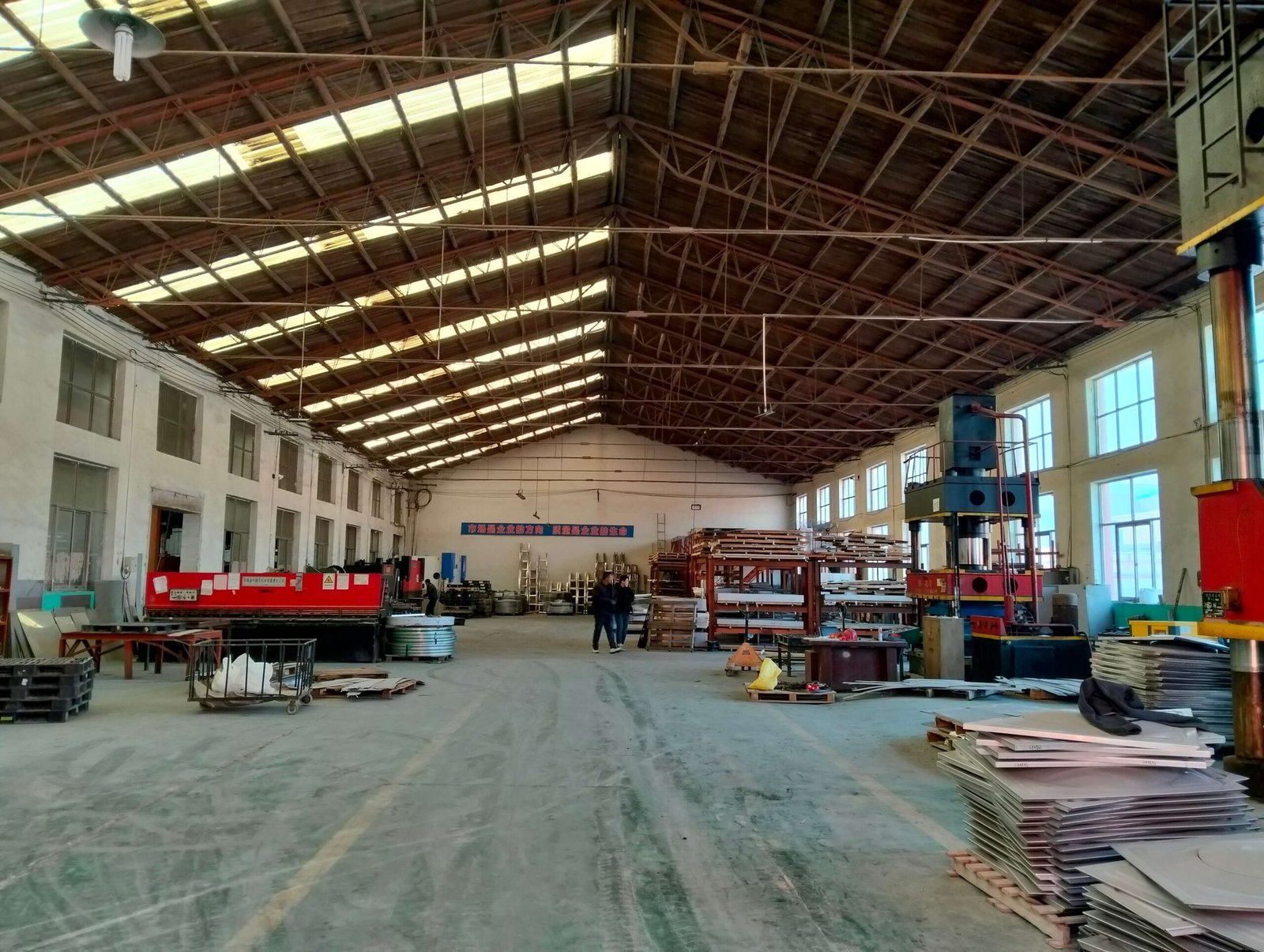
The goal is to make each panel and accessory predictable before it arrives on site. Important fabrication details include:
- Panel cutting and forming accuracy
- Bolt hole alignment
- Edge treatment and surface preparation
- Galvanizing, coating or stainless surface finish
- Reinforcement component matching
- Gasket and sealing accessory selection
- Marking and packing sequence for site assembly
For international projects, marking and packing are especially important. A well-packed bolted tank should let the installation team identify panels, bolts, accessories and drawings without confusion.
Site Assembly Requirements
Bolted tanks are easier to install than many welded systems, but they still require disciplined site work. The following points affect leakage prevention and structural performance:
- Foundation must be level and stable.
- Panels should be installed in the correct sequence.
- Gaskets must be placed cleanly and continuously.
- Bolts should be tightened according to the recommended pattern.
- Nozzle connections should not create excessive pipe stress.
- Filling should be gradual during leakage inspection.
- Final inspection should be completed before operation.
If the project is in a remote location, ZENTVO can help prepare installation guidance so the local team understands the assembly process before the tank arrives.
From Inquiry to Delivery
ZENTVO supports bolted steel water tank projects through a structured process that reduces uncertainty before procurement.
Requirement review
Material & type recommendation
Capacity & layout proposal
CAD drawing & confirmation
Production & QC inspection
Packing & export delivery
Installation & after-sales
Quality Control
Reliable bolted steel storage tanks depend on accurate panel production and proper sealing. ZENTVO quality checks — carried out under certified management systems — may include material verification, panel dimensional inspection, hole alignment and assembly matching, coating or galvanized surface review, gasket and accessory checking, and packing inspection before shipment. For projects requiring technical documentation, ZENTVO can prepare supporting files according to the order scope.
How to Request a Quotation
To receive an accurate bolted steel tank proposal, send capacity, water type, installation country and site environment, preferred material (if known), indoor or outdoor installation, available site dimensions, connection requirements and any project drawings or standards. ZENTVO will review the information and recommend the appropriate bolted steel water tank solution.
Inquiry Template for Faster Quotation
- Project name & country
- Tank application
- Required usable capacity
- Water type
- Preferred material, if known
- Indoor or outdoor installation
- Coastal / seismic / high-wind condition
- Tank footprint or height limitation
- Foundation status
- Nozzle schedule
- Accessories required
- Destination & target schedule
With this information, ZENTVO can recommend the correct bolted steel water tank type instead of quoting a generic product.
Request a Bolted Steel Tank Layout & Quotation
Send your capacity, water type and site location. ZENTVO will recommend galvanized, coated or stainless steel construction and provide a project-based proposal — with a free 24-hour engineering package.
Standards, Compliance and Engineering Support
ZENTVO bolted steel tanks are engineered to AWWA D103 — the recognised standard for factory-coated bolted steel water storage tanks — with EN standards applied as required. Potable-water projects are specified against NSF/ANSI 61 and WRAS; where welded construction is chosen instead, API 650 applies. Tanks are built under ISO-certified management systems with certified materials, factory inspection, and dimensional and sealing tests before shipment.
Each project includes a free 24-hour engineering package (CAD/GA drawings, structural load calculation, and material recommendation), then export packaging and delivery in roughly 15–35 working days (EXW / FOB / CIF / DAP), with installation guidance, spare parts, and a 24/7 technical hotline.
Engineered Water Storage Systems
ZENTVO designs and manufactures engineered water storage systems for municipal, industrial, and firefighting use, in GRP/FRP, stainless steel, and galvanized/steel series — so the bolted tank can be supplied in galvanized, coated, or stainless construction to match the water and site. Manufacturing is backed by certified materials and factory QC at our manufacturing facility.
Compliance covers NSF/ANSI 61 and WRAS (potable), AWWA D103 and API 650 (structural), EN standards, and ISO-certified management systems. Contact: info@zentvo.com · +86 153-1889-6990.
FAQ — Bolted Steel Water Tank
What is a bolted steel water tank?
A bolted steel water tank is a modular storage tank assembled from steel panels connected by bolts and sealed with gaskets. It is designed for efficient transportation, flexible capacity and faster site assembly.
Is a bolted steel tank better than a welded tank?
It depends on the project. Bolted tanks are often better for export projects, remote sites and fast installation. Welded tanks may still be suitable for certain large permanent installations where site welding resources are available.
Can bolted steel tanks be used for potable water?
Yes, but the correct material, coating, lining, gasket and documentation should be selected based on the potable water requirements and local standards.
What material options are available?
Common options include hot-dip galvanized steel, coated steel and stainless steel. ZENTVO can recommend the best option based on water type, environment and budget.
Are bolted tanks suitable for large capacity storage?
Yes. Bolted steel tanks are widely used for medium and large water storage projects. Final capacity depends on design, site conditions and project requirements.