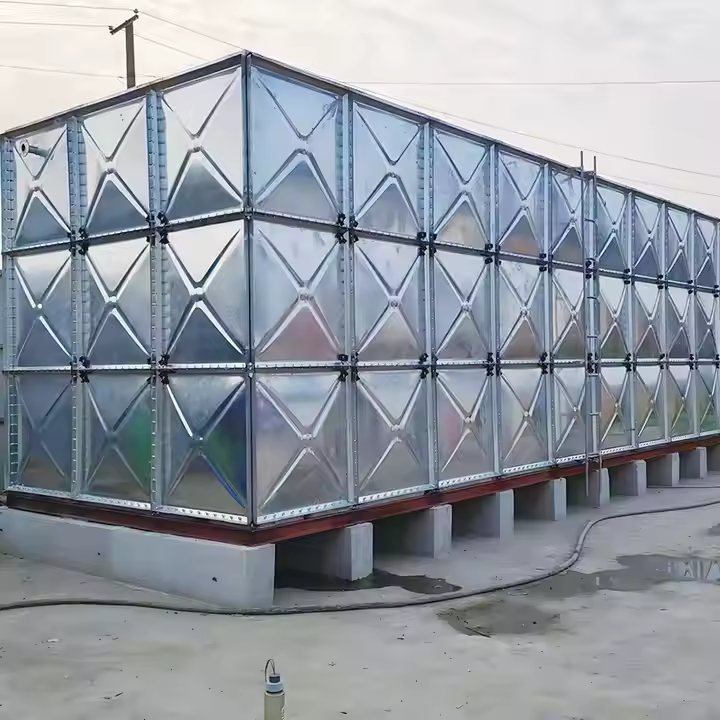
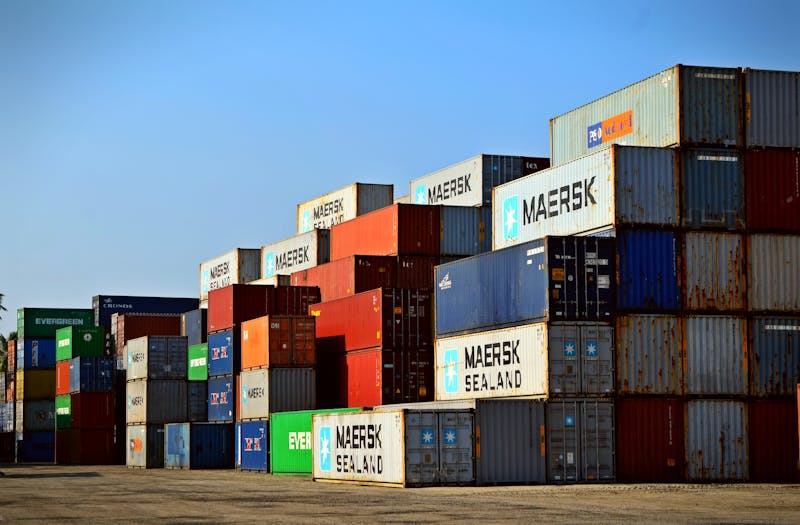
Bolted
Factory panels · containerized · fast site assembly
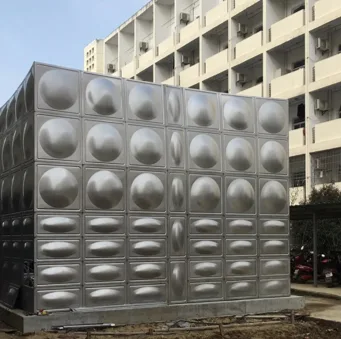
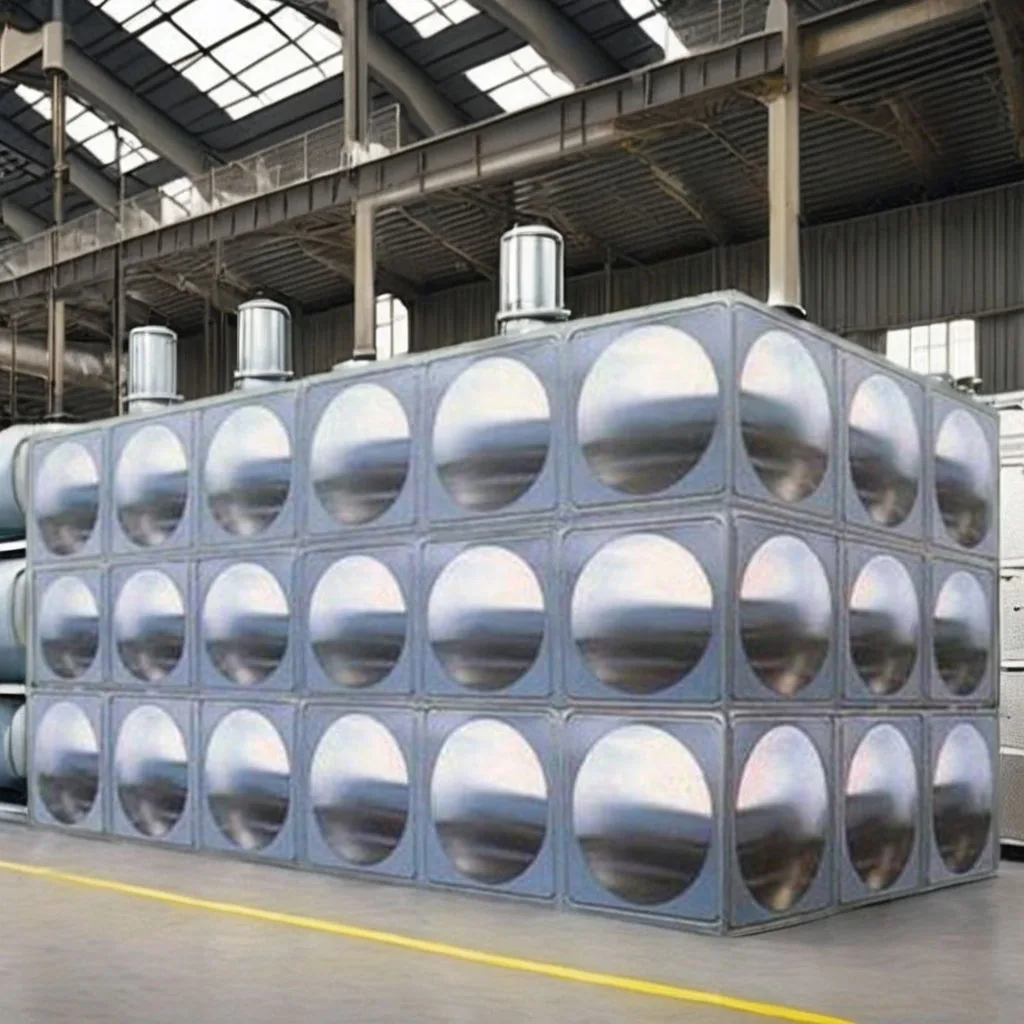
Welded
Rigid monolithic shell · site fabrication · welded seams
Bolted vs Welded Steel Water Tanks: Cost, Installation & Maintenance Compared
Bolted steel water tanks are usually better for export projects, remote sites, fast installation and modular delivery. Welded steel tanks may be better when the project has strong local fabrication resources, enough site time and a design that benefits from welded construction. The best choice depends on total installed cost — not only tank price.
Key Takeaways
- Bolted tanks reduce site welding and simplify containerized shipping.
- Welded tanks depend heavily on welding quality, site conditions and inspection control.
- Bolted tanks are often easier for remote, overseas and fast-track projects.
- Welded tanks can still be suitable for certain large permanent installations.
- Deciding factors: water type, environment, logistics, schedule, inspection and maintenance plan.
- For quotation, request total installed cost assumptions — not just tank supply price.
When engineers compare bolted vs welded steel water tanks, the question is rarely about which method is universally better. The real question is which construction method fits the project conditions, budget, site access, schedule and maintenance plan. Both can provide reliable water storage when designed and installed correctly — but they behave very differently during manufacturing, transportation, installation and long-term service.
Which Risk Do You Want to Control?
Bolted and welded tanks move risk to different parts of the project. Neither method removes risk — the better method is the one whose risks your project can manage better.
The factory panel. The buyer must control panel quality, gasket quality, bolt specification, packing sequence and site assembly discipline.
The welding & surface work. The buyer must control welder qualification, site conditions, weld inspection, distortion, recoating and safety.
Quick Comparison
| Factor | Bolted steel tank | Welded steel tank |
|---|---|---|
| Manufacturing | Factory-fabricated panels | Shop or site welding |
| Transportation | Shipped as modular panels | Large sections or site-fabricated |
| Installation speed | Usually faster on prepared foundation | Often slower due to welding & site work |
| Site labor | Assembly-focused | Welding-focused |
| Quality control | Panel production controlled in factory | Depends strongly on welding & site conditions |
| Remote suitability | Strong | Harder if skilled welding is limited |
| Future modification | Easier in many cases | More difficult |
| Best fit | Export, remote, fast install, modular capacity | Permanent projects with strong site fabrication |
What Each One Is
Assembled from prefabricated steel panels produced in a factory, packed for shipping and connected on site using bolts, gaskets and reinforcement components. Materials may include:
- Hot-dip galvanized steel
- Coated steel
- Stainless steel
- Other project-specific systems
Built by joining steel plates or sections through welding — some fabricated in a workshop and delivered as complete/partial structures, larger tanks often welded on site.
Strong and durable, but performance depends heavily on welding quality, surface treatment, inspection and site conditions.
The modular system makes bolted steel tanks practical for municipal supply, fire reserve, industrial storage, commercial buildings and export projects, while welded stainless steel tanks suit projects that value rigid construction and a clean finish.
Cost Comparison
The initial material cost is only one part of the decision. A true cost comparison should include manufacturing, surface treatment, freight, site labor, equipment, inspection, installation time and maintenance.
Reduces site labor and installation time because main panels are already fabricated. Shipping is efficient — panels pack compactly. For remote or overseas projects this can reduce total project cost even when the product price isn’t the lowest line item.
May appear cost-effective where local welding labor, equipment and inspection are readily available. But site welding can increase total cost if the location is remote, the schedule is tight, weather is difficult or inspection requirements are strict.
Total Installed Cost Factors
When comparing quotations, ask each supplier to separate these items — a lower supply price can become a higher project cost after freight, site work and inspection:
| Cost item | Why it changes the decision | |
|---|---|---|
| Tank supply price | Product price alone may not reflect project cost | |
| International freight | Bolted panels often pack more efficiently | |
| Local transport | Oversized welded sections can be expensive to move | |
| Installation labor | Bolted assembly and welding require different teams | |
| Lifting equipment | Large sections may need heavier equipment | |
| Surface treatment | Site coating or repair can add cost | |
| Inspection | Weld inspection may require more site procedure | |
| Schedule delay risk | Slow installation can affect the wider project | |
| Future maintenance | Repair method affects lifetime cost | |
Installation, Schedule & Logistics
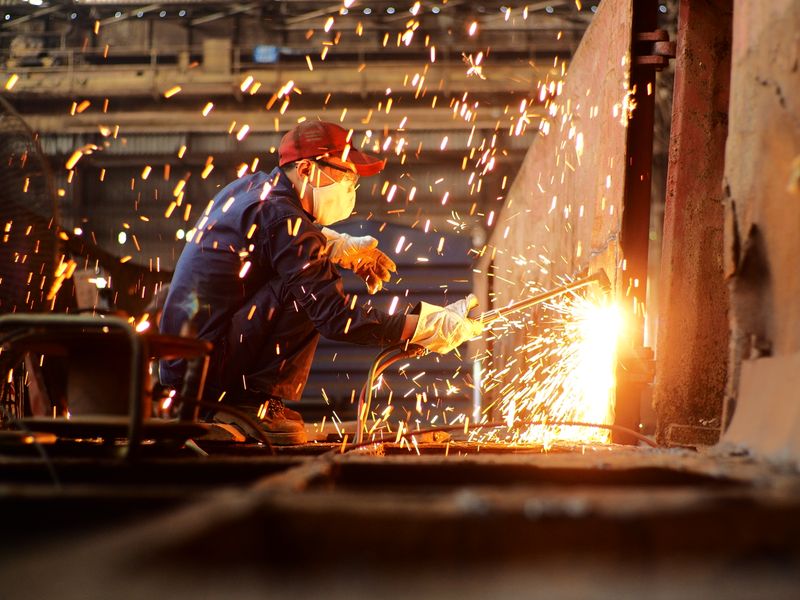
Installation is one of the biggest differences. Bolted tanks are assembled from factory-prepared panels: a trained team follows the drawing, places gaskets, aligns panels and tightens bolts in sequence — usually faster than site welding, especially when the foundation is ready. Welded tanks require welding, surface treatment and inspection on site, where weather, labor skill, access, safety controls and inspection procedures all affect the schedule. For projects where water storage must be operational quickly, bolted tanks are often easier to schedule.
Logistics can decide the project before engineering preferences do. Bolted tanks ship as panels and accessories — suitable for container loading, export delivery, mountain projects, island projects and narrow-access sites. Welded tanks may require oversized transport if fabricated off-site, or significant site work if fabricated on-site. For overseas EPC projects, bolted tanks usually provide a simpler delivery model.
Quality Control Differences
Bolted and welded tanks have different quality control risks. Neither is automatically better — the better choice is the one that can be controlled more reliably under the actual project conditions.
- Panel material specification
- Panel thickness & forming accuracy
- Hole alignment
- Surface protection / coating quality
- Gasket material & compatibility
- Bolt grade & corrosion protection
- Packing marks & installation drawings
- Foundation flatness requirement
- Water filling & leakage test procedure
- Welding procedure specification
- Welder qualification
- Plate material certificates
- Weld inspection method
- Surface preparation standard
- Coating or lining system
- Weather protection during site work
- Distortion control
- Hydrotest procedure
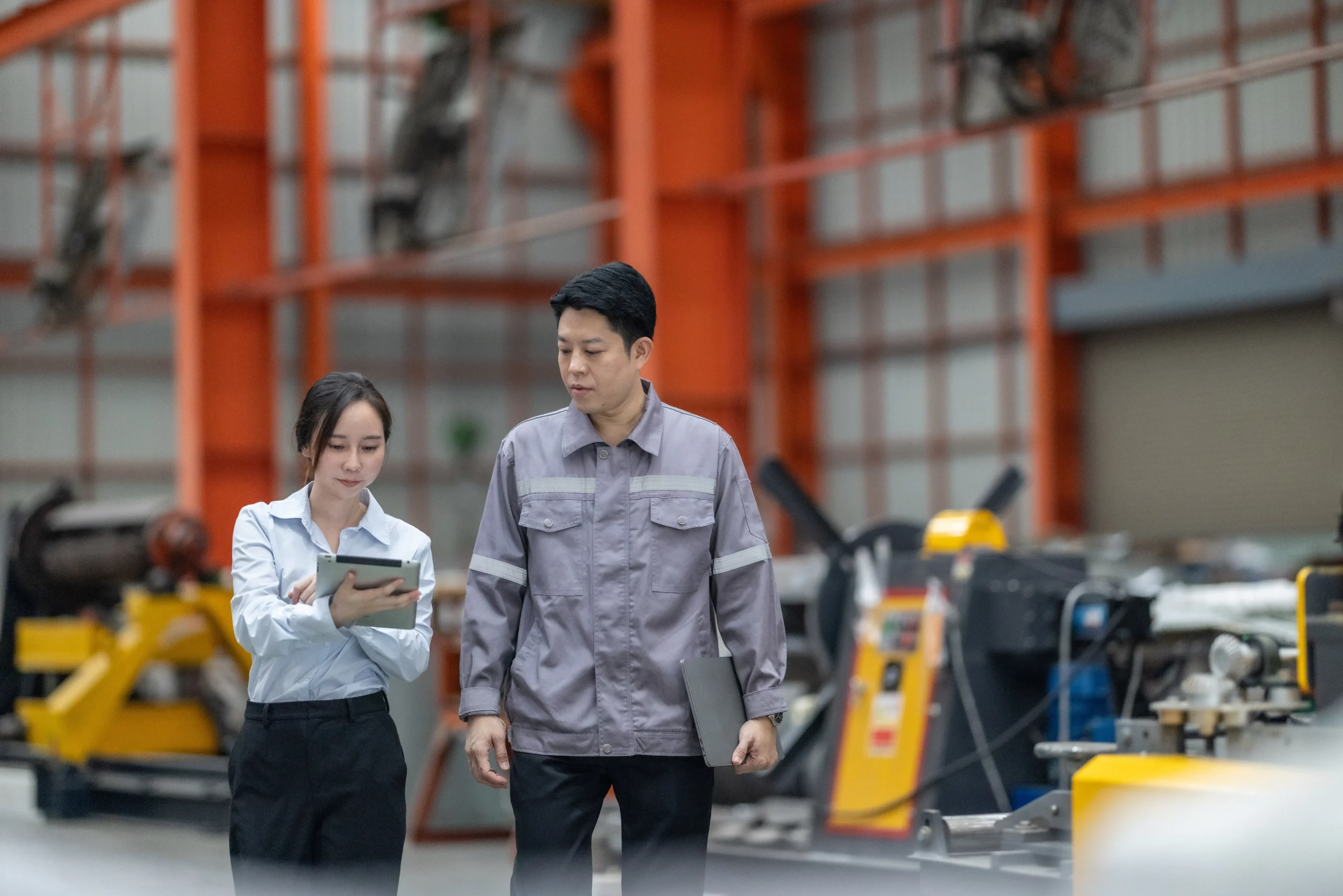
If a supplier cannot explain these controls, the tank price is not enough to judge project suitability.
Maintenance & Material Selection
Bolted tanks can be easier to inspect and maintain because they are built from defined components — some accessories, gaskets or panels may be easier to access or replace. Welded tanks can also be maintained successfully, but repairs may require welding, surface preparation and recoating, which can be more disruptive if the tank is already in service. For projects where downtime is expensive, maintenance planning should be included in the original selection.
The construction method is only part of tank selection — the water type is equally important. For potable water, review internal surface, material compatibility, sealing system and documentation; stainless steel bolted tanks or properly specified coated/lined systems may be used. For fire reserve, industrial or raw water, galvanized steel, coated steel or bolted steel systems may be practical. For aggressive chemistry or coastal environments, stainless steel or advanced coating systems should be evaluated. Our stainless steel bolted tank page covers the potable-grade options in detail.
When to Choose Each
- The project is overseas or remote
- Fast installation is important
- Containerized shipping is needed
- Site welding resources are limited
- The location has restricted access
- Future expansion or modification may be required
- Predictable factory-prepared components are valued
- Minimal site disruption is required
- Local welding resources are strong
- The tank is very large and site fabrication is planned
- There is enough time for welding & inspection
- Site access & safety conditions are suitable
- The owner has welded-tank maintenance capability
- Custom geometry or special process requirements apply
Strong Use Cases
Remote Municipal Project
Panels ship in containers and assemble on a prepared foundation where roads, lifting equipment or local fabrication are limited.
Industrial Fire Reserve
Bolted tanks reduce install time and provide large capacity where downtime or construction disruption must be minimized.
Overseas EPC Project
Bolted tanks simplify procurement, packing, shipping and installation planning across borders.
Large Site-Built Industrial Tank
With experienced fabricators, strong inspection resources and enough construction time, welded construction may be practical.
Established Local Standards
Owners with specifications, maintenance teams and inspection systems built around welded tanks may value consistency.
Custom Geometry / Process
Unusual shapes, process conditions or integration requirements may favor welded fabrication, subject to engineering review.

Questions to Ask First
Before selecting bolted or welded construction, these questions usually make the right choice much clearer:
Governing Standards: AWWA D103 vs API 650
The two construction methods are covered by different recognised standards — useful when writing a specification or comparing bids:
AWWA D103
Governs bolted steel tanks — factory-coated bolted steel tanks for water storage.
API 650 · AWWA D100
Govern welded steel tanks for water applications.
How ZENTVO Recommends
ZENTVO does not treat bolted and welded tanks as a simple product contest. We review the application, water type, installation site, capacity, logistics and project standards first, then recommend the tank structure and material system that best fits the project. ZENTVO builds to AWWA D103, API 650, NSF/ANSI 61, WRAS and EN standards under ISO-certified management systems, and provides a free 24-hour engineering package (CAD/GA drawings, structural load calculation, material recommendation) before any order.
For many international projects, bolted steel tanks are the practical choice because they simplify production, export delivery and site assembly. For specific applications, welded tanks or stainless steel solutions may also be reviewed. For sizing logic on public-water projects, see our municipal potable water storage tank design guide.
Bolted or Welded Tank Comparison RFQ
Send this information when asking ZENTVO or any supplier to compare options:
Send With Your Inquiry
- Required usable capacity
- Stored water type & analysis
- Installation country & site conditions
- Foundation status & available footprint
- Indoor or outdoor installation
- Expected construction schedule
- Local installation labor availability
- Site welding restrictions, if any
- Required standards & inspection documents
- Preferred material or coating system
- Nozzle schedule & accessories
- Delivery terms & target operation date
Bolted or Welded — Not Sure Which Fits?
Send ZENTVO your capacity, water type, site location and schedule. Our engineering team can compare bolted steel, stainless steel bolted, galvanized and coated tank options for your project — with a free 24-hour engineering review.
Engineered Water Storage Systems
ZENTVO designs and manufactures engineered water storage systems for municipal, industrial, and firefighting use, in GRP/FRP, stainless steel, and galvanized/steel series — so a project can be matched to bolted or welded construction in the right material rather than forced toward a single method. Manufacturing is carried out under ISO-certified management at our manufacturing facility.
Compliance covers NSF/ANSI 61 and WRAS (potable), AWWA D103 and API 650 (structural), EN standards, and ISO-certified management systems. Contact: info@zentvo.com · +86 153-1889-6990.
FAQ — Bolted vs Welded
Are bolted steel tanks reliable?
Yes. Bolted steel tanks can be highly reliable when properly designed, manufactured and installed. The quality of panels, gaskets, bolts and installation procedure is critical.
Do bolted tanks leak more than welded tanks?
Not when properly designed and installed. Leakage risk depends on gasket quality, panel alignment, bolt tightening, foundation levelness and installation workmanship.
Are welded tanks stronger than bolted tanks?
Welded tanks can be very strong, but bolted tanks are also engineered for structural loads. Strength should be evaluated by design, material, capacity and site conditions rather than by construction method alone.
Which tank is better for export projects?
Bolted tanks are often better for export projects because they can be packed as panels, shipped in containers and assembled on site with less heavy fabrication work.
Which tank is better for municipal water storage?
Both can be used. Bolted tanks are often selected for municipal projects because of modular delivery, faster installation and easier logistics. Final selection should consider water quality, standards, site conditions and maintenance planning.