By ZENTVO Engineering Team. ZENTVO designs modular water storage systems for potable water, fire reserve, municipal supply and industrial utility water, with engineering review before tank layout, installation and maintenance planning.
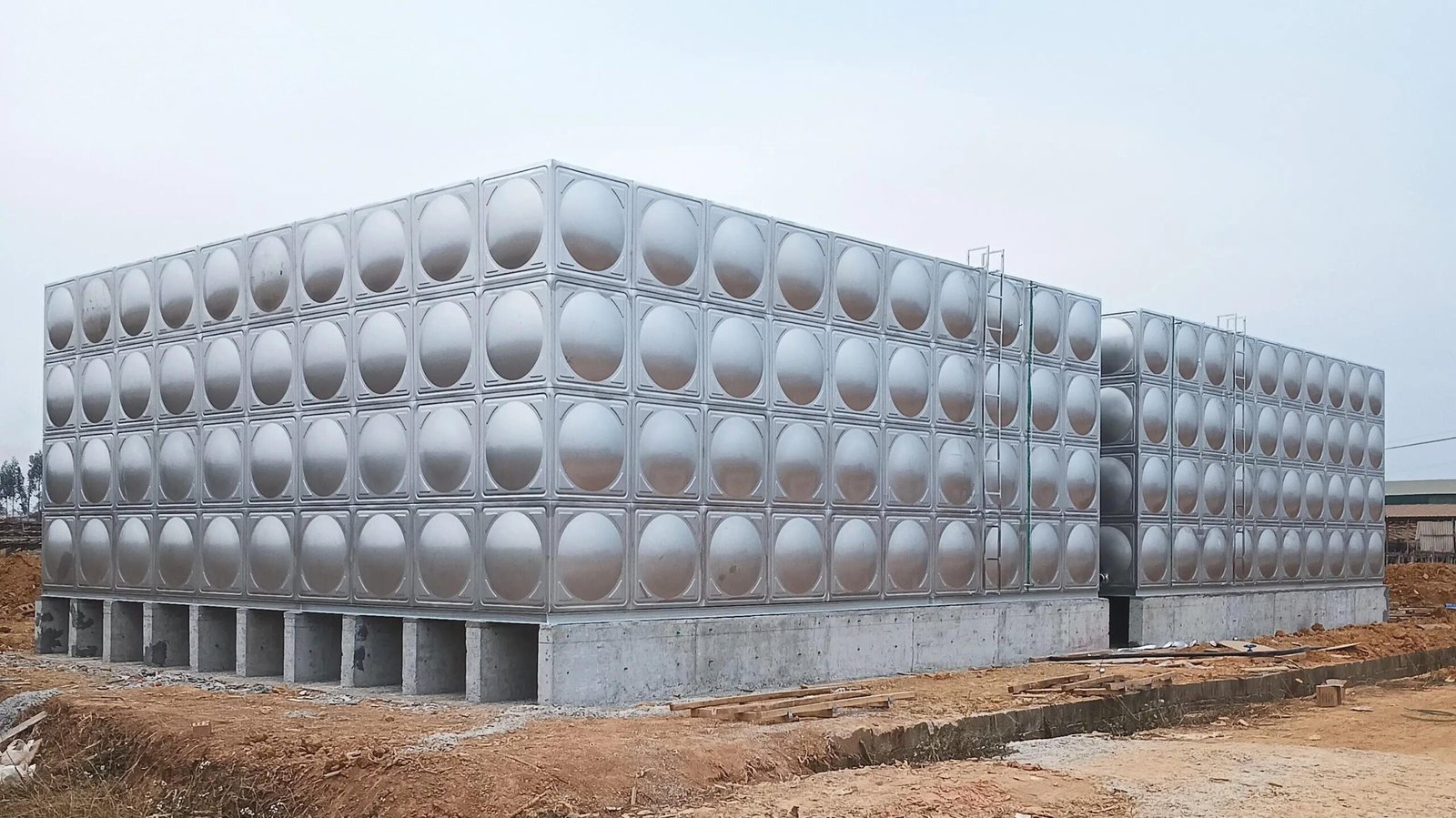
A practical water tank inspection and maintenance schedule should include monthly external checks, quarterly valve and vent checks, semiannual water-quality or sediment checks, annual gasket and accessory inspection, and a deeper internal inspection every 3–5 years or after contamination, coating damage, leakage, seismic event or major repair. For ZENTVO buyers, the direct rule is simple: do not wait for a leak to create the maintenance plan. Put inspection intervals, cleaning triggers, gasket replacement rules, coating repair limits, confined-space safety and handover records into the RFQ. This makes the tank easier to operate after installation, whether the project uses a Stainless Steel Bolted Water Tank, coated steel tank, GRP/FRP tank or fire water storage tank.
Maintenance Schedule At A Glance
A good maintenance schedule uses short visual checks to prevent long shutdowns and expensive repairs.
Source: intervals are ZENTVO planning intervals for modular water tanks; local law, water authority rules, fire code, insurance requirements and the supplier manual control the final programme.
Monthly External Inspection
Monthly inspection should catch visible problems before water quality, coating or gasket damage becomes expensive.
The mechanism is straightforward: water around the base hides foundation settlement and corrosion; a blocked vent causes pressure or vacuum during fill and drawdown; a stuck drain valve turns a simple cleaning task into a shutdown problem. Monthly checks cost little because the tank stays online.
Annual Inspection Checklist
Annual inspection should verify the sealing system, wetted surfaces, accessories and documentation.
Source: the annual checklist is ZENTVO maintenance guidance for RFQ and operation planning; final inspection scope should follow the project standard and operator water-safety plan.
| Item | Annual Acceptance Target | Corrective Action Trigger |
|---|---|---|
| Gaskets | No cracking, extrusion, hardening or visible seepage | Replace gasket section or retighten per supplier procedure |
| Bolts and nuts | No missing hardware, loose rows or abnormal corrosion | Retorque per project table or replace matching material |
| Nozzles | No flange seepage, pipe strain or gasket failure | Support pipe, replace gasket, align flange |
| Overflow | Clear discharge path and screen | Remove blockage and test flow path |
| Drain | Valve accessible and operable | Clean, repair or replace valve |
| Vent | Screen intact, free area open | Clean screen or increase area after engineering review |
| Internal floor | Sediment below 10 mm for normal service screening | Clean tank and review source water if sediment exceeds 10 mm |
| Coating / liner | No blister, peel, crack or exposed steel | Repair per coating/liner method statement |
| Stainless surface | No pitting, crevice staining or deposit buildup | Clean deposits and review chloride/disinfection level |
| Manhole | Cover gasket seated and bolts complete | Replace gasket and retighten evenly |
Cleaning and Disinfection Triggers
Cleaning should be triggered by sediment, contamination risk, inspection findings or potable-water rules — not only by a calendar date.
For potable tanks, AWWA C652 is a common specification reference for disinfection of water-storage facilities. AWWA notes that storage facilities dewatered for entry, painting, repairs or other highly invasive activities should be disinfected and sampled before return to service.
Coating, Liner, Stainless and Galvanized Surface Checks
Surface maintenance should match the tank material because coating failure, zinc loss and stainless pitting have different causes.
Source: surface inspection intervals are ZENTVO lifecycle planning guidance for quotation and maintenance budgeting; project manuals and operator rules control final intervals.
Gasket and Bolt Maintenance
Gasket and bolt maintenance prevents small seepage from becoming panel distortion or hidden corrosion. Inspect gasketed joints for any of these defects:
Bolted tanks rely on controlled compression. Under-tightened bolts leave a leak path. Over-tightened bolts deform panels or squeeze the gasket out of the joint. Maintenance records should state the torque table used, the joint location and the corrective action — not only “tightened bolts.”
Downtime Calculation For Cleaning
Maintenance planning should include the real outage time, especially for single-tank potable or fire-reserve systems.
Source: this example uses ZENTVO shutdown planning logic and AWWA C652-style return-to-service planning; the operator’s disinfection and sampling requirements control final outage time.
Tank volume               =  100 m³
Drain pump rate          =  25 m³/h
Refill rate              =  20 m³/h
Internal cleaning time   =  4 h
Disinfection + sampling  =  24 h
total outage = drain time + cleaning time + refill time + disinfection/sampling allowance
drain time   =  100 / 25   =  4 h
refill time  =  100 / 20   =  5 h
total outage =  4 + 4 + 5 + 24 = 37 h
Confined-Space and Safety Planning
Internal tank inspection should be treated as a safety-controlled activity before anyone opens the manhole.
OSHA 29 CFR 1910.146 — Permit-Required Confined Space
For U.S. general industry, OSHA 29 CFR 1910.146 covers permit-required confined-space practices and procedures for protecting employees from confined-space hazards. Outside the U.S., use the local confined-space rule and site permit system. The maintenance plan should identify whether the tank entry requires all of the following controls:
Fire Water Tank Maintenance
Fire water tank maintenance should follow the fire-protection standard, insurer and authority having jurisdiction. NFPA 22 provides requirements for water tanks and accessory equipment that supply water for private fire protection. Fire tanks need extra attention because a low water level, closed valve, blocked overflow, damaged heater, frozen pipe or failed level signal remains invisible until an emergency test or fire event.
For a Fire Water Storage Tank, the fire-protection standard, insurer’s schedule and authority having jurisdiction control the final maintenance interval — not a general building-services calendar.
RFQ Input List and Specification Checklist
A maintenance-ready RFQ tells the supplier how the tank will be inspected, cleaned and documented after installation.
For a maintenance-ready tank proposal, send your project requirements through the ZENTVO contact page with the water duty, material preference and inspection interval. ZENTVO can prepare a layout and documentation package aligned with Installation Guidelines and long-term operation needs.
Frequently Asked Questions
Source: FAQ values summarize the inspection intervals, cleaning triggers and downtime calculation in this article.
What inspection interval should a water tank use?
A practical schedule is monthly external inspection, quarterly valve and instrument checks, annual gasket and surface review, and internal inspection every 3–5 years. Potable, fire-protection and industrial tanks should shorten the interval after contamination, leakage, coating damage, corrosion, seismic movement or long stagnation.
When should a potable water tank be cleaned?
A potable tank should be cleaned after contamination, intrusive maintenance, sediment above 10 mm, unexplained odor, discoloration, microbiological issue or return from long shutdown. If the tank is dewatered for entry, painting or repair, disinfection and sampling should follow the project standard — such as AWWA C652 where specified.
What should be checked during annual water tank maintenance?
Annual maintenance covers gaskets, bolts, nozzles, manhole seals, vent screens, overflow, drain valve, internal sediment, coating or stainless condition, ladder access, roof seals and foundation drainage. Record photos, measured defect sizes, corrective actions and completion dates so the next inspection has a baseline.
How long does water tank cleaning take?
Cleaning time depends on tank volume, drain rate, refill rate and disinfection requirements. In the example in this article, a 100 m³ tank with 25 m³/h draining, 20 m³/h refilling, 4 h cleaning and 24 h disinfection allowance needs about 37 h of outage.
What safety rule applies to internal tank inspection?
Internal tank inspection should be treated as a confined-space activity. In U.S. general industry, OSHA 29 CFR 1910.146 covers permit-required confined-space practices. The site plan should include isolation, atmospheric testing, ventilation, attendant, rescue plan, lockout/tagout and entry permit when required.
- AWWA C652 — disinfection and sampling considerations for water-storage facilities after construction, inspection or maintenance work.
- OSHA 29 CFR 1910.146 — requirements for practices and procedures to protect employees from permit-required confined-space hazards in U.S. general industry.
- NFPA 22 — standard for water tanks for private fire protection.
- CDC water storage guidance — public-health logic of cleaning and sanitizing water storage containers before use.
- NSF/ANSI/CAN 61 — health-effects benchmarks for drinking-water-contact products and materials.
- WRAS BS 6920 — UK water-contact testing for materials used with wholesome water.
- ISO 9001 — quality management system framework for document control, inspection and corrective-action processes.
Ready to Plan Your Tank’s Maintenance Programme?
Send your water duty, material preference and inspection interval. ZENTVO can prepare a layout and documentation package designed for long-term operation.