Stainless Steel Bolted Water Tank
Modular, hygienic water storage engineered for potable, municipal, industrial and fire-reserve projects — corrosion-resistant 304/316 panels designed for fast on-site assembly.
A stainless steel bolted water tank is best for projects that need hygienic water storage, modular site assembly, corrosion-resistant material and a long operating life. It is commonly specified for potable water, municipal supply, commercial buildings, hospitals, industrial utilities and fire reserve systems where tank cleanliness and installation access matter.
At-a-Glance Specification Guidance
A stainless steel bolted water tank is a modular storage system designed for projects that need clean water compatibility, corrosion resistance, fast site assembly and long service life. Instead of welding the complete tank structure on site, prefabricated stainless steel panels are connected with bolts, gaskets and reinforced structural components to create a stable water storage system.
| Item | Practical guidance |
|---|---|
| Best material choice | 304 stainless steel for normal clean water; 316 stainless steel for coastal, high-chloride or more corrosive environments |
| Best project fit | Potable water, public facilities, commercial buildings, industrial clean water and modular overseas projects |
| Main advantage | Clean internal surface plus bolted-panel logistics and site assembly |
| Main risk if specified poorly | Wrong stainless grade, poor gasket selection, incomplete drainage design or insufficient foundation flatness |
| What buyers should send | Capacity, water analysis, installation location, tank room dimensions, nozzle schedule and project standard |
ZENTVO manufactures stainless steel bolted tanks for municipal water supply, commercial buildings, industrial utilities, fire reserve water and project sites where hygiene, durability and installation speed are important. The same engineering approach extends across our full GRP/FRP tank range and stainless steel series, so each tank can be engineered around the required capacity, site space, water quality, installation environment and local project standards.
When This Tank Is the Right Choice
A stainless steel bolted tank is usually the right choice when the project team is trying to reduce corrosion risk while keeping installation practical. It is not only a “premium material” decision — it is often an operational decision: the owner wants a tank that can be cleaned, inspected, assembled in a restricted space and supported with clear documentation.
Choose this tank type when:
- The stored water is potable or hygiene-sensitive.
- The tank will be installed inside a mechanical room or roof-level utility area.
- A complete welded tank cannot be delivered to the site.
- Site welding is restricted, expensive or undesirable.
- The project is in a humid, coastal or chemically challenging environment.
- The owner needs a material that is easier to inspect and clean.
- The project requires clear documentation for engineering approval.
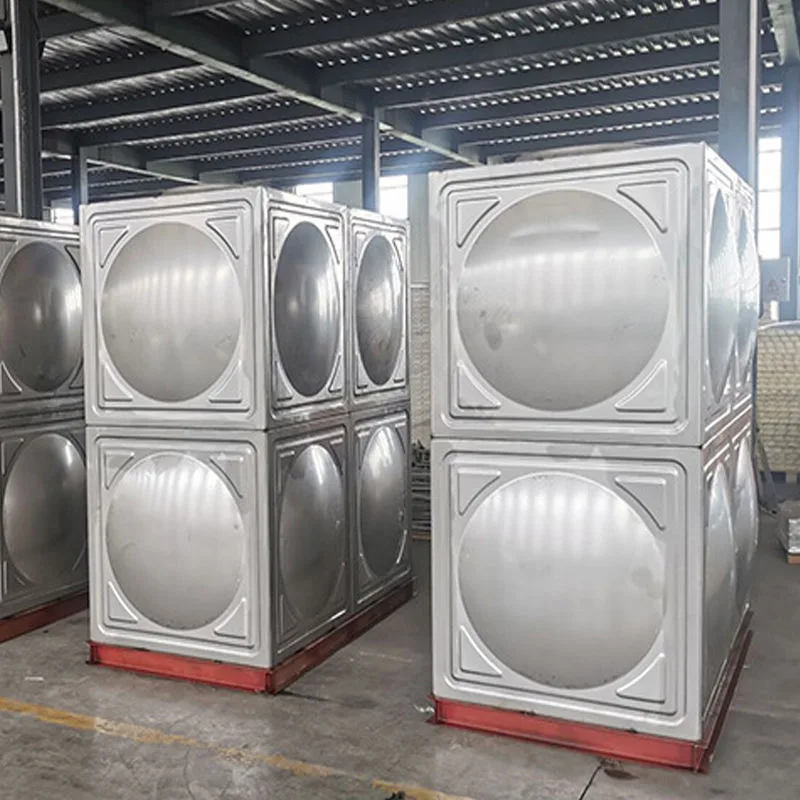
Avoid selecting stainless steel only by price. If a complete one-piece tank can be welded on site, it is worth comparing a welded stainless steel water tank as well. And if chloride level, disinfection method or environmental exposure is not reviewed, the project may choose 304 where 316 is required, or overpay for 316 where 304 would perform well.
Why Choose a Stainless Steel Bolted Tank?
Stainless steel bolted water tanks are often selected when a project requires a balance of clean-water performance and modular construction. The bolted design makes transportation easier, reduces heavy site fabrication work and allows the tank to be assembled in locations where a large pre-welded tank would be difficult to deliver. If you are weighing assembly methods, our guide on bolted vs welded steel water tanks explains how to choose for real project conditions.
Modular panels can be packed efficiently for export and remote project delivery.
Site assembly is faster than many welded or concrete storage options.
Stainless steel provides strong resistance to corrosion when matched correctly to water chemistry.
The tank can be designed for potable water, process water, fire reserve water or general storage.
Internal access and maintenance are easier because the system is built from defined components.
Typical Applications
ZENTVO stainless steel bolted water tanks are used in projects where water quality, long-term reliability and site flexibility matter. For potable water projects, stainless steel is often preferred because it is easy to clean, has a smooth internal surface and can be specified with documentation to support hygiene and safety requirements. For public-supply schemes, see our overview of municipal water supply storage.
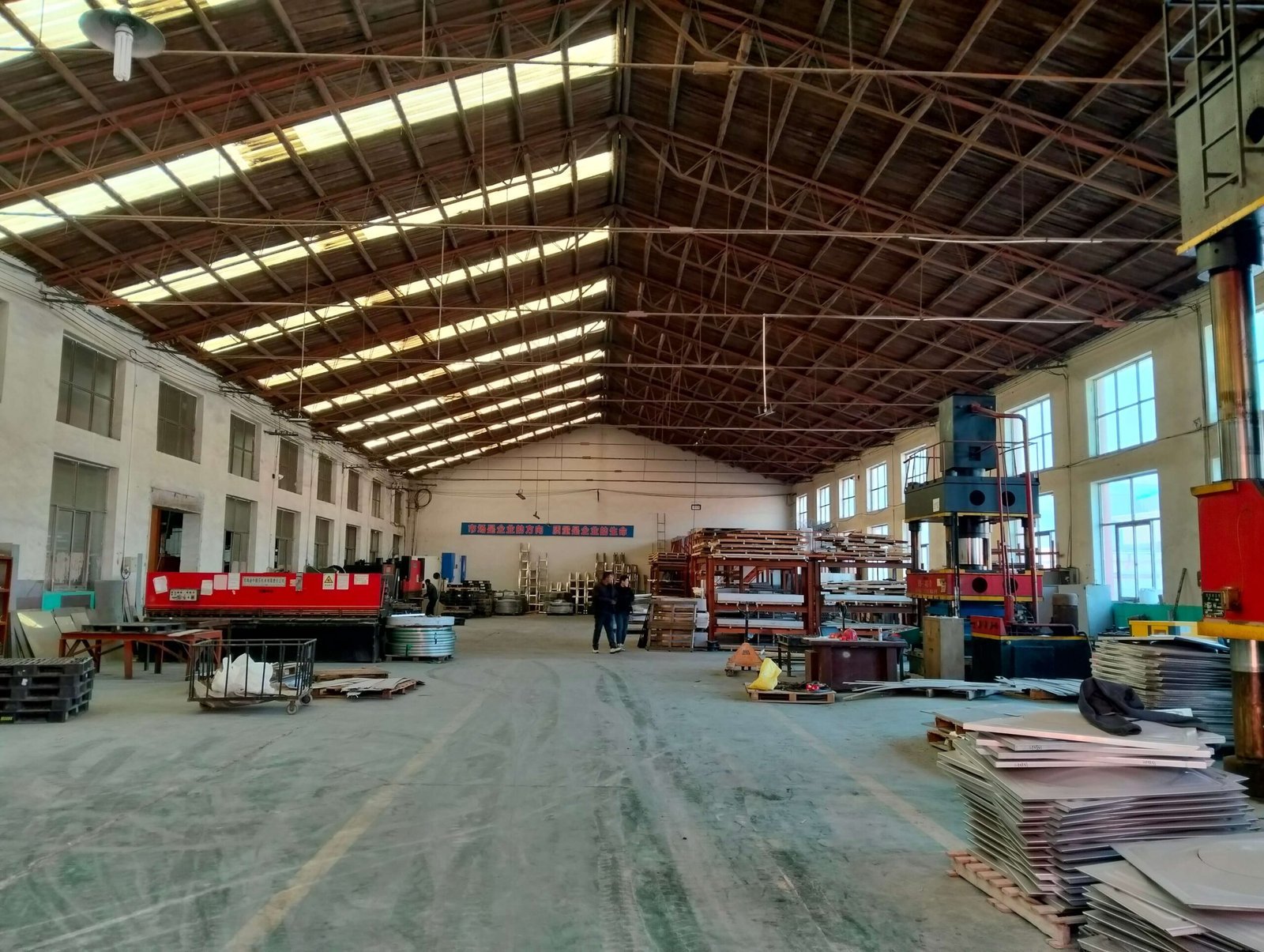
Municipal & Potable Water
Municipal potable water storage and treated-water buffer tanks where hygiene and long service life are priorities.
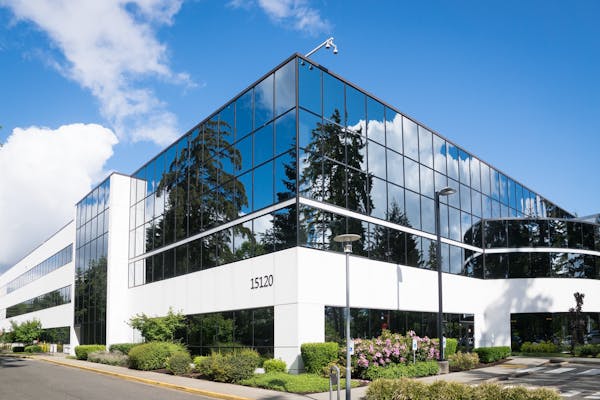
Commercial & Public Facilities
Hotels, hospitals, schools and office complexes — basement mechanical rooms or rooftop plant areas.
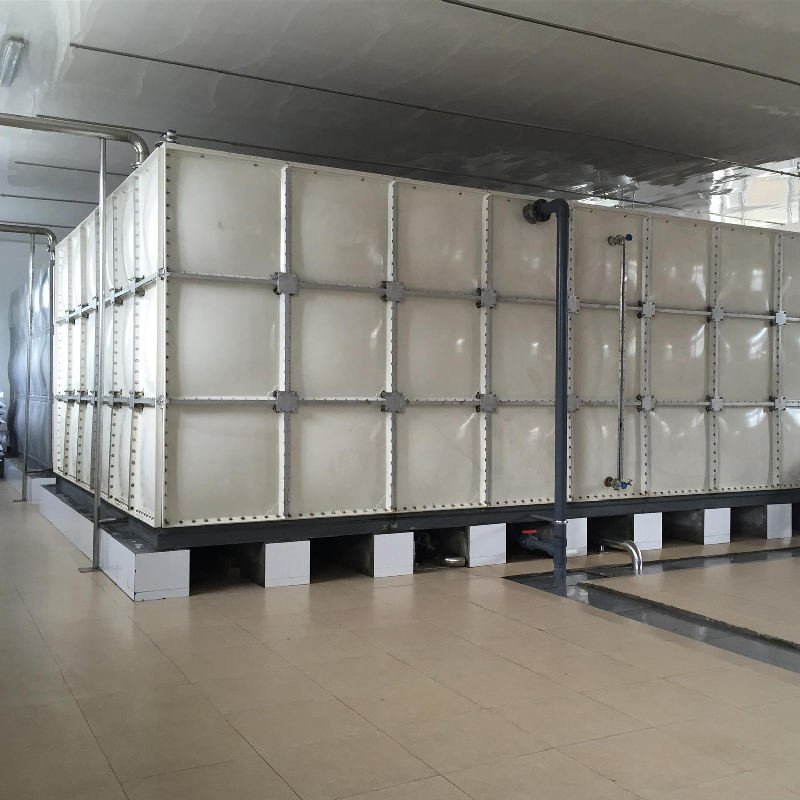
Industrial & Utility Water
Process water, cooling make-up water and washing water for factories and light industry.
Fire Protection Reserve
Reliable fire-fighting reserve water and remote infrastructure / overseas EPC projects.
304 vs 316 Stainless Steel
Choosing the right stainless steel grade is one of the most important decisions in tank specification. ZENTVO can provide both 304 stainless steel and 316 stainless steel water tank solutions depending on the water quality and operating environment.
| Stainless steel grade | Typical use | Selection notes |
|---|---|---|
| 304 stainless steel | General potable water, commercial water supply, indoor installations | Cost-effective for many clean water storage projects with normal chloride levels |
| 316 stainless steel | Coastal areas, higher chloride exposure, more demanding water chemistry | Better corrosion resistance for harsh environments and more demanding projects |
If the project is located near the sea, exposed to high humidity, or stores water with elevated chloride content, 316 stainless steel should be reviewed during engineering selection. For standard indoor potable water storage, 304 stainless steel may be sufficient. The final recommendation should be based on water analysis, temperature, installation conditions and project standards.
Stainless Steel Grade Selection Matrix
| Project condition | 304 stainless | 316 stainless | Notes for engineers |
|---|---|---|---|
| Indoor potable water tank | Usually suitable | Optional | Confirm water chemistry and cleaning method |
| Coastal installation | Review carefully | Usually preferred | Salt air increases corrosion risk |
| High chloride water | Not preferred | Preferred | Ask for chloride data before quotation |
| Hospital or public facility | Often suitable | Optional for demanding projects | Hygiene access and cleaning plan matter |
| Industrial process water | Depends on chemistry | Depends on chemistry | Water analysis is required |
| Fire reserve water | Often suitable | Optional | Confirm stagnation, treatment and maintenance plan |
For serious projects, the stainless grade should never be selected from a catalog alone. A good inquiry should include water type, chloride level if available, temperature, disinfection method and installation environment.
Main Components
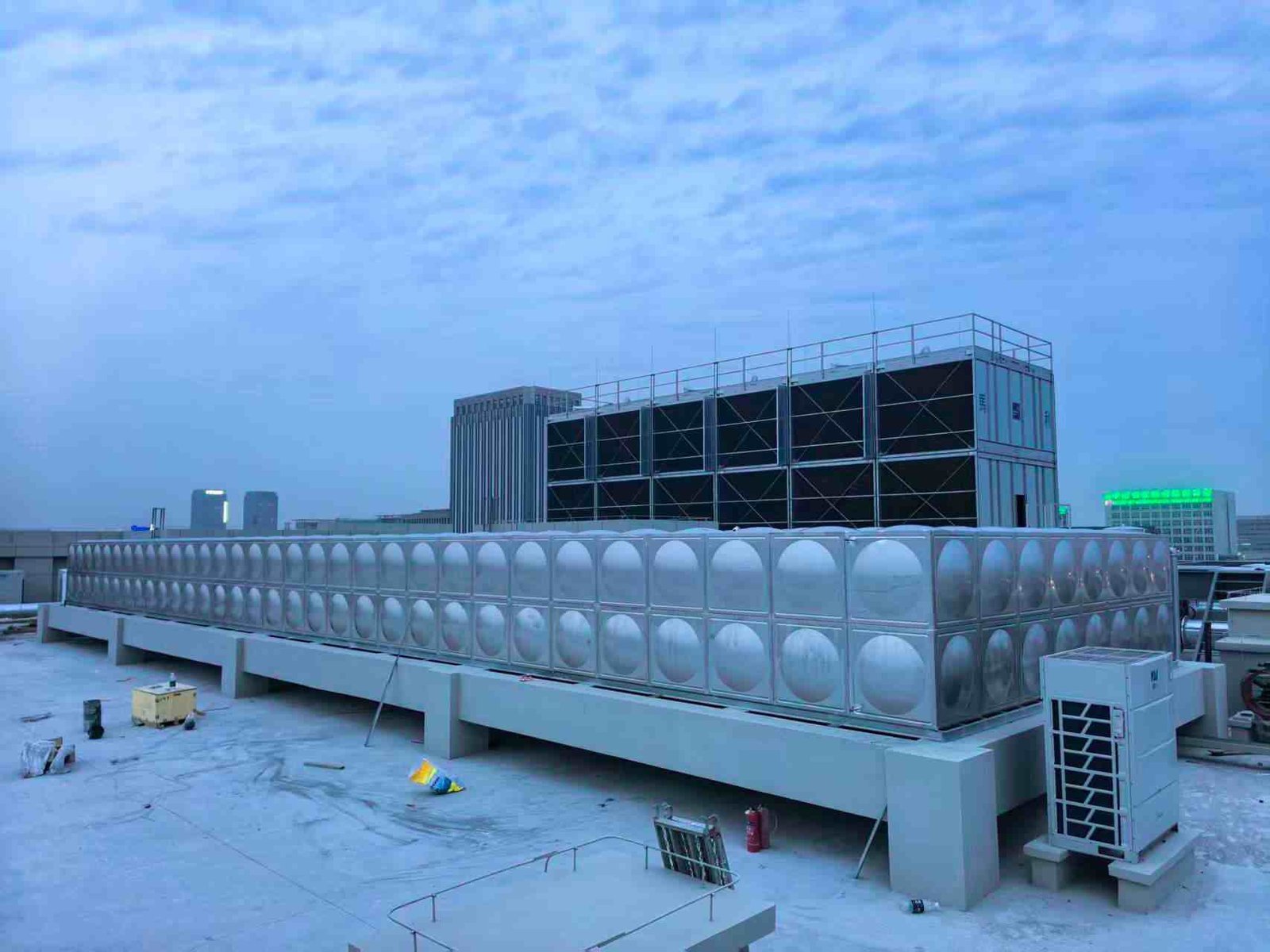
A stainless steel bolted water tank is not just a set of panels. A reliable system depends on the fit between all structural and sealing components.
- Stainless steel side panels, bottom panels and roof panels
- Bolts, nuts, washers and connecting accessories
- Sealing gaskets suitable for the stored water
- Internal or external reinforcement structure
- Manhole, ladder, level indicator and access fittings
- Inlet, outlet, overflow, drain and vent connections
- Optional insulation or external protection depending on climate
ZENTVO can customize nozzle positions, panel thickness, reinforcement layout and accessory configuration according to the tank drawing and site requirements.
Engineering Support Before Production
Every project begins with capacity, space and operating-condition review. ZENTVO can support buyers, contractors and engineering consultants with a practical technical package before production — helping procurement teams confirm that the tank is not only priced correctly, but also suitable for the actual project site.
Capacity & Layout
Tank capacity recommendation plus layout and dimensional proposal.
CAD Drawings
CAD / GA drawings for project review and submittal.
Structural Detail
Panel thickness and reinforcement recommendation.
Connection Schedule
Nozzle and connection arrangement.
Logistics Plan
Packing and shipping plan for export delivery.
Installation Guidance
Step-by-step installation guidance for site teams.
Technical Points Buyers Often Miss
Many stainless steel bolted tank problems begin before production, during incomplete specification. The following details should be confirmed before order approval:
Usable vs Nominal Volume
The operational water level may be lower than the geometric tank volume because of overflow, freeboard and connection positions.
Nozzle Schedule
Inlet, outlet, drain, overflow, vent and inspection access should be fixed before production.
Tank Room Access
Panel size, door width, lifting space and assembly clearance affect whether the tank can be installed smoothly.
Foundation Tolerance
Bolted panel tanks need a stable, level base to protect gasket compression and panel alignment.
Cleaning Access
Potable water tanks should be designed so maintenance teams can enter, drain and clean safely.
Water Stagnation
Oversized tanks can create poor turnover. Capacity should match real demand and reserve needs.
Disinfection Compatibility
Chlorine-based treatment and water chemistry should be considered during material selection.
Confirming these points early answers the real procurement question behind every tank inquiry: “Will this tank work for my project?”
Application Examples
Commercial Building Potable Water
For hotels, office towers, hospitals and public buildings, bolted tanks are often installed in basement mechanical rooms or rooftop plant areas. Modular panels make installation possible where a complete welded tank cannot be moved through the building.
Municipal Clean Water Buffer
Small and medium municipal systems may use bolted tanks for treated water storage, especially where hygiene, inspection and long service life are priorities.
Industrial Clean / Utility Water
Factories may use stainless tanks for process water, cooling make-up water, washing water or other utility systems where contamination control matters.
Coastal Project Water Storage
For coastal resorts, ports and island infrastructure, 316 stainless steel should be reviewed because airborne salts and chloride exposure can shorten the life of unsuitable materials.
Quality Control and Inspection
For water storage systems, small details affect long-term performance. ZENTVO controls the bolted-tank process from material selection to panel fabrication, trial checking and packing.
- Stainless steel material verification
- Panel size and forming accuracy
- Surface quality inspection
- Hole position and connection checks
- Gasket and accessory matching
- Packing inspection before shipment
For international projects, inspection documents, packing lists and technical files can be prepared to support project delivery and customs clearance. All work is carried out under ZENTVO’s certified management systems.
Packing, Delivery and Installation
The modular structure makes stainless steel bolted tanks suitable for export projects. Panels and accessories can be packed in a compact form, helping reduce shipping volume compared with large prefabricated tanks.
On site, the tank is assembled according to the installation drawing. A well-prepared foundation, correct bolt-tightening sequence and careful gasket installation are essential for leakage prevention and structural reliability. ZENTVO can provide installation instructions and remote technical support to help the site team complete assembly correctly.
How to Specify a Stainless Steel Bolted Water Tank
To prepare an accurate proposal, please provide the following information so ZENTVO can recommend the right stainless steel grade, panel structure, accessories and delivery plan:
- Required storage capacity
- Tank shape and available installation space
- Indoor or outdoor installation
- Water type and water quality report if available
- Required stainless steel grade, if already specified
- Local design standards or project specifications
- Inlet, outlet, overflow and drain requirements
- Installation country and shipping destination
Inquiry Template for Faster Quotation
- Project name and country
- Application: potable / fire reserve / industrial / other
- Required usable capacity
- Preferred tank dimensions, if fixed
- Location: indoor / outdoor / rooftop / basement / coastal
- Water analysis available: yes / no
- Preferred grade: 304 / 316 / need recommendation
- Accessories: ladder, manhole, level indicator, insulation, platform
- Nozzle list: inlet, outlet, overflow, drain, vent
- Required standards or approval documents
- Expected delivery date
The more complete the inquiry, the faster ZENTVO can return a useful proposal instead of a generic price. If you are still comparing materials, our engineering FAQ covers common selection, sizing and installation questions.
Request a Stainless Steel Bolted Tank Proposal
Send capacity, water type, installation country and preferred stainless grade. ZENTVO will review the project and respond with material recommendation, tank layout and quotation guidance.
Standards, Compliance and Material Grades
ZENTVO stainless steel bolted tanks are engineered to recognised water and structural standards. For potable water, material and components are specified to support NSF/ANSI 61 and WRAS requirements; structural design follows AWWA D103 (bolted steel tank) and EN standards as applicable. Tanks are built under ISO-certified management systems, with certified materials, factory inspection, and dimensional and sealing tests before shipment. See full details on our certifications page.
Stainless grade is selected by service condition: 304 / 304L for general clean and potable water, and 316 / 316L for coastal, high-chloride, or more demanding chemistry. Confirm the chloride level and disinfection method so the correct grade is specified — not assumed.
Engineered Water Storage Systems
ZENTVO designs and manufactures engineered water storage systems for municipal, industrial, and firefighting applications, with GRP/FRP, stainless steel, and galvanized/steel tank series. Every project starts with a free 24-hour engineering design package (CAD/GA drawings, structural load calculation, and material recommendation), followed by certified manufacturing at our manufacturing facility, export packaging, and delivery in roughly 15–35 working days (EXW / FOB / CIF / DAP).
Support includes installation guidance, spare parts, and a 24/7 technical hotline. Compliance covers NSF/ANSI 61 and WRAS (potable), AWWA D103 and API 650 (structural), EN standards, and ISO-certified management systems. Contact: info@zentvo.com · +86 153-1889-6990.
FAQ — Stainless Steel Bolted Water Tank
What is a stainless steel bolted water tank?
A stainless steel bolted water tank is a modular water storage tank made from stainless steel panels connected by bolts and sealed with gaskets. It is designed for easier transportation, faster site assembly and reliable water storage performance.
Is 304 or 316 stainless steel better for water tanks?
304 stainless steel is suitable for many general potable water projects. 316 stainless steel offers stronger corrosion resistance and is usually recommended for coastal areas, higher chloride environments or more demanding water chemistry.
Can a stainless steel bolted tank be used for potable water?
Yes, stainless steel bolted tanks are commonly used for potable water storage when the correct material grade, sealing system and project documentation are selected.
What capacities can ZENTVO supply?
ZENTVO can engineer stainless steel bolted water tanks in different capacities based on project requirements, available space and structural design. Contact the engineering team with your target capacity for a customized proposal.
How long does installation take?
Installation time depends on tank capacity, site conditions, crew experience and foundation readiness. Modular bolted tanks are generally faster to install than many site-welded or concrete storage systems.